
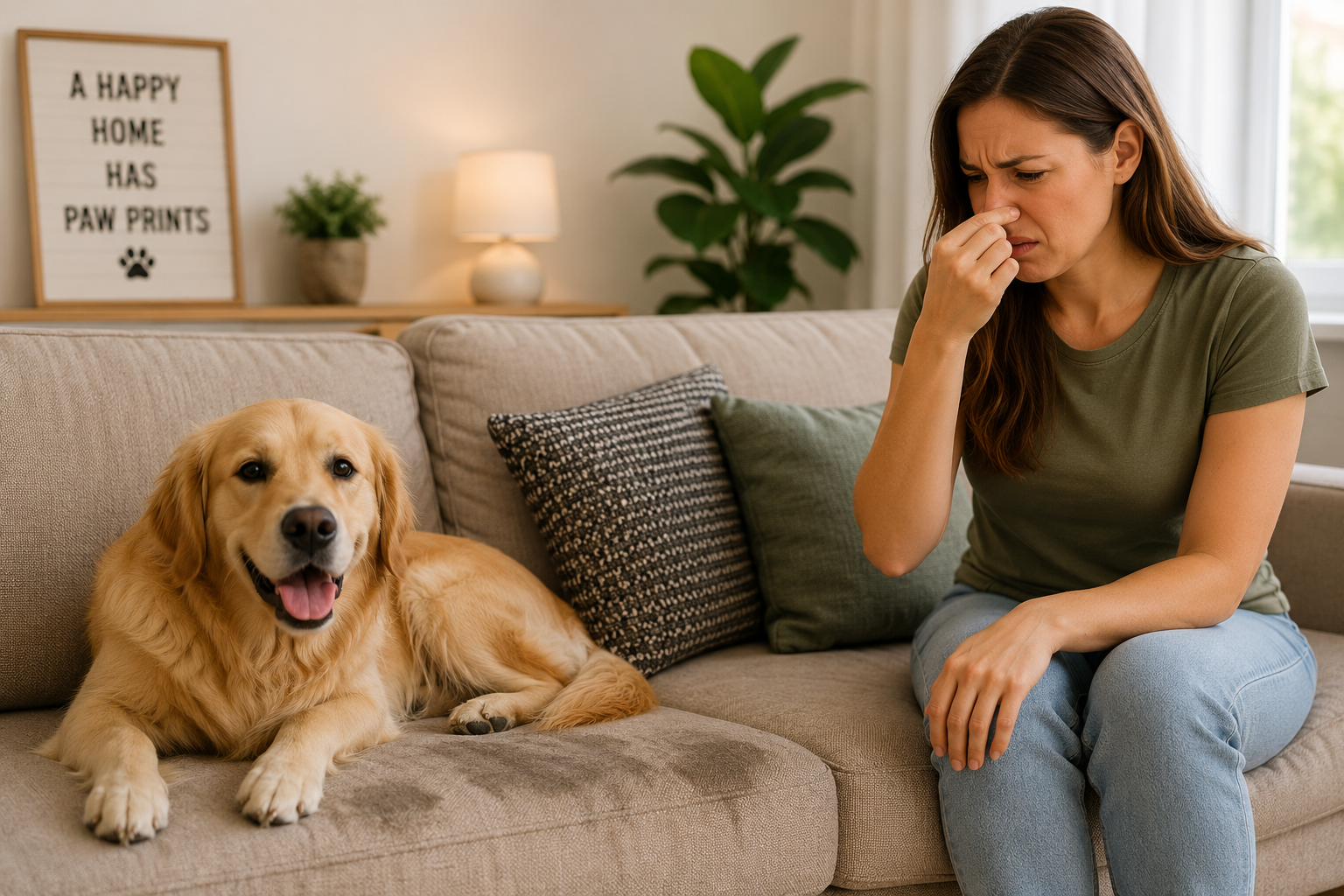
Pet Odor: Why Your Home Still Smells Like Pets and How to Fix It

Pets bring comfort, companionship, and joy into a home — but they can also leave behind stubborn odors that are difficult to remove completely.
Many homeowners clean constantly but still notice lingering dog or cat smells in couches, carpets, bedding, and even entire rooms.
The reason is simple: pet odors often sink deep into fabrics, padding, and hidden surfaces where ordinary cleaning products cannot fully reach.
In this guide, you’ll learn:
- Why pet odors linger indoors
- The most common sources of dog and cat smells
- How to remove odors from couches, carpets, and furniture
- Natural cleaning methods that actually help
- Which products work best for pet odor control
- How to prevent odors from coming back
By the end of this article, you’ll understand how to eliminate pet odors at the source instead of simply masking them temporarily.
Why Pet Odors Are So Hard to Remove

Pet smells are more than just surface-level odors.
Dogs and cats naturally produce oils, dander, saliva, and moisture that absorb into fabrics and soft materials.
Common odor sources include:
- pet hair
- saliva
- accidents and urine
- damp fur
- body oils
- dirty paws
- pet beds
- litter boxes
Soft surfaces trap these particles over time, allowing bacteria to grow and odors to become stronger.
The Most Common Places Pet Odors Hide
Even clean homes can trap odors in hidden areas.
Couches and Upholstery
Fabric couches absorb pet oils and smells very quickly.
Odors often settle deep inside cushions and padding.
Carpets and Rugs
Carpets are one of the biggest odor traps in pet-friendly homes.
Even small accidents can soak beneath the surface.
Pet Beds
Pet beds collect fur, moisture, and bacteria daily.
Without regular cleaning, they become major odor sources.
Blankets and Pillows
Soft fabrics absorb smells much faster than hard surfaces.
Air Vents and Small Rooms
Poor airflow can spread pet smells throughout the home.
How to Remove Pet Odors From a Couch

Couches are one of the most searched pet odor problems online.
Step 1: Vacuum Thoroughly
Use a vacuum designed for:
- pet hair
- upholstery
- deep fabric cleaning
Pay special attention to:
- corners
- under cushions
- seams
- hidden creases
Pet hair traps odors and bacteria.
Step 2: Use Baking Soda

Baking soda helps absorb odors naturally.
How to use:
- Sprinkle baking soda over the couch
- Let it sit for several hours
- Vacuum thoroughly
This method works especially well for mild odors.
Step 3: Use a Pet Odor Neutralizer
Unlike air fresheners, odor neutralizers are designed to break down odor-causing particles instead of simply covering smells.
Look for products labeled:
- enzyme-based
- pet-safe
- fabric-safe
Step 4: Deep Clean When Necessary
For strong smells, a portable upholstery cleaner or extractor may be necessary.
Deep cleaning helps remove:
- trapped oils
- bacteria
- hidden moisture
- old stains
How to Remove Dog Smell From Carpets

Carpets absorb pet odors faster than most surfaces.
Vacuum Frequently
Homes with pets often require more frequent vacuuming.
High-traffic areas collect fur and dander quickly.
Use Carpet Baking Soda Treatments
Baking soda can help absorb mild odors before vacuuming.
Steam Cleaning
Steam cleaning helps lift:
- deep dirt
- bacteria
- odor-causing residue
However, carpets must dry completely afterward to avoid mildew.
Treat Accidents Immediately
Urine odors become much harder to remove once they soak into carpet padding.
Fast cleanup is extremely important.
Natural Pet Odor Solutions That Actually Help

Many homeowners prefer natural cleaning methods because they avoid harsh chemicals.
White Vinegar
White vinegar may help reduce odors on washable surfaces.
It’s commonly used for:
- blankets
- pet bedding
- removable covers
Always test fabrics first.
Baking Soda
Baking soda remains one of the most popular odor absorbers.
It works well for:
- carpets
- couches
- pet beds
- fabric surfaces
Fresh Air and Ventilation
Good airflow helps reduce trapped odors.
Opening windows and improving ventilation can make a noticeable difference.
Best Products for Pet Odor Removal

The right tools can significantly reduce cleaning time and improve odor control.
Pet Hair Vacuums
Specialized pet vacuums help remove:
- embedded fur
- dander
- odor-causing debris
Many models include upholstery attachments.
Portable Carpet and Upholstery Cleaners
Portable extractors are extremely effective for:
- couches
- rugs
- pet accidents
- fabric furniture
They help pull moisture and dirt from deep inside fabrics.
Enzyme-Based Odor Removers
Enzyme cleaners help break down organic odor particles.
They are commonly recommended for:
- urine smells
- old stains
- pet accidents
Air Purifiers
Air purifiers can help reduce:
- airborne pet dander
- odors
- dust particles
Especially useful in small apartments or homes with multiple pets.
Washable Furniture Covers
Furniture covers protect couches and make cleaning easier.
How to Prevent Pet Odors From Returning
Preventing odors is easier than removing heavy buildup later.
Bathe Pets Regularly
Clean fur reduces oils and odor buildup.
Avoid overbathing, which can irritate skin.
Wash Pet Bedding Frequently
Pet beds should be cleaned regularly.
Vacuum More Often
Frequent vacuuming helps control fur and dander before odors accumulate.
Improve Home Ventilation
Fresh airflow reduces trapped smells.
Clean Accidents Immediately
Fast cleanup prevents deep odor penetration.
Common Pet Odor Mistakes
Avoid these common cleaning mistakes:
Using Air Fresheners Only
Air fresheners often mask odors temporarily instead of removing them.
Ignoring Hidden Areas
Pet odors frequently hide beneath cushions and rugs.
Letting Wet Fur Sit on Furniture
Moisture can create stronger smells over time.
Skipping Deep Cleaning
Surface cleaning alone may not remove embedded odors.
Not Cleaning Vacuum Filters
Dirty vacuum filters can spread odors back into the air.
When Should You Replace a Couch or Carpet?
In severe cases, odors may penetrate too deeply into padding or fabric.
Replacement may be necessary if:
- odors return immediately after cleaning
- padding is heavily contaminated
- mold or mildew develops
- multiple accidents have soaked deeply into materials
Final Thoughts

Pet odors are usually caused by trapped oils, fur, moisture, bacteria, and hidden residue inside soft materials.
The best long-term strategy combines:
- regular vacuuming
- deep cleaning
- fast accident cleanup
- moisture control
- odor-neutralizing products
Instead of masking smells temporarily, focus on removing the source of the odor completely.
With consistent maintenance and the right tools, it’s possible to keep a home smelling fresh while still enjoying life with pets.
Quick Summary
- Vacuum pet hair frequently
- Use baking soda for mild odors
- Deep clean couches and carpets regularly
- Use enzyme-based odor removers
- Improve airflow and ventilation
- Wash pet bedding often
- Clean accidents immediately
- Maintain vacuum filters
With the right cleaning habits and preventive care, pet odors can be managed effectively before they become overwhelming.