
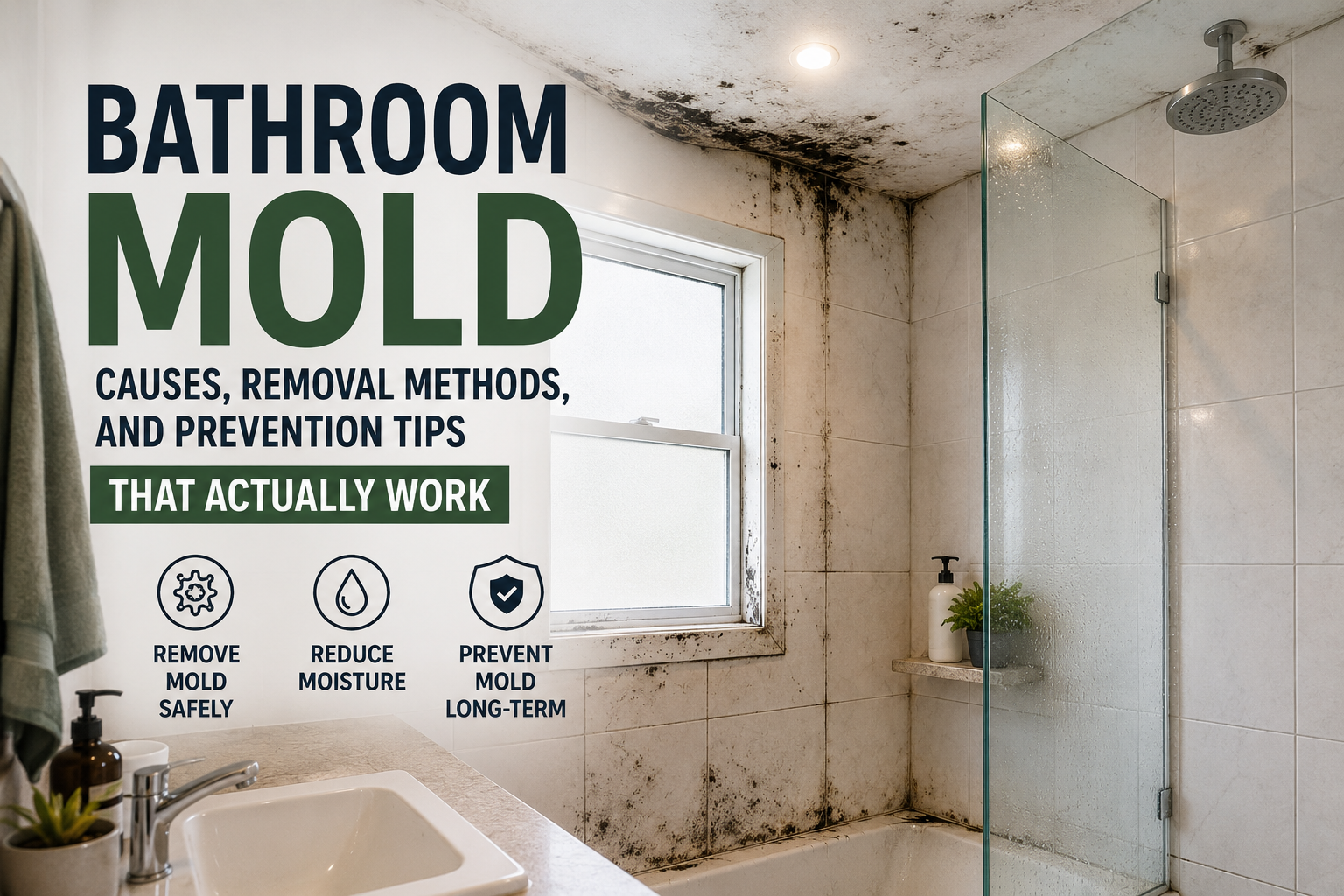

Bathroom Mold: Why It Keeps Coming Back and How to Remove It Safely
Bathroom mold is one of the most common household problems, especially in homes with poor ventilation, high humidity, or frequent moisture buildup.
Many people clean visible mold only to see it return a few weeks later.
The reason is simple: mold problems usually start behind the surface.
In this guide, you’ll learn:
- Why bathroom mold keeps returning
- The difference between mold and mildew
- The safest ways to remove mold
- How to clean mold without harsh bleach fumes
- The best products and tools for mold prevention
- How to reduce moisture and humidity permanently
By the end of this article, you’ll understand how to stop bathroom mold at the source instead of constantly treating the symptoms.
Why Does Mold Grow in Bathrooms?
Bathrooms create the perfect environment for mold growth because they combine:
- Moisture
- Warm temperatures
- Poor airflow
- Damp surfaces
- Steam from showers
Even small amounts of trapped moisture can create ideal conditions for mold spores.
Common places where bathroom mold appears:

- Shower corners
- Tile grout
- Around bathtubs
- Ceiling corners
- Window frames
- Shower curtains
- Sink cabinets
- Silicone seals
Mold vs Mildew: What’s the Difference?
Many people use the terms interchangeably, but mold and mildew are slightly different.
Mildew
Mildew is usually:
- flat
- powdery
- white or gray
- easier to remove
It often appears on shower walls and bathroom ceilings.
Mold
Mold is typically:
- darker in color
- thicker
- rooted deeper into surfaces
- harder to remove permanently
Black mold around seals and grout lines is especially common in humid bathrooms.
Why Bathroom Mold Keeps Coming Back
Removing visible mold does not always solve the real problem.
Here are the most common reasons mold returns:
1. Poor Ventilation

Bathrooms without proper airflow trap moisture after showers.
Steam settles onto walls, ceilings, and grout lines, creating long-term dampness.
Signs of poor ventilation:
- foggy mirrors for long periods
- condensation on walls
- damp smell
- peeling paint
2. Excess Humidity
Humidity levels above 60% can encourage mold growth.
Small bathrooms and apartments are especially vulnerable.
3. Water Leaks
Small leaks under sinks or around tubs often go unnoticed for months.
Hidden moisture behind walls can feed mold continuously.
4. Dirty Grout and Silicone Seals
Soap residue traps moisture and bacteria.
Over time, mold starts growing deep inside porous materials.
5. Using Bleach Incorrectly
Bleach may temporarily remove surface stains, but it often fails to kill mold roots inside porous surfaces.
That’s why mold frequently returns after bleach cleaning.
How to Remove Bathroom Mold Safely
Step 1: Improve Airflow First
Before cleaning mold, reduce moisture.
Open windows, turn on ventilation fans, and allow fresh air to circulate.
This helps prevent mold spores from spreading during cleaning.
Step 2: Use Protective Gear
When cleaning mold, wear:
- gloves
- protective mask
- eye protection
Especially in poorly ventilated bathrooms.
Step 3: Choose the Right Cleaning Solution
Several cleaning methods can help remove mold effectively.
White Vinegar
White vinegar is one of the most popular natural mold solutions.
It may help reduce mold growth on non-porous surfaces.
How to use:

- Spray directly onto affected areas
- Let sit for 30–60 minutes
- Scrub gently
- Dry completely
Baking Soda
Baking soda helps absorb odors and loosen residue.
It works well combined with light scrubbing.
Hydrogen Peroxide
Hydrogen peroxide is commonly used for mold removal because it penetrates surfaces better than bleach.
It may help reduce mold stains and bacteria.
Mold Removal Sprays
Commercial mold removers are useful for stubborn buildup.
Look for products designed for:
- bathrooms
- grout
- silicone seals
- low-odor cleaning
How to Clean Mold From Bathroom Grout
Grout is porous, meaning mold can grow beneath the surface.

Best method:
- Apply mold cleaner or vinegar
- Let it sit
- Scrub using a grout brush
- Rinse thoroughly
- Dry completely
Electric scrubbers can make grout cleaning easier and reduce physical effort.
How to Remove Mold From Silicone Seals

Silicone around bathtubs and showers is one of the most common mold hotspots.
If mold has penetrated deeply into the silicone, cleaning may not fully solve the problem.
In severe cases, replacing old silicone seals may be necessary.
Natural Mold Removal vs Bleach
Many homeowners prefer natural cleaning methods because bleach fumes can irritate:
- allergies
- asthma
- pets
- children
Natural methods advantages:
- lower odor
- safer for small spaces
- less irritating
- easier for frequent maintenance
Bleach advantages:
- strong whitening effect
- fast stain removal
However, bleach alone often does not prevent mold from returning.
Best Products for Bathroom Mold Prevention
The right tools can significantly reduce moisture and mold problems.

Bathroom Exhaust Fans
Good airflow is one of the most effective mold prevention strategies.
Use exhaust fans during and after showers.
Moisture Absorbers
These help reduce humidity in bathrooms with limited ventilation.
Especially useful in:
- apartments
- basements
- windowless bathrooms
Electric Cleaning Brushes

Electric scrubbers help clean:
- grout
- tile corners
- shower seals
- hard-to-reach areas
They also reduce cleaning time.
Low-Odor Mold Sprays
Many modern mold sprays are designed to clean effectively without strong chemical smells.
Small Dehumidifiers
Compact bathroom dehumidifiers can help maintain safer humidity levels year-round.

How to Prevent Bathroom Mold Permanently
Preventing mold is easier than removing severe buildup later.
Keep Surfaces Dry
After showers:
- wipe excess water
- dry shower doors
- use a squeegee on tiles
Leave the Bathroom Door Open
This improves airflow and reduces trapped humidity.
Use Ventilation Fans Longer
Keep fans running for at least 20–30 minutes after showers.
Wash Shower Curtains Regularly
Fabric shower curtains can trap moisture and bacteria.
Monitor Humidity Levels
A small humidity monitor helps track moisture problems before mold appears.
Common Bathroom Mold Mistakes
Avoid these common errors:
Painting Over Mold
This only hides the problem temporarily.
Ignoring Small Black Spots
Early mold is easier to remove.
Leaving Wet Towels in the Bathroom
Damp fabrics increase humidity.
Never Cleaning Ventilation Fans
Dust buildup reduces airflow efficiency.
Closing the Bathroom Immediately After Showers
Trapped steam encourages mold growth.
When Should You Call a Professional?
You may need professional help if:
- mold covers large areas
- mold returns quickly after cleaning
- there is water damage behind walls
- strong odors persist
- family members experience respiratory irritation
Severe mold problems sometimes indicate hidden plumbing or structural issues.

Final Thoughts
Bathroom mold is usually caused by excess moisture, poor airflow, and hidden humidity problems.
While cleaning products can help remove visible buildup, long-term prevention depends on reducing moisture and improving ventilation.
The most effective strategy combines:
- regular cleaning
- better airflow
- humidity control
- fast moisture removal
With the right habits and maintenance routine, most bathroom mold problems can be controlled before they become serious.
Quick Summary
- Improve bathroom airflow
- Reduce humidity levels
- Clean grout and seals regularly
- Dry surfaces after showers
- Use mold prevention tools
- Avoid relying only on bleach
- Fix leaks quickly
- Monitor moisture year-round
By controlling moisture and maintaining proper ventilation, you can keep your bathroom cleaner, healthier, and mold-free long term.