
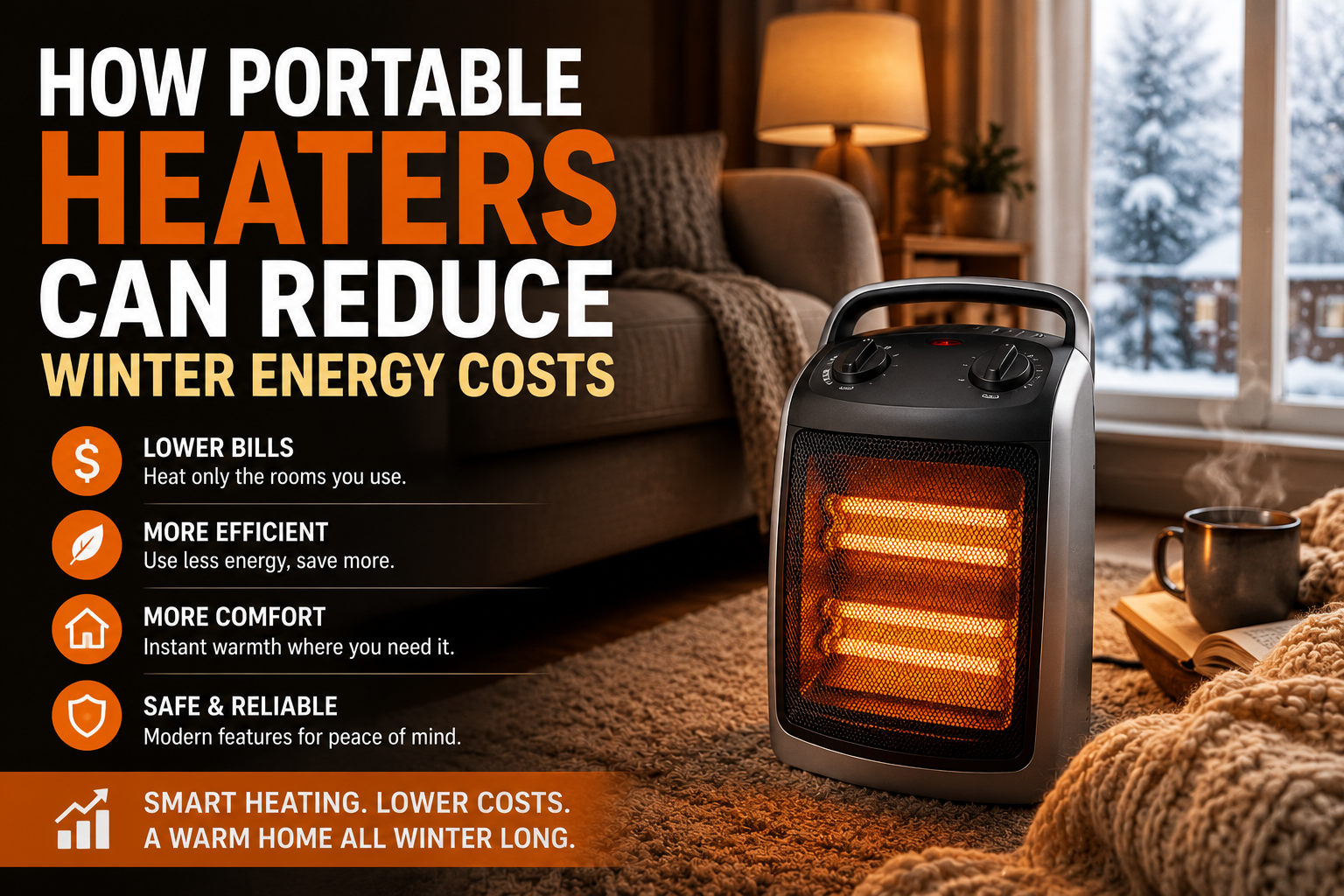
Winter heating bills can become one of the biggest household expenses during colder months.
Many homes waste energy by heating entire buildings even when only one or two rooms are being used regularly.
That’s why portable heaters have become an increasingly popular solution for reducing winter energy costs.
These compact appliances allow people to heat specific spaces more efficiently without constantly relying on central heating systems.
When used correctly, portable heaters can:
- lower electricity consumption,
- improve comfort,
- reduce heating waste,
- and help households save money during winter.
But not all portable heaters are equally efficient.
Choosing the wrong model — or using it incorrectly — can actually increase energy bills instead of reducing them.
In this guide, you’ll learn:
- How portable heaters work
- Why they can reduce heating costs
- The different types available
- Which heaters are most energy-efficient
- Safety tips and common mistakes
- How to maximize heating efficiency
- And whether portable heaters are worth the investment
By the end of this article, you’ll know exactly how to use portable heaters effectively to stay warm while lowering winter energy expenses.

What Are Portable Heaters?
Portable heaters are compact heating appliances designed to warm specific areas instead of heating an entire house.
Unlike central heating systems, portable heaters focus heat directly where it’s needed most.
Most models are:
- lightweight,
- movable,
- easy to use,
- and designed for small or medium-sized spaces.
Portable heaters are commonly used in:
- bedrooms,
- home offices,
- apartments,
- garages,
- RVs,
- and small living rooms.
Their flexibility makes them ideal for targeted heating.
Why Portable Heaters Can Lower Energy Costs
Portable heaters reduce energy waste by allowing people to heat only occupied areas.
This approach is often called:
“zone heating”

Instead of heating an entire home, users warm only the rooms they actively use.
This can significantly reduce:
- central heating usage,
- furnace workload,
- and overall energy consumption.
For example:
If you spend most of your evening in one room, a portable heater may allow you to lower the home thermostat while still staying comfortable.
Over time, this can noticeably reduce winter utility bills.
Types of Portable Heaters
Different heater types offer different benefits.
Understanding them helps you choose the most efficient option.

Ceramic Heaters
Ceramic heaters are among the most popular portable models.
Advantages:
- fast heating,
- lightweight design,
- affordable pricing,
- energy-efficient operation.
Best for:
- bedrooms,
- offices,
- small rooms.
Oil-Filled Radiator Heaters
These heaters warm oil inside sealed metal fins.
Advantages:
- quieter operation,
- long-lasting heat,
- energy efficiency,
- consistent warmth.
Best for:
- overnight use,
- medium-sized rooms,
- quiet environments.
Infrared Heaters
Infrared heaters warm objects and people directly instead of heating surrounding air.
Advantages:
- instant warmth,
- efficient targeted heating,
- lower heat loss.
Best for:
- spot heating,
- garages,
- workspaces.
Fan Heaters
These models use heated air and internal fans.
Advantages:
- rapid heating,
- compact size,
- lower upfront cost.
Disadvantages:
- noisier operation,
- less efficient for long-term heating.
Best Features to Look For
Choosing the right heater improves efficiency and safety.
Adjustable Thermostat
Allows better temperature control and prevents unnecessary electricity usage.
Energy-Saving Modes
Eco settings automatically reduce power consumption when less heat is needed.
Timer Functions
Timers help avoid accidentally leaving heaters running for long periods.
Safety Shutoff Features
Modern heaters often include:
- tip-over protection,
- overheat protection,
- automatic shutoff systems.
These features improve household safety significantly.
Noise Level
Quiet operation is important for:
- bedrooms,
- offices,
- study areas,
- and nighttime use.
Portable Heaters vs Central Heating
Portable heaters and central heating systems serve different purposes.

Portable Heater Advantages:
- lower short-term heating costs,
- targeted heating,
- easier room control,
- reduced energy waste.
Central Heating Advantages:
- heats entire homes evenly,
- better for large households,
- more effective in extreme cold.
For many people, combining both systems strategically provides the best balance.
How to Maximize Energy Savings
Portable heaters work best when combined with smart energy habits.

Close Unused Rooms
Prevent warm air from spreading into areas that don’t need heating.
Improve Insulation
Simple improvements help retain heat:

- sealing windows,
- using curtains,
- blocking drafts,
- adding rugs.
Better insulation reduces heater workload.
Lower the Main Thermostat
Portable heaters become most effective when central heating usage decreases simultaneously.
Use the Correct Heater Size
Small heaters may struggle in large rooms and consume more electricity while working harder.
Always match heater capacity to room size.
Common Mistakes to Avoid
Avoid these common portable heater errors.
Heating Large Spaces with Small Heaters
Undersized heaters run longer and less efficiently.
Leaving Heaters Running Unattended
This increases:
- safety risks,
- electricity waste,
- and equipment wear.
Blocking Airflow
Keep heaters away from:
- furniture,
- curtains,
- blankets,
- and walls.
Proper airflow improves efficiency and safety.
Ignoring Maintenance
Dust buildup can reduce performance and create overheating problems.
Regular cleaning is important.
Portable Heater Safety Tips
Safety should always come first.

Important guidelines include:
- keeping heaters on flat surfaces,
- maintaining safe clearance,
- avoiding extension cords,
- unplugging when not in use,
- supervising pets and children nearby.
Modern safety-certified heaters are much safer than older models, but proper use still matters.
Are Portable Heaters Worth It?
For many households, yes.
Portable heaters can:
- reduce heating costs,
- improve comfort,
- increase flexibility,
- and provide fast warmth exactly where needed.

They are especially useful for:
- apartments,
- small homes,
- home offices,
- renters,
- RV owners,
- and people living in colder climates.
When used correctly, portable heaters can become one of the most cost-effective winter appliances available.
Final Thoughts
Portable heaters are practical tools for reducing winter energy expenses while improving indoor comfort.
Their ability to provide targeted heating makes them especially useful for modern households looking to control utility costs.
The best portable heater depends on:
- room size,
- heating needs,
- safety priorities,
- noise preferences,
- and energy efficiency goals.
With proper usage and smart heating habits, portable heaters can significantly reduce energy waste and make winter much more affordable.
For many people, they offer an excellent balance between comfort, convenience, and cost savings.
Quick Summary
- Portable heaters warm specific rooms efficiently
- Zone heating can reduce energy costs
- Ceramic, infrared, oil-filled, and fan heaters have different advantages
- Adjustable thermostats improve efficiency
- Safety features are essential
- Portable heaters work best with lower central heating usage
- Proper insulation increases savings
- Avoid blocking airflow
- Regular cleaning improves performance
- Excellent solution for targeted winter heating
Portable heaters are a smart and energy-efficient way to stay warm while reducing winter heating expenses.