
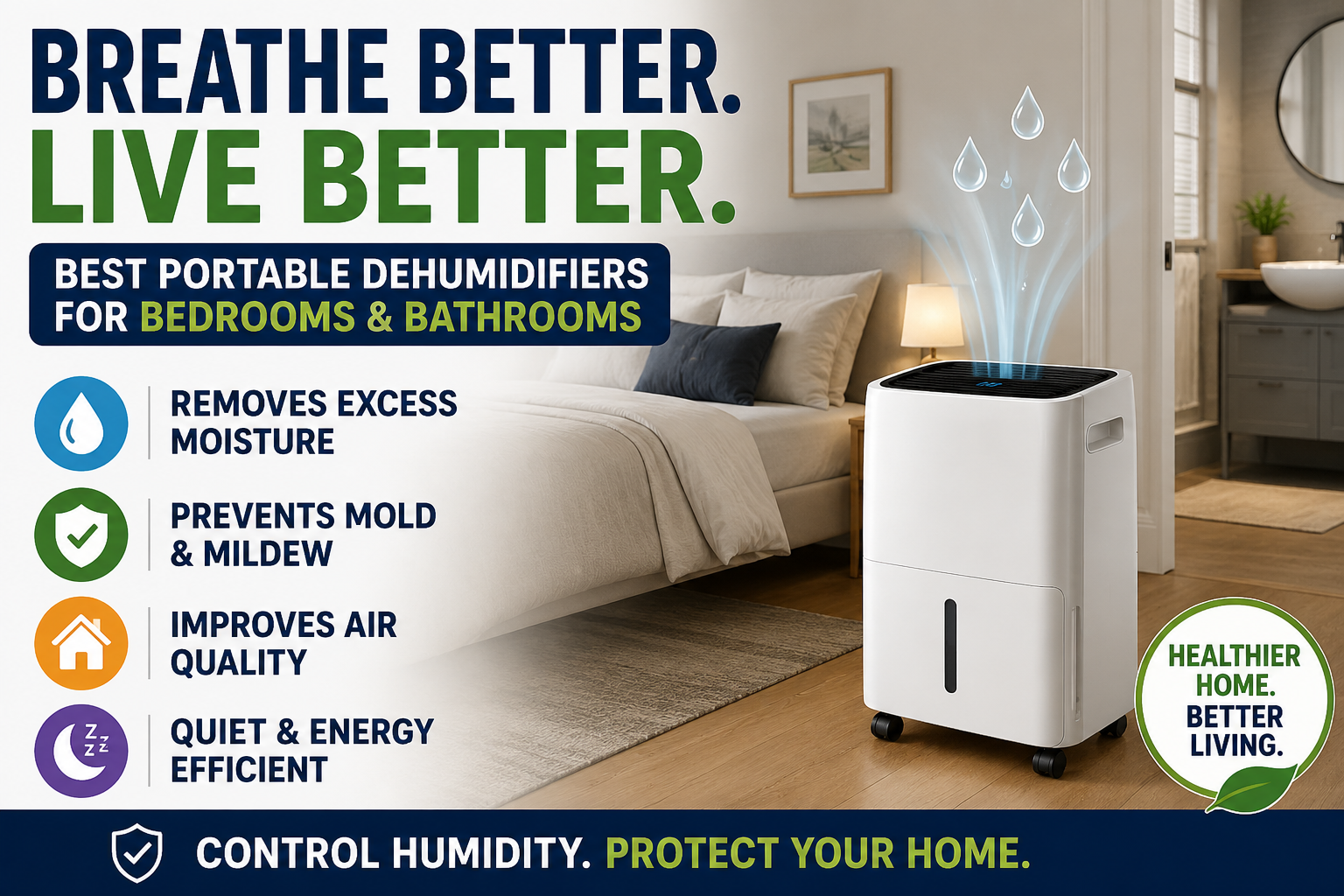
Excess moisture in the air may seem like a minor inconvenience, but over time it can create serious problems inside a home.
High humidity levels can lead to:
- Mold growth
- Musty odors
- Condensation on windows
- Peeling paint
- Damage to furniture
- Increased allergy symptoms
- Poor indoor comfort
Bedrooms and bathrooms are among the most common areas affected by excess humidity.
Fortunately, portable dehumidifiers offer a simple and effective solution.
These compact appliances help remove excess moisture from the air, creating a healthier, more comfortable living environment while protecting your home from moisture-related damage.
But with dozens of models available, how do you know which portable dehumidifier is right for your needs?
In this guide, you’ll learn:
- How portable dehumidifiers work
- Why humidity control matters
- The benefits of using a dehumidifier
- Key features to consider before buying
- The best dehumidifier types for bedrooms and bathrooms
- Common mistakes to avoid
- Maintenance and cleaning tips
- How to choose the right model
By the end of this article, you’ll understand exactly how portable dehumidifiers improve indoor air quality and how to select the best option for your home.

What Is a Portable Dehumidifier?
A portable dehumidifier is a compact appliance designed to remove excess moisture from indoor air.
Most models pull humid air through an internal system that extracts water vapor and collects it in a reservoir or drains it through a hose.
The result is:
- Lower humidity levels
- Reduced mold risk
- Improved comfort
- Better air quality
Portable dehumidifiers are especially useful in:
- Bedrooms
- Bathrooms
- Laundry rooms
- Basements
- Closets
- RVs
- Small apartments
Their compact size allows them to fit easily in spaces where moisture problems commonly occur.
Why Humidity Control Matters
Humidity plays a major role in indoor comfort and health.
Experts generally recommend maintaining indoor humidity between:
30% and 50%
Humidity levels above this range may encourage:
- Mold growth
- Dust mite activity
- Mildew formation
- Odor buildup
- Condensation
Excess moisture can also make rooms feel warmer and more uncomfortable than they actually are.
Controlling humidity improves both comfort and indoor air quality.
Common Signs of Excess Humidity
Many homeowners do not realize they have a humidity problem.
Watch for these warning signs:

Condensation on Windows
Frequent window fogging often indicates excess indoor moisture.
Musty Smells
Persistent damp odors frequently suggest mold or mildew growth.
Mold Spots
Dark spots on walls, ceilings, grout, or corners often indicate excessive humidity.
Damp Towels and Fabrics
Bathrooms and bedrooms may feel constantly damp when humidity remains too high.
Allergies and Respiratory Irritation
High humidity can worsen symptoms for people sensitive to mold, mildew, and dust mites.
How Portable Dehumidifiers Work
Portable dehumidifiers use one of two primary technologies.

Refrigerant Dehumidifiers
These models work similarly to air conditioners.
They:
- Pull humid air inside
- Cool the air
- Condense moisture into water
- Collect the water in a tank
- Return drier air to the room
Advantages:
- High moisture removal
- Excellent efficiency
- Effective for larger rooms
Thermoelectric (Peltier) Dehumidifiers
Popular in compact units.
Advantages:
- Quiet operation
- Lightweight design
- Low power consumption
- Compact size
Best for:
- Bedrooms
- Bathrooms
- Closets
- Small spaces
Benefits of Using a Portable Dehumidifier
Portable dehumidifiers provide several important advantages.

Reduces Mold and Mildew
Lower humidity helps prevent mold growth on:
- Walls
- Ceilings
- Shower areas
- Furniture
- Fabrics
Improves Indoor Air Quality
Removing excess moisture creates a cleaner environment and may reduce airborne allergens.
Eliminates Musty Odors
Many unpleasant indoor smells are caused by moisture buildup.
Reducing humidity often improves freshness significantly.
Protects Furniture and Belongings
Excess moisture can damage:
- Wood furniture
- Clothing
- Books
- Electronics
- Flooring
Dehumidifiers help reduce this risk.
Enhances Comfort
Lower humidity often makes rooms feel cooler and more comfortable without adjusting the thermostat.
Best Portable Dehumidifiers for Bedrooms
Bedrooms require a balance of performance and quiet operation.
Look for:
Low Noise Levels
Quiet models help maintain sleep quality.
Compact Design
Smaller units fit comfortably near beds, dressers, or corners.
Auto Shutoff
Automatically stops operation when the water tank becomes full.
Night Mode
Many modern units offer quieter nighttime operation.
Best Portable Dehumidifiers for Bathrooms
Bathrooms experience some of the highest humidity levels in a home.
Ideal features include:

Fast Moisture Removal
Useful after showers and baths.
Compact Footprint
Fits easily on countertops, shelves, or floors.
Automatic Drainage Options
Reduces the need for frequent emptying.
Easy Cleaning
Important in moisture-prone environments.
Key Features to Look For
Not all portable dehumidifiers offer the same capabilities.
Consider these important features.

Water Tank Capacity
Larger tanks require less frequent emptying.
Common sizes range from:
- 500 ml
- 1000 ml
- 1500 ml
- 2000 ml+
Coverage Area
Always match the dehumidifier to room size.
Manufacturers typically specify recommended coverage in square feet or square meters.
Auto Shutoff
Essential for preventing overflow when the tank fills.
Humidity Sensor
Some models monitor humidity automatically and adjust operation accordingly.
Energy Efficiency
Efficient units reduce operating costs while maintaining performance.
Portable Dehumidifier vs Exhaust Fan
Bathrooms often include exhaust fans, but these devices serve different purposes.
Exhaust Fan
- Removes steam temporarily
- Improves ventilation
- Works during and shortly after showers
Portable Dehumidifier
- Continuously removes moisture
- Controls overall humidity
- Helps prevent long-term moisture problems
Many homeowners benefit from using both.
Common Mistakes to Avoid
Avoid these common dehumidifier mistakes.
Choosing a Unit That Is Too Small
Undersized units struggle to maintain proper humidity levels.
Always verify coverage recommendations.
Poor Placement
Avoid placing dehumidifiers:
- Behind furniture
- Inside tight corners
- Against walls with blocked airflow
Proper airflow improves efficiency.
Ignoring Maintenance
Dirty filters and full water tanks reduce performance significantly.
Expecting Instant Results
Humidity reduction often requires several hours or days depending on room conditions.
Maintenance and Cleaning Tips
Proper maintenance extends appliance lifespan and improves performance.
Helpful practices include:

Empty the Water Tank Regularly
Prevent overflow and bacterial growth.
Clean the Tank
Wash periodically to reduce odors and buildup.
Clean Air Intakes
Dust accumulation restricts airflow.
Follow Manufacturer Instructions
Regular maintenance schedules vary by model.
How to Choose the Right Portable Dehumidifier
Before buying, ask yourself:
How Large Is the Room?
Coverage area is one of the most important specifications.
How Severe Is the Humidity Problem?
Persistent moisture may require higher-capacity models.
Is Noise Important?
Bedrooms typically benefit from quieter thermoelectric models.
Do You Need Automatic Features?
Auto shutoff, humidity sensors, and timers improve convenience.
Choosing the right combination of features ensures better long-term satisfaction.
Are Portable Dehumidifiers Worth It?
For many homeowners, absolutely.
Portable dehumidifiers help:
- Reduce moisture problems
- Improve comfort
- Protect property
- Minimize mold risk
- Improve air quality

They are especially valuable in:
- Bedrooms
- Bathrooms
- Apartments
- RVs
- Small homes
- Damp climates
When used correctly, they can significantly improve indoor living conditions.
Final Thoughts
Portable dehumidifiers are among the most effective appliances for managing excess indoor humidity.
They help create healthier environments by reducing moisture, preventing mold growth, improving comfort, and protecting household belongings.
The best portable dehumidifier depends on:
- Room size
- Humidity levels
- Noise preferences
- Budget
- Desired features
With proper placement and maintenance, a quality portable dehumidifier can provide years of reliable performance while helping maintain a cleaner and more comfortable home.
Quick Summary
- Portable dehumidifiers remove excess moisture from indoor air
- Ideal humidity levels range between 30% and 50%
- Bedrooms and bathrooms often benefit the most
- Lower humidity reduces mold and mildew risk
- Thermoelectric models are quieter and compact
- Refrigerant models remove more moisture
- Auto shutoff improves safety and convenience
- Proper placement increases efficiency
- Regular cleaning improves performance
- Excellent investment for healthier indoor air
Portable dehumidifiers offer a practical and effective way to control humidity while improving comfort, cleanliness, and air quality throughout your home.