
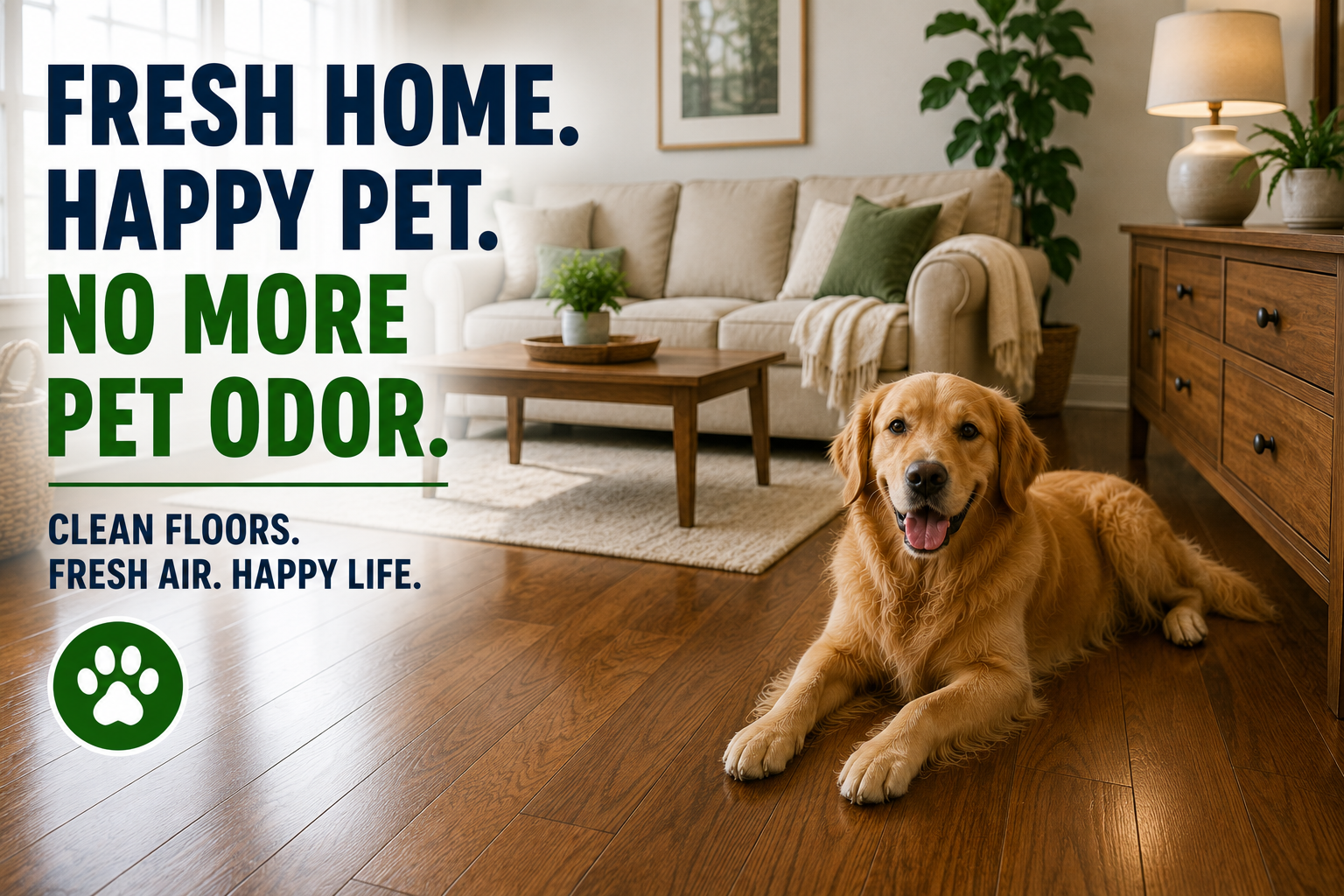
Hardwood floors and wood furniture can make a home feel warm, elegant, and timeless — but they can also absorb stubborn pet odors over time.
Many pet owners are surprised to discover that wood surfaces can trap:
- urine smells,
- moisture,
- pet oils,
- dander,
- and bacteria
especially when accidents are not cleaned properly or moisture penetrates the wood.
Unlike tile or vinyl, wood is naturally porous.
That means pet odors can sometimes seep:
- below the surface,
- into cracks,
- under floorboards,
- or inside unfinished wood areas.
The good news is that most pet odors can be reduced or removed safely with the right cleaning methods.
In this guide, you’ll learn:
- Why hardwood and wood furniture absorb pet odor
- The most common causes of lingering smells
- Safe cleaning methods for wood surfaces
- Products that help neutralize odors
- Mistakes that damage hardwood floors
- How to remove pet urine smells
- Long-term prevention strategies
- And how to keep wood surfaces fresh and protected
By the end of this article, you’ll know exactly how to clean pet odor from hardwood floors and wood furniture safely without damaging the finish.

Why Wood Absorbs Pet Odors
Wood naturally contains tiny pores and fibers that can absorb:
- moisture,
- oils,
- bacteria,
- and odor particles.
When pet accidents are left untreated, liquids can penetrate:
- cracks,
- seams,
- and unfinished areas.
Over time, this creates lingering odors that become difficult to remove.
Humidity and poor ventilation can make these smells even stronger.
Common Sources of Pet Odor in Wood Surfaces
Understanding the source of the smell helps determine the best cleaning method.

Pet Urine Accidents
Urine is the most common cause of deep wood odor.
If moisture reaches beneath the wood finish, bacteria and ammonia smells may develop.
Wet Fur and Pet Oils
Pets naturally transfer:
- oils,
- saliva,
- dirt,
- and moisture
onto furniture and floors.
This buildup gradually creates odor over time.
Moisture Trapped Under Rugs
Rugs placed over hardwood can trap:
- pet accidents,
- humidity,
- and odor particles underneath.
Dander and Dust Buildup
Pet dander often settles into:
- floor seams,
- corners,
- furniture joints,
- and textured wood surfaces.
Poor Ventilation
Closed rooms allow odor particles to remain concentrated longer.
How to Remove Pet Odor From Hardwood Floors
1. Vacuum or Sweep Thoroughly
Before using cleaners, remove:
- pet hair,
- dust,
- dander,
- and debris.

Use soft-bristle attachments to avoid scratching hardwood finishes.
2. Use a Damp Microfiber Mop
Avoid soaking hardwood floors.

Instead:
- lightly dampen a microfiber mop,
- clean small sections,
- and dry excess moisture immediately.
Too much water may damage wood finishes and worsen odor problems.
3. Use Pet-Safe Hardwood Cleaners
Special hardwood-safe cleaners help remove:
- oils,
- dirt,
- bacteria,
- and mild odors.
Always choose products designed specifically for sealed wood surfaces.
4. Use Baking Soda Carefully
Baking soda can help absorb odors from affected areas.
However:
- do not scrub aggressively,
- and avoid leaving moisture trapped on the surface.
For light odor:
- sprinkle lightly,
- allow it to sit briefly,
- then vacuum carefully.
5. Treat Urine Stains Quickly
Fresh accidents are much easier to remove than old stains.
Blot immediately using:
- paper towels,
- microfiber cloths,
- or absorbent towels.
Avoid rubbing because this spreads moisture deeper into the wood.
How to Remove Pet Odor From Wood Furniture
Wood furniture can absorb pet smells through:
- oils,
- fur,
- moisture,
- and daily contact.

Clean Surface Dust and Hair First
Start by removing:
- pet hair,
- dust,
- and debris.
Microfiber cloths work especially well.
Use Mild Wood-Safe Cleaners
Avoid harsh chemicals that may damage finishes.
Use:
- gentle wood cleaners,
- diluted vinegar solutions when appropriate,
- or manufacturer-approved products.
Dry Furniture Completely
Moisture left behind may create:
- mildew,
- swelling,
- or stronger odors later.
Always dry wood thoroughly after cleaning.
Improve Airflow Around Furniture
Air circulation helps reduce:
- trapped moisture,
- stale smells,
- and lingering odor buildup.
Best Products for Removing Pet Odor From Wood
Some products are safer and more effective for wood than others.
Hardwood Floor Cleaners
Best for:
- routine maintenance,
- mild odor removal,
- and finish protection.
Enzyme Cleaners
Helpful for:
- urine breakdown,
- organic odor removal,
- and bacteria reduction.
Always verify they are safe for hardwood use.
Baking Soda
Good for:
- light odor absorption,
- moisture control,
- and mild freshness improvement.
Microfiber Cleaning Cloths
Help reduce:
- scratching,
- streaking,
- and excess moisture.
Common Mistakes That Damage Wood Floors
Avoid these common cleaning mistakes.
Using Too Much Water
Excess moisture can:
- warp wood,
- weaken finishes,
- and trap odors deeper below the surface.
Using Harsh Chemicals
Strong cleaners may:
- strip finishes,
- discolor wood,
- or damage protective coatings.
Ignoring Small Accidents
Even small urine spots can create long-term odor issues if ignored.
Scrubbing Too Aggressively
Harsh scrubbing may damage protective finishes.
Covering Odors Instead of Removing Them
Air fresheners rarely solve deep odor problems.
How Humidity Affects Wood Odors
Humidity increases:
- odor strength,
- moisture absorption,
- and bacteria growth.

Using:
- dehumidifiers,
- air conditioning,
- and proper ventilation
can help significantly reduce pet smells.
Long-Term Prevention Tips
Prevention is much easier than deep odor removal later.

Helpful habits include:
- cleaning accidents immediately,
- grooming pets regularly,
- vacuuming often,
- improving airflow,
- and protecting floors with washable rugs.
Furniture covers and area rugs can also help reduce direct wear.
Should You Refinish Hardwood Floors?
In severe cases, refinishing may help remove:
- deep stains,
- odor penetration,
- and finish damage.
Professional refinishing is sometimes necessary when urine penetrates below the wood surface.
Final Thoughts
Hardwood floors and wood furniture can absorb:
- moisture,
- pet oils,
- bacteria,
- and odor particles over time.
However, strong pet odor is not permanent in most cases.
The best solution combines:
- fast accident cleanup,
- moisture control,
- gentle wood-safe cleaning,
- odor-neutralizing products,
- and long-term maintenance habits.

Instead of masking odors temporarily, focus on removing odor particles safely while protecting the wood finish.
With proper care and consistent cleaning, wood floors and furniture can remain:
- fresh,
- beautiful,
- durable,
- and pet-friendly for many years.
Quick Summary
- Clean accidents immediately
- Avoid soaking hardwood floors
- Use microfiber cloths and mops
- Choose wood-safe cleaners
- Use enzyme cleaners carefully
- Improve airflow and humidity control
- Vacuum pet hair and dander often
- Avoid harsh chemicals
- Protect floors with washable rugs
- Maintain regular cleaning routines
Safe moisture control and consistent maintenance are the keys to keeping wood surfaces fresh in pet-friendly homes.