
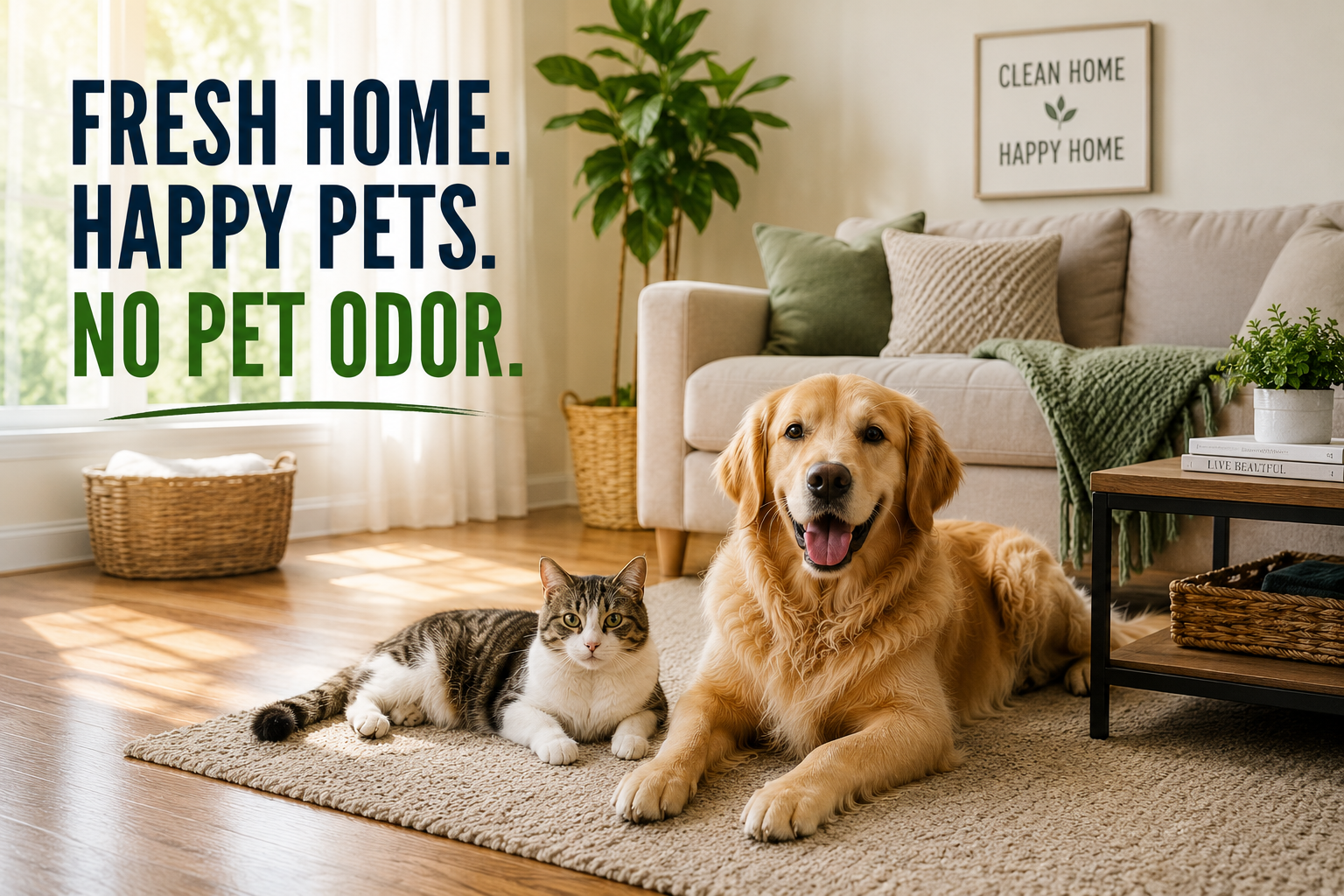
Many homeowners clean the obvious pet areas regularly:
- pet beds,
- litter boxes,
- food bowls,
- and visible accidents.
Yet their homes still smell like pets.
Why?
Because pet odor often hides in places most people completely forget to clean.
Even if your home looks clean, odor particles can continue building up inside:
- fabrics,
- vents,
- furniture,
- corners,
- flooring,
- and hidden surfaces.
Over time, these overlooked areas trap:
- fur,
- oils,
- saliva,
- bacteria,
- dander,
- and moisture.
This creates the lingering “pet smell” many homeowners struggle to eliminate.
The good news is that once hidden odor sources are identified, removing pet smells becomes much easier.
In this guide, you’ll learn:
- The most overlooked sources of pet odor
- Why smells continue even after cleaning
- Which areas trap the most odor particles
- How to clean hidden pet odor safely
- The biggest cleaning mistakes homeowners make
- How airflow affects odor buildup
- And long-term odor prevention strategies
By the end of this article, you’ll know exactly where hidden pet odors come from and how to keep your home smelling truly fresh.

Why Pet Odor Lingers Even After Cleaning
Most pet odors do not stay only on visible surfaces.
Odor particles spread through:
- air circulation,
- moisture,
- fabrics,
- dust,
- and pet movement throughout the home.
As pets walk, sleep, shed, and play, they transfer:
- oils,
- fur,
- saliva,
- dirt,
- and dander
into hidden areas most people rarely clean.
Humidity and poor ventilation can intensify these smells even more.
Hidden Pet Odor Sources Most Homeowners Miss

1. Under Furniture
Many homeowners rarely clean:
- beneath couches,
- beds,
- dressers,
- and chairs.
These areas collect:
- fur,
- dust,
- dander,
- and moisture.

Over time, trapped debris creates stale pet odors.
2. Air Vents and HVAC Systems
Pet hair and dander circulate through:
- vents,
- air ducts,
- filters,
- and HVAC systems.
Dirty filters continuously spread odor particles throughout the house.

Homes with multiple pets often require more frequent filter replacement.
3. Curtains and Fabric Decor
Fabric absorbs pet smells surprisingly fast.
Often-forgotten items include:
- curtains,
- decorative pillows,
- fabric wall hangings,
- and blankets.
These materials trap:
- oils,
- fur,
- and airborne odors.
4. Baseboards and Corners
Pet hair and dander frequently accumulate along:
- wall edges,
- corners,
- behind doors,
- and under cabinets.
These areas are commonly skipped during routine cleaning.
5. Rugs and Rug Pads
Even if rugs appear clean on the surface, odors can remain trapped underneath.
Rug pads often absorb:
- moisture,
- pet accidents,
- and bacteria.
6. Mattress and Upholstered Furniture
Pets sleeping on:
- beds,
- couches,
- and chairs
transfer:
- oils,
- saliva,
- fur,
- and odor particles deeply into fabrics.
7. Pet Collars and Leashes
Many pet owners forget to wash:
- collars,
- harnesses,
- and leashes.
These items absorb:
- oils,
- moisture,
- and outdoor odors quickly.
8. Washing Machines
Pet laundry can leave odor buildup inside the washing machine itself.
Residual:
- fur,
- detergent buildup,
- and moisture
can create musty smells over time.
9. Walls and Doors
Pets often rub against:
- walls,
- door frames,
- corners,
- and furniture edges.
Over time, oils and dirt transfer onto surfaces.
10. Shoes and Entry Areas
Outdoor walks bring:
- dirt,
- moisture,
- bacteria,
- and organic debris
back into the home.
Entry rugs and shoe areas may contribute to odor buildup.
How to Remove Hidden Pet Odor Properly
Vacuum More Thoroughly
Focus on:
- edges,
- under furniture,
- corners,
- vents,
- and fabric surfaces.
Use HEPA-filter vacuums whenever possible.
Wash More Fabric Surfaces
Regularly wash:
- curtains,
- blankets,
- pillow covers,

- pet accessories,
- and removable furniture covers.
Improve Airflow
Fresh airflow helps reduce:
- trapped odor particles,
- humidity,
- and stale air.

Helpful strategies include:
- opening windows,
- using ceiling fans,
- replacing HVAC filters,
- and using air purifiers.
Clean Hidden Areas Regularly
Deep cleaning hidden spaces prevents odor buildup before it becomes severe.

Even monthly cleaning can make a major difference.
Use Enzyme Cleaners for Organic Odors
Enzyme cleaners help break down:
- urine,
- saliva,
- bacteria,
- and organic residue.
They are especially useful for:
- rugs,
- upholstery,
- and accident-prone areas.
Common Mistakes That Make Pet Odor Worse
Avoid these common cleaning mistakes.
Only Cleaning Visible Surfaces
Hidden odor sources often create the strongest smells.
Ignoring Air Filters
Dirty filters continuously recirculate odor particles.
Using Too Much Moisture
Overwetting fabrics or carpets can worsen odor problems.
Masking Odors Instead of Removing Them
Air fresheners only cover smells temporarily.
The odor source still remains.
Waiting Too Long Between Deep Cleanings
Odor particles accumulate gradually over time.
How Humidity Affects Hidden Odors
Humidity intensifies:
- bacteria growth,
- moisture retention,
- and odor strength.
Warm humid environments allow smells to spread faster through:
- fabrics,
- carpets,
- mattresses,
- and upholstery.
Using:
- dehumidifiers,
- air conditioning,
- and proper ventilation
helps significantly.
Best Cleaning Routine for Pet Owners
Consistent routines matter more than occasional deep cleaning.
Helpful habits include:
- vacuuming frequently,
- washing fabrics regularly,
- brushing pets often,
- replacing filters,
- cleaning vents,
- and checking hidden areas monthly.
Small maintenance habits prevent large odor problems later.
Final Thoughts
Hidden pet odor sources are one of the biggest reasons homes continue smelling like pets even after cleaning.
Many odor problems originate from:
- overlooked fabrics,
- trapped fur,
- dirty filters,
- hidden moisture,
- and neglected corners.
The best solution combines:
- regular deep cleaning,
- airflow improvement,
- humidity control,
- fabric maintenance,
- and routine odor prevention.

Instead of masking odors temporarily, focus on finding and removing the hidden odor sources directly.
With consistent maintenance, homes with pets can remain:
- fresh,
- clean,
- comfortable,
- and odor-free year-round.
Quick Summary
- Hidden pet odors often build up under furniture
- Air vents and filters trap dander and smells
- Curtains and rugs absorb pet odors easily
- Mattress and upholstery fabrics hold odor particles
- Humidity makes pet smells stronger
- Vacuum edges and hidden spaces regularly
- Wash pet accessories frequently
- Use HEPA filters and air purifiers
- Clean hidden areas monthly
- Focus on odor removal, not odor masking
Finding hidden odor sources is one of the most effective ways to keep pet-friendly homes smelling fresh long term.