
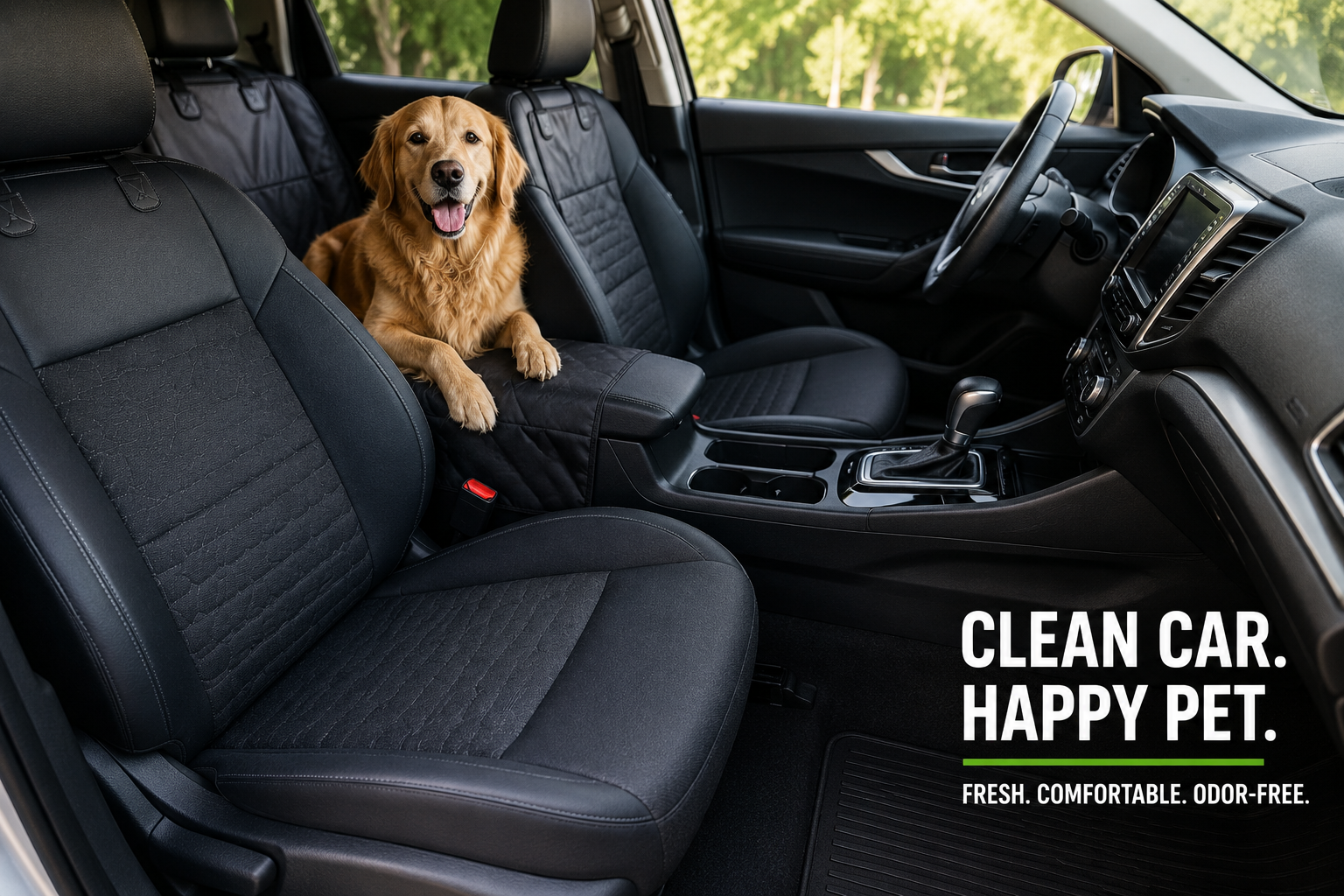
Traveling with pets can be fun and convenient, but it often leaves behind one frustrating problem:
persistent pet odor inside the car.
Dog and cat smells can quickly settle into:
- fabric seats,
- carpets,
- seat belts,
- floor mats,
- air vents,
- and even the car’s air conditioning system.
Many car owners try air fresheners or quick sprays, only to discover that the smell keeps returning days later.
That happens because pet odors usually sink deep into:
- upholstery fibers,
- foam padding,
- trapped pet hair,
- and moisture hidden inside the vehicle.
The good news is that with the right cleaning methods, it’s possible to remove pet odors completely instead of simply masking them temporarily.
In this guide, you’ll learn:
- Why pet odors linger inside cars
- The most common odor sources in vehicles
- How to remove smells from cloth and leather seats
- How to clean car carpets and floor mats properly
- The best odor-removal products for vehicles
- Natural odor removal methods
- How to prevent smells from returning
- Common mistakes that make car odors worse
By the end of this article, you’ll know exactly how to make your car smell clean and fresh again — even after frequent pet travel.

Why Pet Odors Are Stronger Inside Cars
Cars are small enclosed spaces with limited airflow.
This allows pet odors to build up much faster than they do inside larger rooms.
Common odor causes include:
- wet fur,
- saliva,
- dander,
- pet hair,
- accidents,
- body oils,
- and trapped moisture.
Heat also makes odors stronger.
On hot days, upholstery and carpets release trapped smells more intensely.
That’s why many cars smell worse after sitting in the sun.
The Most Common Places Pet Odors Hide in Cars
Pet odors rarely stay on the surface.

They usually settle deep into hidden areas.
Car Seats
Fabric seats absorb:
- oils,
- moisture,
- and pet hair very quickly.
Foam padding underneath the fabric can also trap odors.
Floor Mats and Carpets
Pet paws carry:
- dirt,
- moisture,
- bacteria,
- and outdoor debris.
Carpet fibers hold these particles easily.
Seat Belts
Seat belts absorb:
- pet saliva,
- fur,
- and body oils over time.
Many people forget to clean them.
Trunk and Cargo Areas
Dogs traveling in cargo spaces often leave strong odors behind.
Especially after:
- outdoor activities,
- beach trips,
- or rainy weather.
Air Vents and Cabin Filters
Pet hair and dust may circulate through the vehicle’s ventilation system.
Dirty cabin air filters can spread odors continuously.
How to Remove Pet Odor From Cloth Car Seats
Cloth seats are one of the biggest odor traps inside vehicles.
Step 1: Vacuum Thoroughly
Start by removing:
- pet hair,
- dirt,
- and loose debris.

Use a vacuum with:
- upholstery attachments,
- pet hair brushes,
- and crevice tools.
Focus on:
- seams,
- seat edges,
- under seats,
- and tight corners.
Removing hair first improves deep-cleaning effectiveness.
Step 2: Use Baking Soda
Baking soda helps absorb odors naturally.

How to use it:
- Sprinkle baking soda lightly across fabric seats
- Let it sit for several hours
- Vacuum completely afterward
This works especially well for mild pet odors.
Step 3: Apply Upholstery Cleaner
Use a fabric-safe upholstery cleaner designed for automotive interiors.
Avoid oversaturating the seats.
Too much moisture may:
- trap odors deeper,
- damage foam,
- or create mildew.
Use microfiber towels to remove excess moisture.
Step 4: Use an Enzyme Cleaner for Strong Odors
Enzyme cleaners help break down:
- urine,
- saliva,
- bacteria,
- and organic odor particles.
They are especially useful for:
- pet accidents,
- old smells,
- and deep contamination.
Always follow the product instructions carefully.
How to Remove Pet Odor From Leather Car Seats
Leather requires gentler cleaning methods.
Avoid:
- harsh chemicals,
- bleach,
- or excessive moisture.
Step 1: Vacuum Carefully
Remove pet hair from:
- seams,
- stitching,
- and creases.
Step 2: Use Leather-Safe Cleaner
Choose products specifically labeled:
- leather-safe,
- automotive-safe,
- and non-drying.
Step 3: Condition the Leather
Leather conditioners help:
- prevent cracking,
- restore moisture,
- and reduce odor absorption.
Well-maintained leather absorbs fewer smells over time.
How to Clean Car Carpets and Floor Mats
Floor mats often trap the strongest odors.

Remove Floor Mats Completely
Take mats outside before cleaning.
Shake off:
- hair,
- dirt,
- and debris.
Vacuum Deeply
Vacuum:
- carpets,
- under seats,
- trunk areas,
- and mat edges.
Shampoo the Carpets
Carpet cleaners help remove:
- embedded dirt,
- bacteria,
- and odor-causing residue.
Portable extractors work especially well.
Dry Everything Completely
Moisture left behind may create:
- mildew,
- mold,
- and stronger odors.
Always allow carpets and mats to dry fully before reinstalling them.
How to Remove Pet Odor From Car Air Vents
Sometimes the odor source is hidden inside the ventilation system.
Replace the Cabin Air Filter
Dirty cabin filters trap:
- pet hair,
- dust,
- dander,
- and odor particles.

Replacing the filter often improves odor immediately.
Run Ventilation With Windows Open
Fresh airflow helps clear trapped smells.
Use Automotive Vent Cleaning Sprays
Some sprays are designed specifically for:
- HVAC systems,
- vents,
- and cabin odor removal.
Natural Pet Odor Solutions for Cars
Many car owners prefer natural cleaning methods.
Baking Soda
Helps absorb mild odors safely.
White Vinegar Solution
A diluted vinegar solution may help clean:
- removable mats,
- hard surfaces,
- and cargo liners.
Always test surfaces first.
Activated Charcoal Bags
Charcoal absorbs odors continuously.
These bags work well inside:
- trunks,
- small cars,
- and enclosed interiors.
Fresh Air and Sunlight
Sunlight helps reduce moisture and bacteria buildup.
Ventilating the vehicle regularly can make a major difference.
Best Products for Pet Odor Removal in Cars
The right tools improve cleaning results significantly.
Pet Hair Removal Brushes
Helpful for:
- fabric seats,
- carpets,
- and hard-to-vacuum fur.
Portable Upholstery Extractors
Excellent for:
- deep stains,
- odors,
- and heavy buildup.
Enzyme-Based Odor Removers
Best for:
- urine,
- accidents,
- and organic odor particles.
Automotive Upholstery Cleaners
Designed specifically for:
- car fabrics,
- foam,
- and automotive materials.
Cabin Air Filters
Improving airflow often reduces lingering smells.
How to Prevent Pet Odors From Returning
Prevention is easier than deep cleaning later.
Use Seat Covers
Washable seat covers protect upholstery from:
- fur,
- moisture,
- and oils.

Dry Wet Pets Before Car Rides
Wet fur creates stronger odors quickly.
Vacuum Frequently
Regular vacuuming prevents odor buildup.
Clean Accidents Immediately
Fast cleanup prevents deep absorption.
Improve Airflow
Open windows when possible after trips.
Wash Pet Blankets Often
Travel blankets trap odors very quickly.
Common Pet Odor Mistakes in Cars
Avoid these common mistakes.
Using Strong Air Fresheners Only
Air fresheners often mask smells temporarily instead of removing the source.
Oversaturating Seats With Cleaner
Too much moisture may worsen odors.
Ignoring Cabin Air Filters
Dirty filters continuously circulate odors.
Leaving Wet Mats Inside the Car
Moisture can create mildew rapidly.
Skipping Deep Cleaning
Surface cleaning alone rarely removes embedded pet smells.
Final Thoughts
Pet odors inside vehicles are usually caused by:
- trapped hair,
- moisture,
- bacteria,
- oils,
- and hidden residue.
The best long-term solution combines:
- regular vacuuming,
- deep upholstery cleaning,
- odor-neutralizing products,
- moisture control,
- and ventilation.
Instead of covering odors temporarily, focus on removing the source completely.
With the right cleaning routine, even heavily used pet-friendly vehicles can smell fresh, clean, and comfortable again.
Quick Summary
- Vacuum pet hair frequently
- Use baking soda for mild odors
- Deep clean cloth seats carefully
- Use leather-safe products on leather interiors
- Replace cabin air filters
- Dry carpets and mats completely
- Use enzyme cleaners for strong odors
- Improve airflow and ventilation
- Clean accidents immediately
- Use washable seat covers
With consistent maintenance and the right cleaning methods, pet odors can be removed successfully from almost any vehicle interior.