
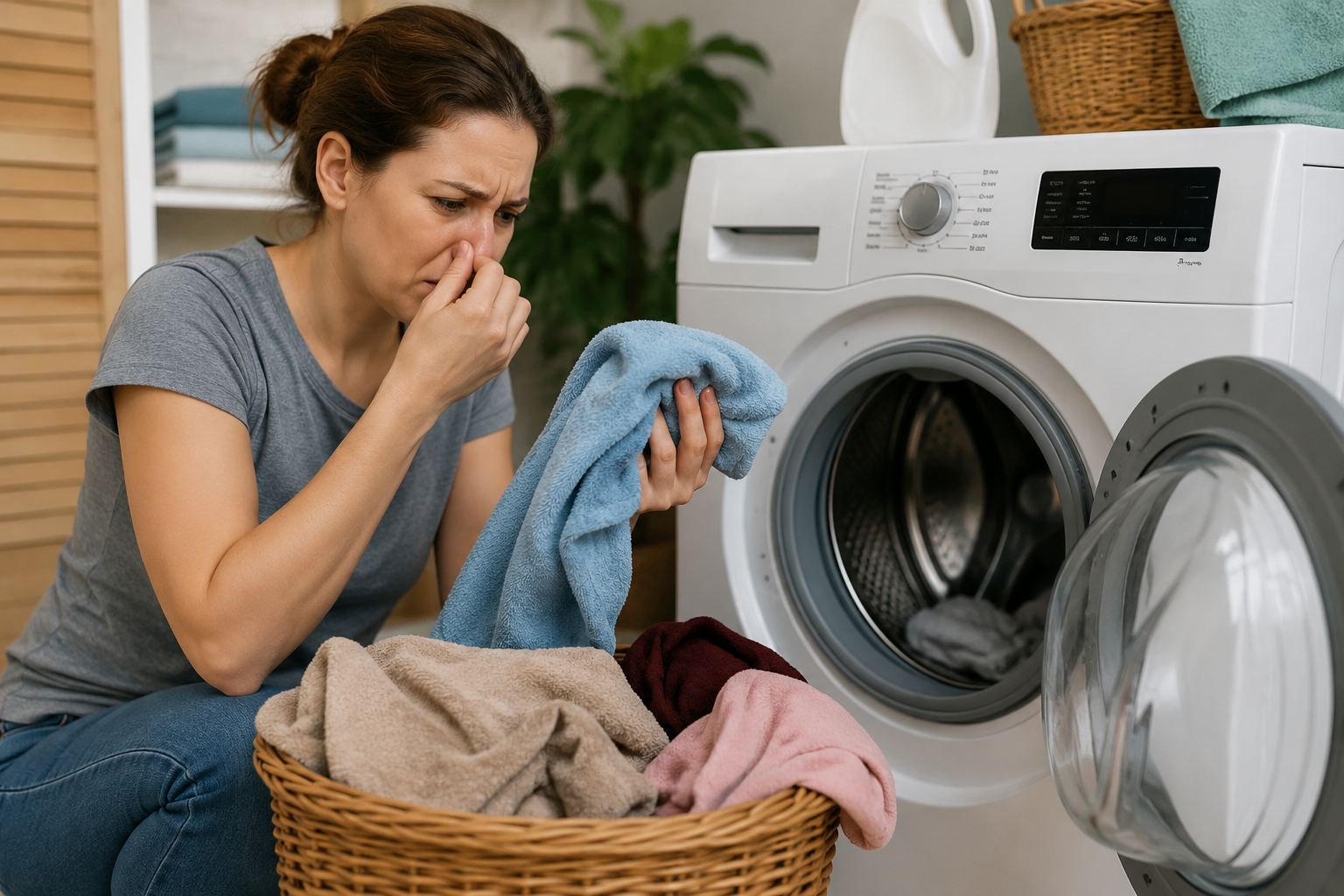

Few laundry problems are as strange and frustrating as pulling freshly washed clothes out of the washing machine only to notice a strong “wet dog” smell. Even clean towels, blankets, or shirts can sometimes develop a damp animal-like odor after washing or drying.
This issue is surprisingly common in many homes, especially in humid environments or households with pets, front-load washers, and poor laundry ventilation.
The good news is that this smell usually has a specific cause — and once you identify it, the problem can often be fixed without replacing your washing machine or throwing away clothes.
In this guide, you’ll learn:
- Why laundry sometimes smells like wet dog
- What causes this odor in clothes and washing machines
- Why certain fabrics trap smells more easily
- How to remove the odor properly
- Which laundry habits make the problem worse
- How to prevent the smell from returning
By the end of this article, you’ll understand exactly what causes this unpleasant odor and how to keep your laundry smelling fresh long-term.
Why Does Laundry Smell Like Wet Dog?

That “wet dog” smell is usually caused by a combination of:
- trapped moisture,
- bacteria,
- detergent buildup,
- mildew,
- body oils,
- or contaminated washing machine components.
When fabrics stay damp for too long, bacteria begin breaking down organic material trapped in clothing fibers. This creates odors that many people describe as:
- wet dog smell,
- sour laundry smell,
- damp towel odor,
- or musty fabric odor.
The smell may become stronger:
- immediately after washing,
- during drying,
- or when clothes warm up while being worn.
Common Causes of Wet Dog Smell in Laundry
Several issues can contribute to this problem.
1. Mold and Bacteria Inside the Washing Machine

One of the most common causes is hidden mold growth inside the washer.
Front-load machines are especially prone to moisture buildup around:
- rubber door seals,
- detergent drawers,
- drain filters,
- and internal hoses.
Over time, bacteria and mildew create odors that transfer directly to clothes.
Signs Your Washer May Be the Problem
- Musty smell when opening the washer
- Black spots around rubber seals
- Smell becomes worse after washing
- Clean clothes smell bad immediately
- Washer stays damp for long periods
2. Wet Laundry Sitting Too Long
Leaving clothes inside the washer after the cycle ends allows bacteria to multiply rapidly.
Even a few hours can create strong odors in:
- towels,
- gym clothes,
- bedding,
- pet blankets,
- and synthetic fabrics.
Warm, humid climates make this problem even worse.
3. Detergent Buildup in Fabrics
Many people use more detergent than necessary.
Excess detergent leaves residue trapped inside fibers, which:
- holds bacteria,
- traps body oils,
- collects moisture,
- and creates unpleasant smells over time.
High-efficiency (HE) washers are especially sensitive to soap buildup.
Common Signs
- Clothes feel stiff or sticky
- Strong fragrance mixed with musty odor
- Poor rinsing performance
- White residue on dark fabrics
4. Damp Towels and Thick Fabrics
Certain materials absorb and retain moisture much longer than others.
Common problem fabrics include:
- towels,
- fleece blankets,
- pet bedding,
- hoodies,
- comforters,
- and athletic wear.
If these items do not dry fully, bacteria continue growing inside the fabric.
5. Pet Hair and Oils on Laundry
Homes with dogs and cats often experience stronger laundry odors because pet hair, saliva, and skin oils transfer onto fabrics.
Even if clothes appear clean, microscopic residue may remain trapped inside washing machines and fabric fibers.
This becomes especially noticeable when fabrics become damp again.
Why the Smell Gets Worse After Drying
Some odors only appear after clothes come out of the dryer.
Heat can reactivate trapped bacteria and oils inside fabrics, making the smell stronger once laundry warms up.
This is why:
- towels smell fine wet but bad when dry,
- shirts smell okay until worn,
- blankets develop odor after heating.
The heat itself is not the cause — it simply reveals the hidden buildup inside fibers.
How to Remove Wet Dog Smell From Laundry
Fortunately, several cleaning methods can help eliminate stubborn odors.
Step 1: Clean the Washing Machine
Before rewashing clothes, clean the machine itself thoroughly.
Areas to Clean
- Rubber door seals
- Detergent drawer
- Drain filter
- Drum interior
Helpful Cleaning Products
- Washing machine cleaner tablets
- White vinegar
- Baking soda
- Oxygen bleach
Run an empty hot-water cycle after cleaning.
Step 2: Wash Clothes Again Properly
Rewash affected clothes using:
- smaller detergent amounts,
- warm or hot water when safe,
- extra rinse cycles.
Avoid overloading the washer.
Proper water circulation helps remove trapped residue more effectively.
Step 3: Use White Vinegar Carefully

White vinegar helps break down odor-causing residue naturally.
How to Use It
Add:
- 1 cup of white vinegar during the rinse cycle.
This may help:
- neutralize odors,
- soften fabrics,
- improve rinsing.
Important:
Never mix vinegar with bleach.
Step 4: Add Baking Soda
Baking soda can help absorb unpleasant smells.
Instructions
Add:
- ½ cup baking soda directly into the drum.
This is especially helpful for:
- towels,
- pet blankets,
- gym clothes,
- heavily used fabrics.
Step 5: Dry Laundry Completely

Partially damp laundry often develops odor again quickly.
Better Drying Habits
- Dry clothes immediately after washing
- Avoid leaving damp loads in baskets
- Improve airflow indoors
- Use fans or dehumidifiers if necessary
Completely dry fabrics before folding or storing them.
Melhores hábitos para evitar o odor de cachorro molhado

Consistent habits are the best long-term solution.
Leave the Washer Door Open
Airflow prevents trapped humidity inside the machine.
Avoid Excess Detergent
Modern washers need much less detergent than most people assume.
More soap often creates more buildup.
Wash Towels Separately
Towels collect:
- body oils,
- dead skin,
- moisture,
- bacteria.
Washing them separately may improve odor control.
Clean the Washer Monthly

Routine maintenance prevents hidden mold and bacteria buildup.
Improve Laundry Room Ventilation
Poor airflow allows moisture to accumulate around the washer and drying areas.
Fans, ventilation, and dehumidifiers can help significantly.
Best Products That Help Reduce Laundry Odors
Many homeowners use products like:
- Washing machine cleaning tablets
- HE detergents
- Odor-removing laundry additives
- Moisture absorbers
- Dehumidifiers
- Ventilated laundry baskets
Quality laundry products often improve both cleanliness and appliance performance.
Common Mistakes That Make Laundry Smells Worse
Avoid these common habits:
Overloading the Washer
Limits proper rinsing and airflow.
Leaving Wet Clothes Overnight
Creates rapid bacterial growth.
Using Too Much Fabric Softener
Traps oils and residue inside fibers.
Ignoring Washer Maintenance
Hidden mold spreads over time.
Drying Clothes Slowly Indoors
Allows moisture to remain trapped.
Frequently Asked Questions
Why do my towels smell like wet dog after washing?
Usually because of trapped moisture, bacteria, or detergent buildup inside thick fabric fibers.
Can washing machines cause wet dog smells?
Yes. Mold, mildew, and dirty washer components often transfer odors to clothes.
Does vinegar remove wet dog smell from laundry?
It can help neutralize odor-causing residue when used occasionally during rinse cycles.
Why do clothes smell worse after drying?
Heat reactivates trapped bacteria and oils hidden inside fabrics.
Are front-load washers more likely to smell?
Yes. They trap moisture more easily around rubber seals and internal components.
Final Thoughts

Laundry that smells like wet dog is usually caused by moisture, bacteria, detergent buildup, or hidden mold somewhere in the washing process.
Fortunately, most odor problems can be solved with:
- regular washer cleaning,
- better drying habits,
- improved ventilation,
- and proper detergent use.
The key is treating the source of the smell instead of simply covering it with stronger fragrances.
With consistent maintenance and a few simple changes, your clothes, towels, and laundry room can stay fresh, clean, and odor-free year-round.