
Living in a humid climate can make laundry much more difficult than most people realize. Even freshly washed clothes can quickly develop musty odors, damp smells, or mildew if moisture becomes trapped in the fabric.
This problem is especially common in apartments, coastal cities, tropical regions, and homes with limited airflow. In high-humidity environments, clothes take longer to dry, washing machines stay damp longer, and mold-causing moisture builds up much faster.
The good news is that you do not need expensive equipment or harsh chemicals to keep clothes smelling fresh. With the right laundry habits, drying methods, and moisture control strategies, it is possible to prevent most odor problems before they start.
In this guide, you’ll learn:
- Why humidity causes clothes to smell bad
- The biggest laundry mistakes in humid climates
- How to dry clothes properly indoors
- Best ways to reduce moisture buildup
- How to prevent mildew smells permanently
- Useful products and tools for humid environments
By the end of this article, you’ll know exactly how to keep your clothes fresh, clean, and odor-free — even during the most humid months of the year.
Why Clothes Smell Worse in Humid Climates
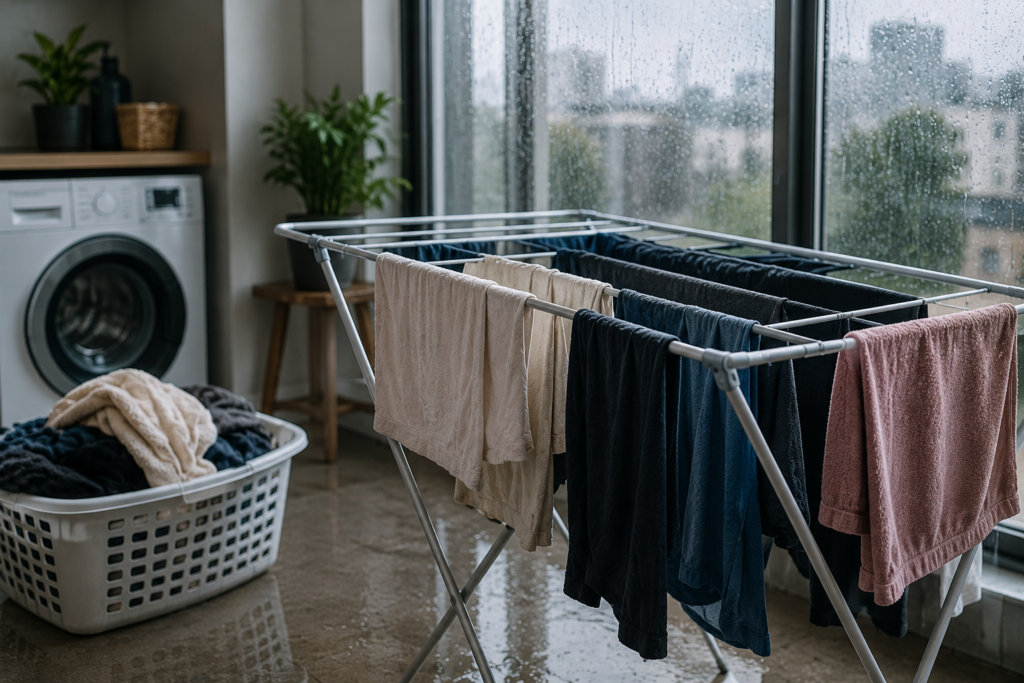
Humidity slows down evaporation.
When moisture remains trapped inside fabrics for too long, bacteria and mildew begin to grow. These microorganisms create the sour, musty odors many people notice in towels, shirts, bedding, and workout clothes.
In humid environments, several factors combine to make the problem worse:
- Slow indoor drying
- Poor airflow
- Damp laundry rooms
- Closed windows
- Overcrowded closets
- Moisture trapped in washing machines
Even clean clothes can begin smelling unpleasant if they are stored before drying completely.
Common Signs Humidity Is Affecting Your Laundry
You may have a humidity-related laundry problem if you notice:
- Clothes smell damp after drying
- Towels develop sour odors quickly
- Closets smell musty
- Laundry takes over 24 hours to dry indoors
- Mold appears near laundry areas
- Clothes smell fine at first but worsen later
Many people mistakenly blame detergent when humidity is actually the main cause.
1. Dry Clothes as Quickly as Possible
The longer fabrics stay damp, the more time bacteria have to multiply.
One of the most important steps in humid climates is reducing drying time.
Better Drying Habits
- Hang clothes immediately after washing
- Separate thick fabrics for better airflow
- Avoid leaving laundry inside the washer
- Use wider spacing on drying racks
- Dry clothes near windows or fans
Good airflow is often more important than heat alone.
2. Improve Air Circulation Indoors
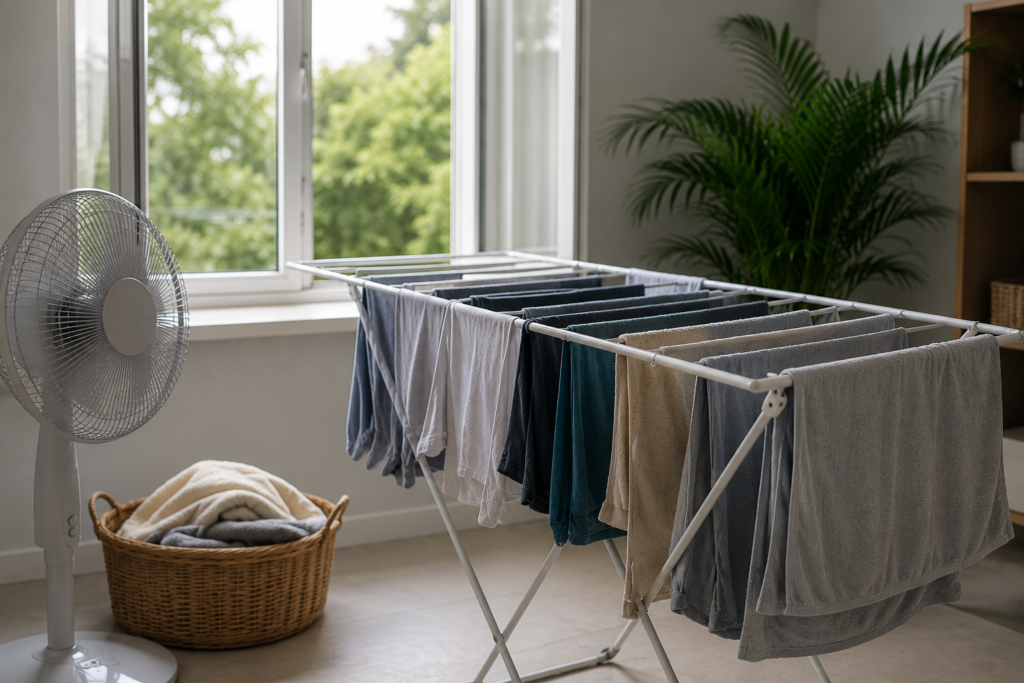
Poor airflow is one of the biggest causes of musty-smelling clothes.
Even if clothes appear dry on the outside, moisture can remain trapped deep inside fabric fibers.
Ways to Improve Airflow
Use Fans
Fans help:
- move humid air,
- speed up evaporation,
- reduce mildew growth.
Open Windows When Possible
Natural ventilation improves moisture removal significantly.
Avoid Overcrowded Drying Areas
Too many clothes hanging together trap humidity between fabrics.
3. Use a Dehumidifier in Damp Rooms
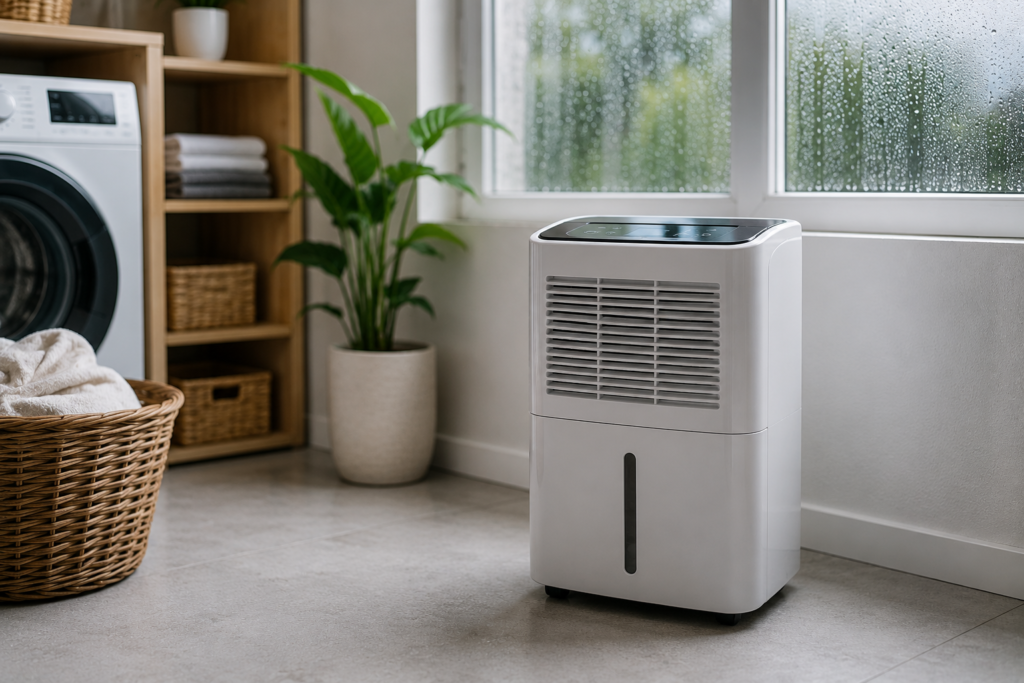
In very humid regions, airflow alone may not solve the problem.
Dehumidifiers remove excess moisture from the air and can dramatically improve indoor drying conditions.
Benefits of Dehumidifiers
They help:
- reduce mold growth,
- speed up drying,
- lower musty odors,
- protect closets and fabrics.
Small portable dehumidifiers are especially useful in:
- apartments,
- laundry rooms,
- bathrooms,
- basements.
4. Avoid Storing Clothes Before They Are Fully Dry
This is one of the most common mistakes.
Even slight moisture trapped inside clothing can create odors after storage.
Signs Clothes Are Still Damp
- Cool feeling fabric
- Slightly heavy texture
- Wrinkles that feel moist
- Smell becomes worse inside closets
Before folding laundry:
- check thicker areas,
- sleeves,
- waistbands,
- towel corners.
5. Keep Closets Dry and Ventilated
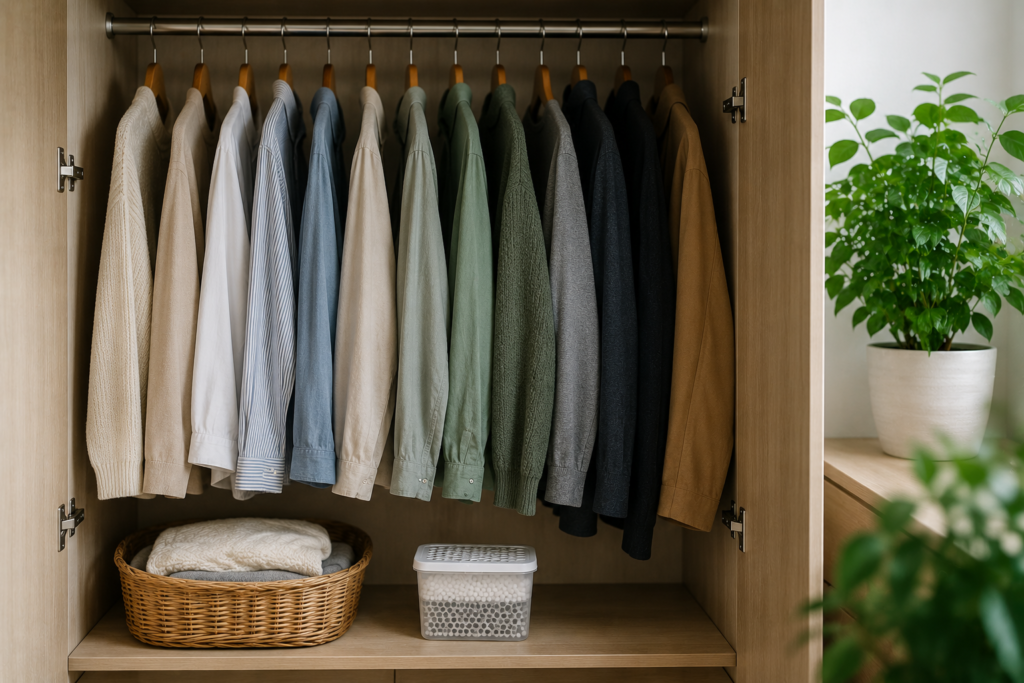
Closets often trap humidity, especially in homes without strong air circulation.
This creates an ideal environment for mildew smells.
Helpful Closet Tips
- Leave space between hanging clothes
- Avoid overstuffed wardrobes
- Open closet doors occasionally
- Use moisture absorbers if necessary
- Avoid storing damp shoes or towels nearby
Closet airflow matters more than many people realize.
6. Wash Towels and Bedding More Frequently
Humid climates increase bacterial growth inside fabrics that absorb moisture regularly.
This includes:
- towels,
- bedsheets,
- pillowcases,
- bath mats.
Recommended Washing Frequency
Towels
Every 3–4 uses
Bedding
At least once per week
Gym Clothes
After every workout
Frequent washing helps prevent odor buildup before it becomes severe.
7. Clean Your Washing Machine Regularly
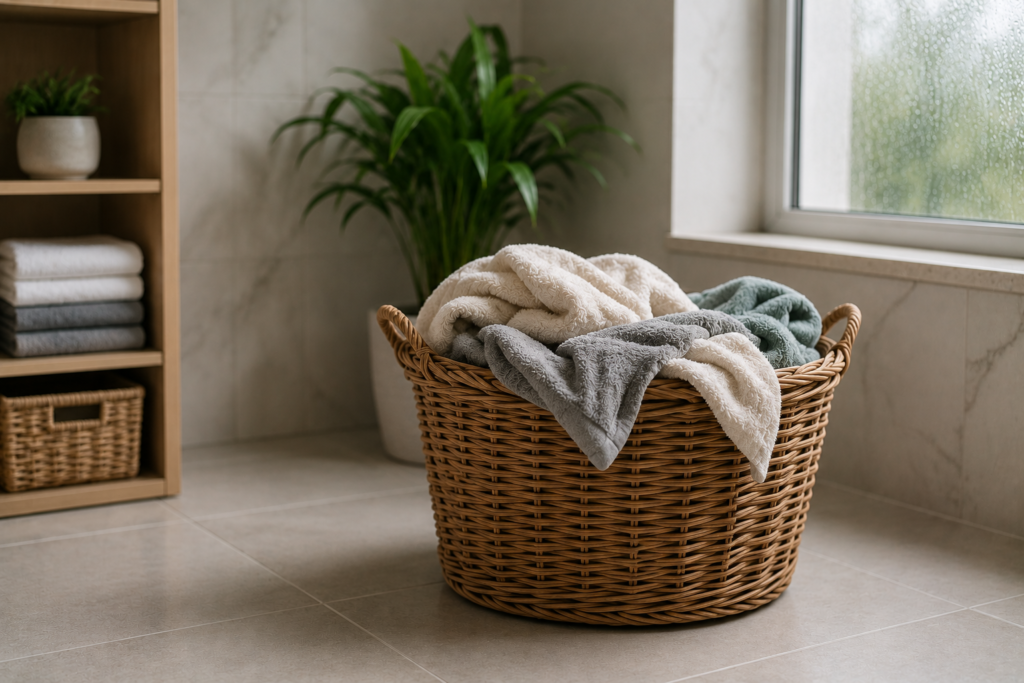
Humidity affects washing machines too.
Front-load washers especially trap moisture around:
- rubber seals,
- detergent drawers,
- drain filters.
If the machine smells musty, clean clothes may absorb the odor immediately during washing.
Basic Washer Maintenance
Monthly Cleaning Cycle
Run an empty hot cycle using:
- washing machine cleaner,
- white vinegar,
- baking soda.
Keep the Door Open
Allow the drum to dry completely between washes.
8. Use the Right Amount of Detergent
Excess detergent leaves residue inside fabrics.
In humid climates, this residue traps moisture and bacteria more easily.
Better Detergent Habits
- Follow label measurements carefully
- Avoid overloading the washer
- Use HE detergent in HE machines
- Run occasional extra rinse cycles
Clean-rinsing laundry usually smells fresher longer.
Best Laundry Products for Humid Climates
Certain tools can make laundry care much easier in high-humidity environments.
Dehumidifiers
Useful for:
- laundry rooms,
- closets,
- small apartments.
Moisture Absorbers
Help reduce damp smells inside:
- wardrobes,
- storage areas,
- drawers.
Drying Racks With Airflow Design
Allow better spacing between fabrics.
Washing Machine Cleaner Tablets
Help prevent hidden mold and residue buildup.
Odor-Removing Laundry Additives
Can help eliminate stubborn mildew smells from towels and synthetic fabrics.
Natural Ways to Keep Clothes Smelling Fresh
Many simple household ingredients help reduce odors naturally.
White Vinegar
Helps:
- neutralize smells,
- break down residue,
- soften fabrics naturally.
Add a small amount during rinse cycles occasionally.
Baking Soda
Useful for:
- absorbing odors,
- improving detergent performance,
- reducing musty smells.
Lemon Juice
Can help freshen certain fabrics naturally and improve scent.
Always test delicate fabrics first.
Common Laundry Mistakes in Humid Climates
Avoid these habits:
Leaving Laundry in the Washer
Even a few extra hours can create odors.
Drying Clothes in Closed Rooms
Poor ventilation slows evaporation.
Overcrowding Drying Racks
Air cannot circulate properly.
Ignoring Small Musty Smells
Minor odors often become larger mold problems later.
Storing Damp Laundry
This is one of the fastest ways to create mildew smells.
How to Remove Musty Smells From Already Damp Clothes
If clothes already smell bad:
Step 1
Wash them again quickly.
Step 2
Add:
- white vinegar,
- baking soda,
or - odor-removing laundry booster.
Step 3
Dry completely with strong airflow.
Sometimes one proper wash-and-dry cycle solves the issue completely.
Frequently Asked Questions
Why do clothes smell musty in humid weather?
Because moisture remains trapped in fabric longer, allowing bacteria and mildew to grow.
Is indoor drying bad in humid climates?
Not necessarily, but proper airflow is essential.
Are dehumidifiers worth it for laundry rooms?
Yes. They can significantly reduce moisture and speed up drying.
Why do clothes smell fine at first but later smell bad?
Hidden moisture and bacteria may remain trapped inside the fabric.
Does sunlight help remove odors?
Yes. Sunlight and UV exposure can help reduce bacteria naturally.
Final Thoughts
Keeping clothes fresh in humid climates can feel difficult, but most odor problems come from trapped moisture, poor airflow, and slow drying habits — not from the clothes themselves.
Simple improvements like:
- increasing ventilation,
- drying clothes faster,
- cleaning the washing machine regularly,
- reducing indoor humidity,
- and storing clothes properly
can make a major difference.
When moisture is controlled correctly, clothes stay fresher, closets smell cleaner, and laundry becomes much easier to manage year-round.
With the right habits, even homes in very humid climates can maintain clean, fresh-smelling laundry consistently.