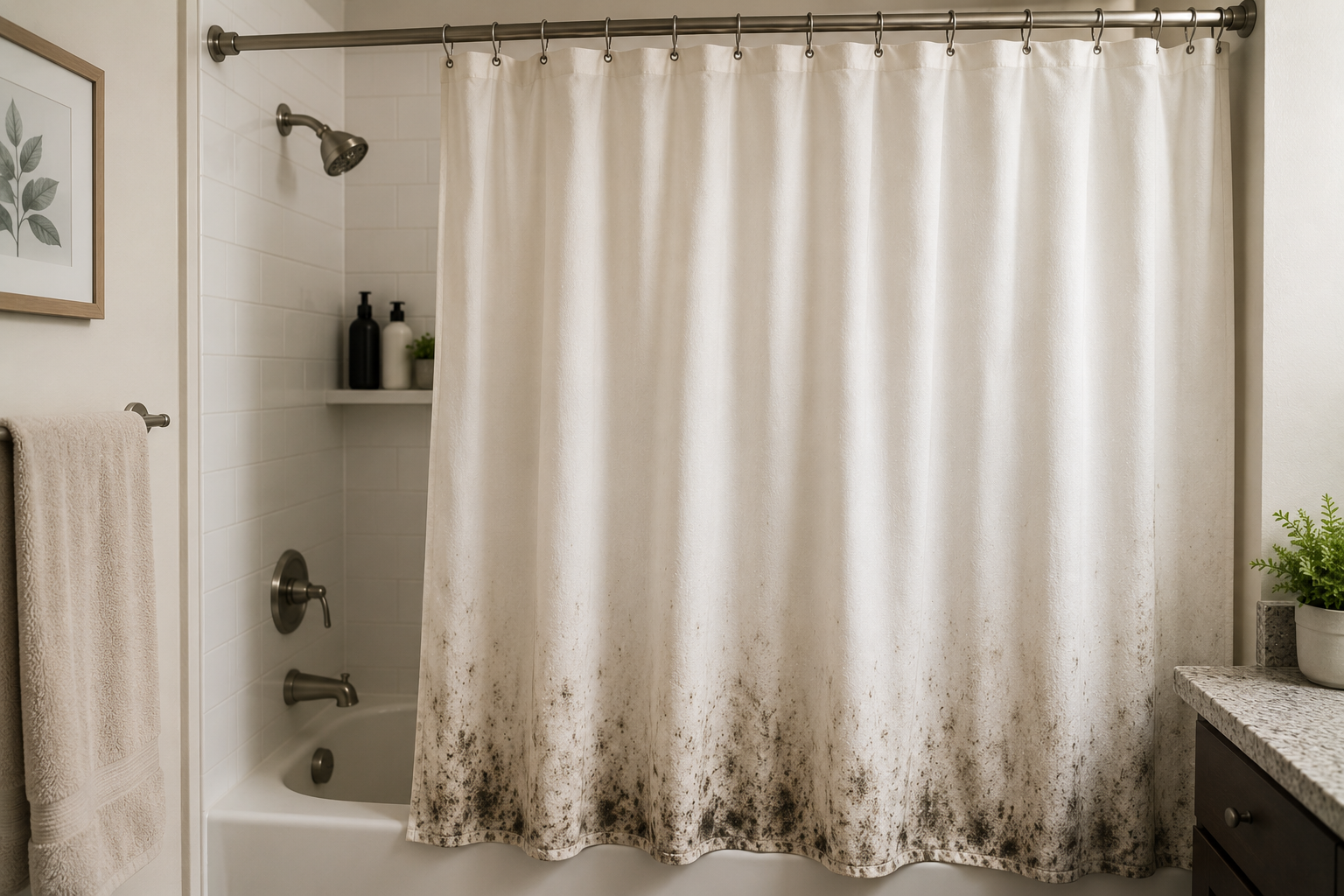
Shower curtain mold is one of the most common bathroom problems in homes and apartments. Many people notice black spots, pink residue, mildew smells, or slimy buildup forming along the bottom of shower curtains and liners — even when the bathroom appears clean overall.
Because shower curtains are exposed to constant moisture, soap residue, humidity, and poor airflow, they become ideal surfaces for mold and mildew growth.
Unfortunately, many homeowners only clean visible mold while ignoring the moisture habits that cause the problem in the first place.
The good news is that shower curtain mold is usually preventable with simple cleaning routines, better ventilation, and a few smart bathroom habits.
In this guide, you’ll learn:
- Why shower curtain mold develops
- The most common hidden causes
- How to clean mold safely from shower curtains
- Which materials resist mold better
- How to stop mildew smells permanently
- Long-term prevention tips that actually work
By the end of this article, you’ll know exactly how to keep your shower curtain cleaner, fresher, and mold-free year-round.
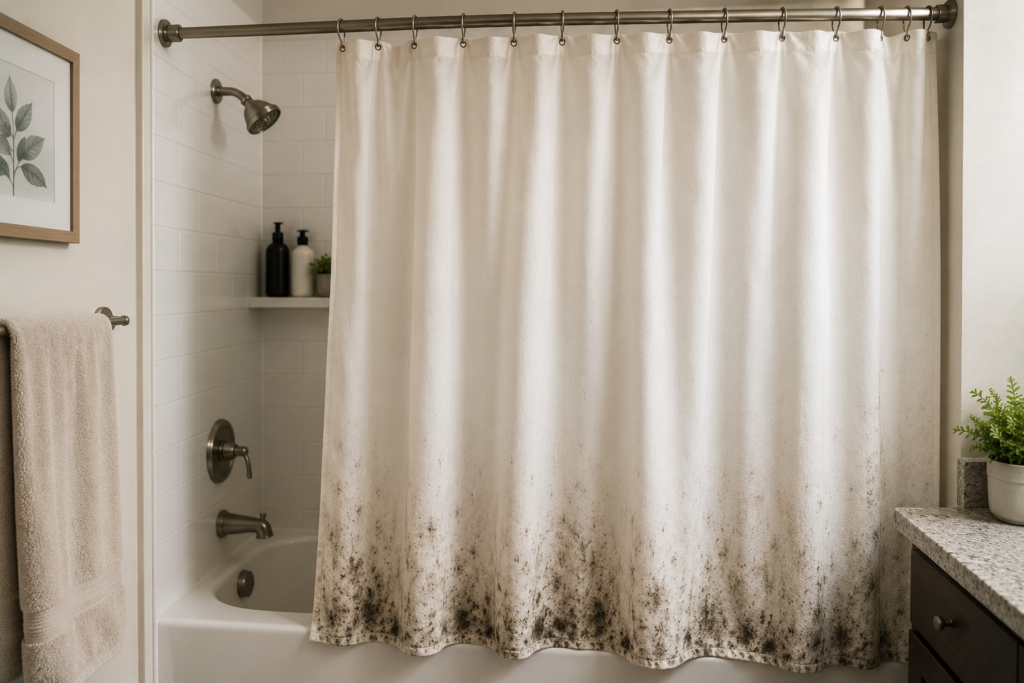
Why Does Mold Grow on Shower Curtains?
Shower curtains stay wet for long periods after bathing.
This constant moisture allows:
- mold,
- mildew,
- bacteria,
- soap scum,
- and biofilm buildup
to develop over time.
The lower portion of the curtain usually becomes the worst area because water collects there continuously.
Bathrooms with poor ventilation experience even faster mold growth.
Common Signs of Shower Curtain Mold
Shower curtain mold problems often begin gradually.
Common warning signs include:
- black or dark spots,
- pink slime buildup,
- musty odors,
- slimy curtain texture,
- discoloration near folds,
- mildew around the curtain hem.
In severe cases, mold may spread onto nearby walls, tubs, or grout.
1. Poor Bathroom Ventilation Is a Major Cause
Bathrooms that trap steam and humidity create the perfect conditions for mildew growth.
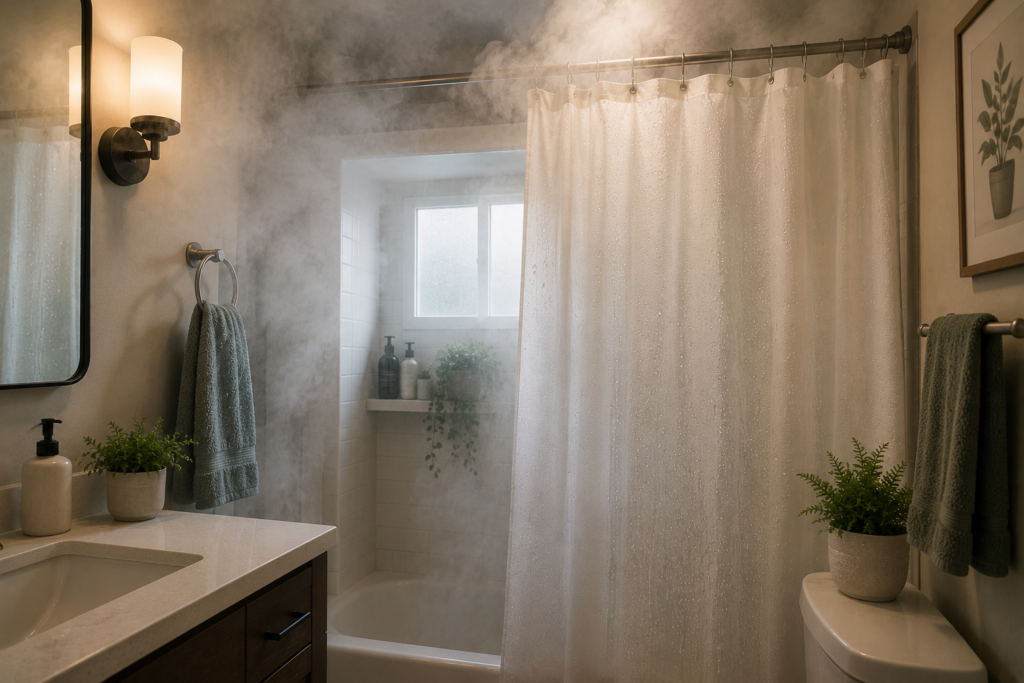
Without proper airflow:
- curtains stay wet longer,
- moisture cannot evaporate properly,
- mold spores multiply faster.
Small bathrooms without windows are especially vulnerable.
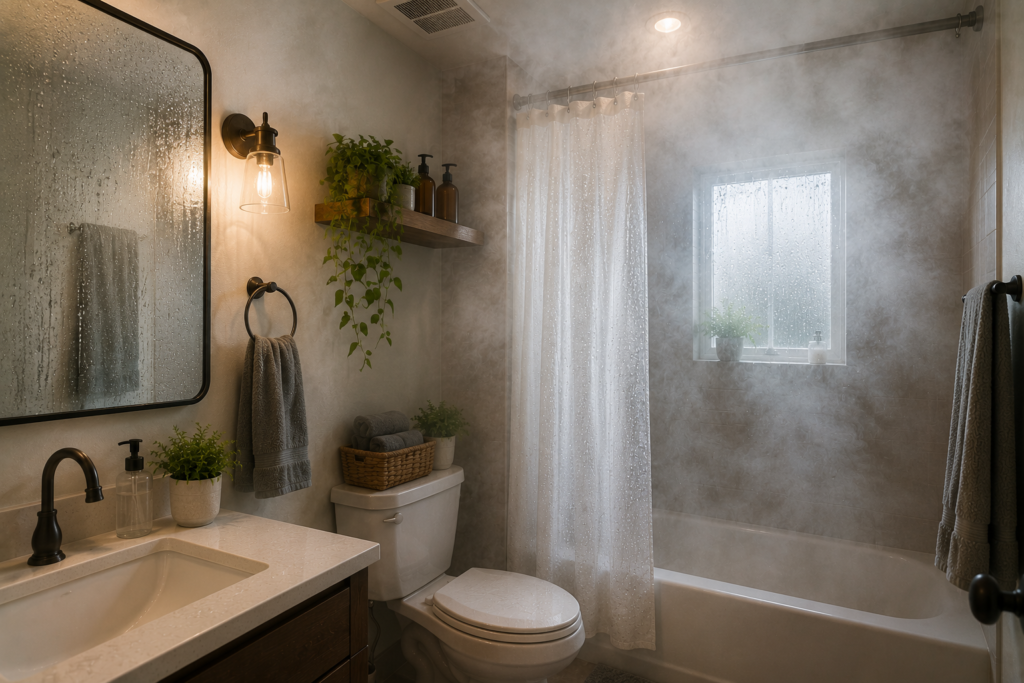
Signs Your Bathroom Has Excess Moisture
- Mirrors stay foggy long after showers
- Damp smells remain in the bathroom
- Towels dry slowly
- Condensation appears frequently
- Mold returns quickly after cleaning
If the bathroom remains humid for hours, the shower curtain will likely stay damp too.
2. Soap Scum and Body Oils Feed Mold
Many people assume mold only needs moisture.
However, soap residue and body oils also provide nutrients that mildew feeds on.
Over time, shower curtains collect:
- shampoo residue,
- conditioner buildup,
- body oils,
- dead skin cells,
- hard water minerals.
This buildup creates an ideal surface for mold growth.
3. Folding the Curtain Traps Moisture
One of the most common mistakes is leaving the shower curtain bunched together after bathing.
When the folds stay compressed:
- moisture becomes trapped,
- airflow decreases,
- mildew develops much faster.
Better Habit
Spread the curtain open fully after every shower.
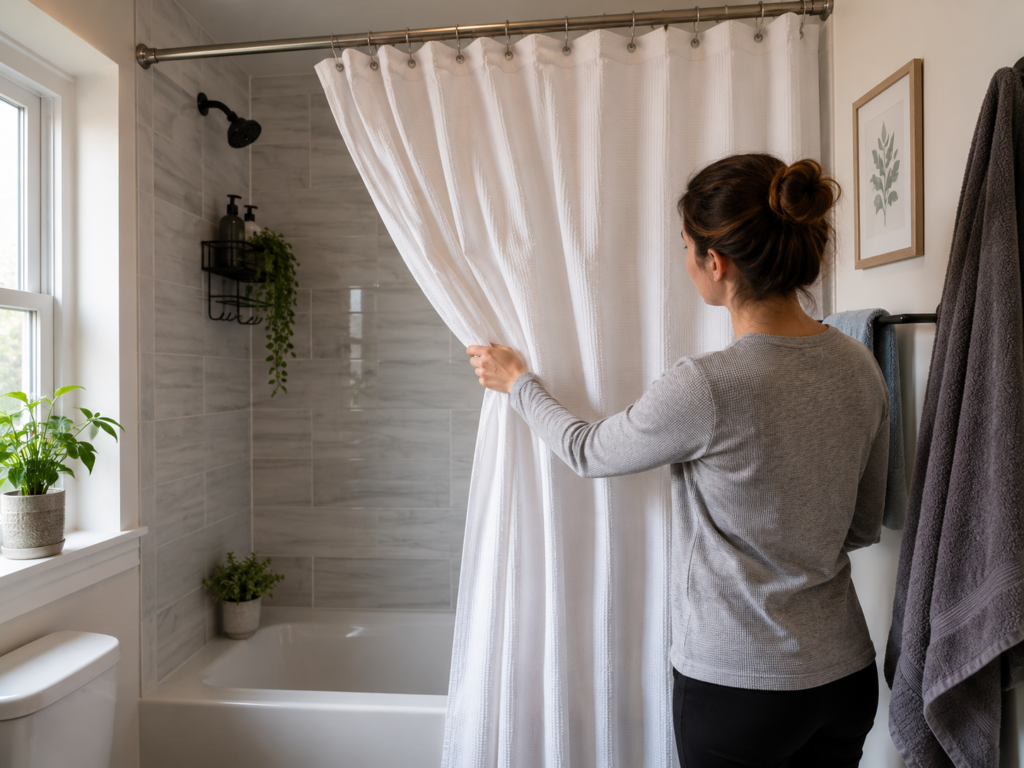
This allows faster drying and improves airflow significantly.
4. Fabric Curtains Hold More Moisture
Fabric shower curtains often absorb more water than vinyl or plastic liners.
Without proper drying, fabric materials may develop:
- mildew smells,
- discoloration,
- mold stains,
- bacteria buildup.
Using a washable liner may help reduce long-term moisture problems.
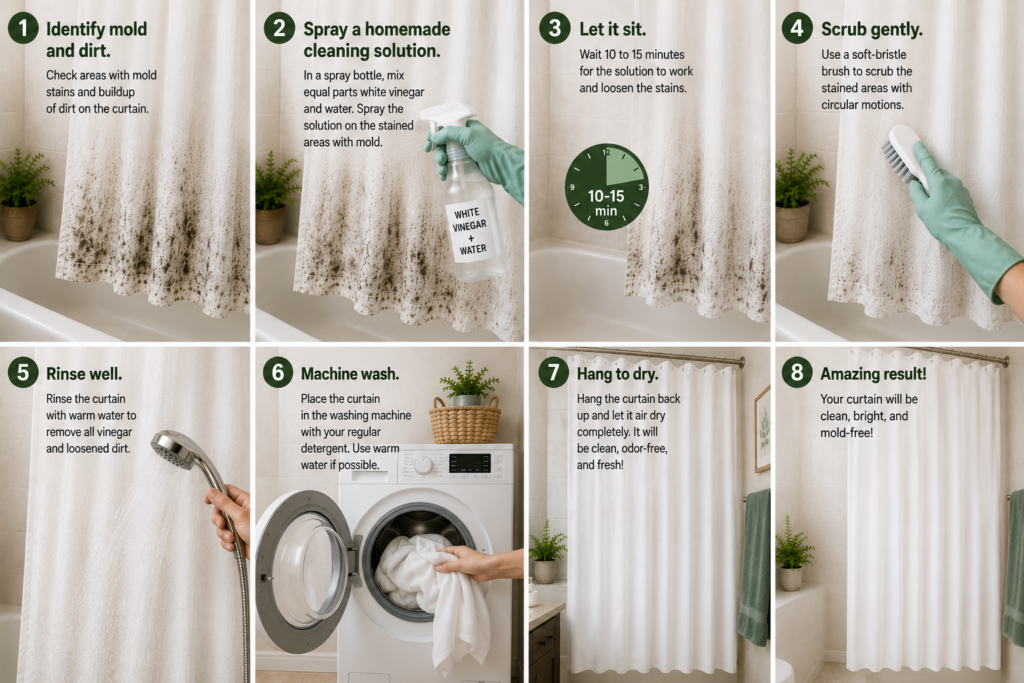
How to Clean Mold From Shower Curtains Safely
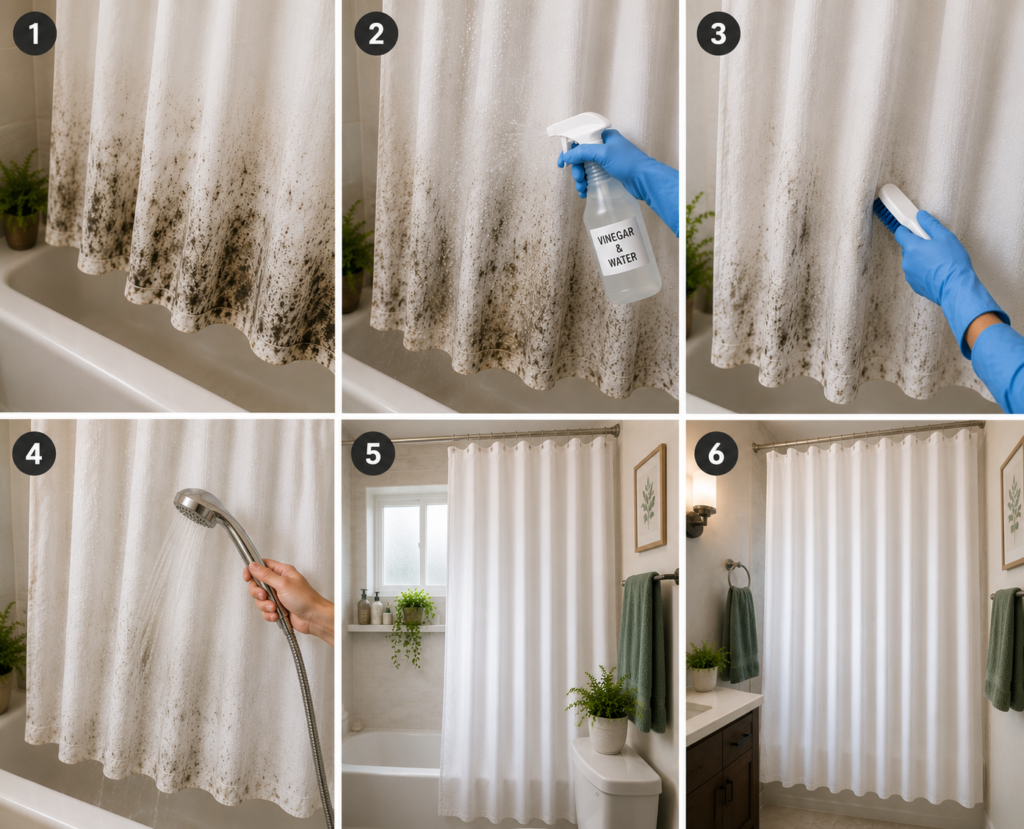
Cleaning methods depend on the curtain material and the severity of mold buildup.
Method 1: Washing Machine Cleaning
Many shower curtains and liners can be machine washed.
Helpful Cleaning Ingredients
- mild detergent,
- white vinegar,
- baking soda,
- oxygen bleach.
Washing Tips
- Use warm water if safe for the material
- Wash with towels to help scrub the surface
- Avoid high heat drying unless recommended
Always check manufacturer labels first.
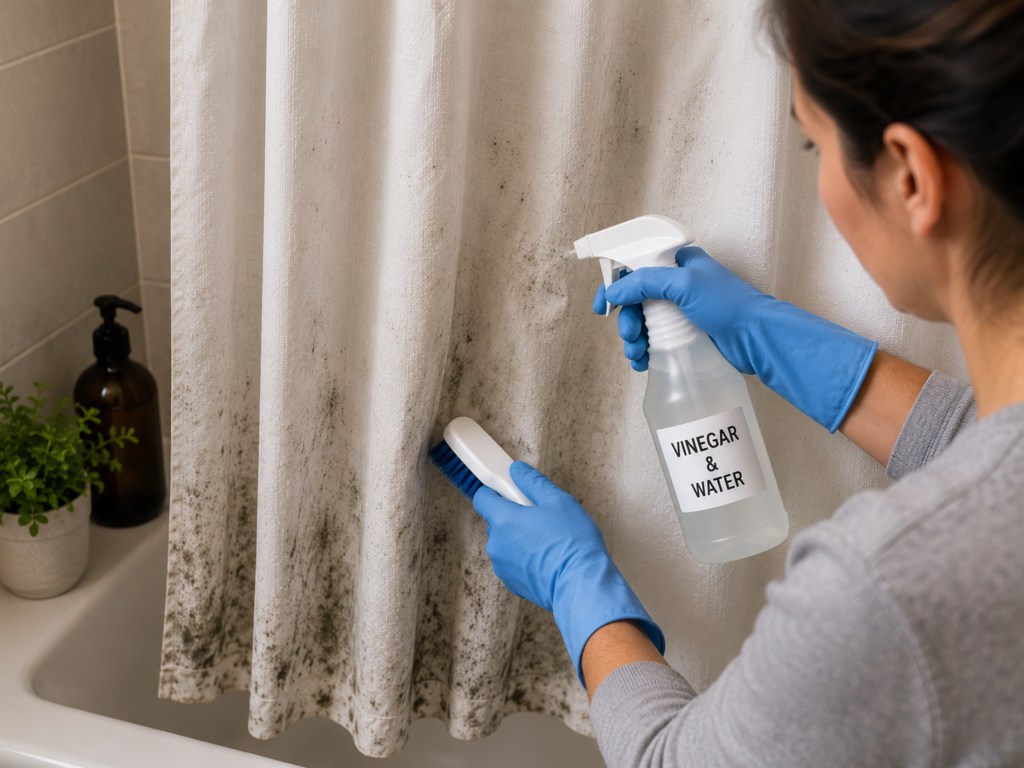
Method 2: Vinegar Spray Cleaning
White vinegar may help:
- loosen mildew residue,
- reduce odors,
- break down soap buildup.
How to Use It
- Spray affected areas directly
- Let sit for 20–30 minutes
- Scrub gently with a soft brush
- Rinse thoroughly
- Allow to dry fully
Method 3: Baking Soda Scrub
Baking soda works well for:
- mild mold stains,
- soap scum,
- odor reduction.
Its gentle texture also helps avoid damaging delicate materials.
Should You Replace a Moldy Shower Curtain?
Sometimes replacement is the better option.
Consider replacing the curtain if:
- mold stains remain permanently,
- the material smells bad after cleaning,
- the liner becomes brittle or damaged,
- mildew returns immediately.
Very old liners often hold bacteria deep inside the material.
Best Shower Curtain Materials for Mold Prevention
Some materials resist moisture better than others.
Vinyl and PEVA Liners
These are popular because they:
- dry faster,
- absorb less moisture,
- resist mildew better than fabric alone.
Fabric Curtains With Washable Liners
Fabric curtains work best when paired with removable washable liners.
This setup improves:
- appearance,
- cleaning convenience,
- moisture control.
Mold-Resistant Curtains
Some shower curtains are specifically designed with:
- antimicrobial coatings,
- mildew-resistant materials,
- water-repellent surfaces.
These may help reduce maintenance.
How to Prevent Shower Curtain Mold
Prevention is much easier than deep cleaning recurring mold.
Improve Bathroom Airflow
Good ventilation is one of the most effective solutions.
Helpful habits include:
- running the exhaust fan,
- opening windows,
- leaving the bathroom door partially open,
- improving air circulation.
Keep the Curtain Open After Showers
Never leave the curtain folded tightly after use.
Spreading it open allows faster drying.
Dry Excess Water Quickly
Using a towel or squeegee to remove extra moisture may help reduce mildew growth.
Wash Curtains Regularly
Regular cleaning prevents soap scum and bacteria buildup.
Helpful schedule:
- light cleaning weekly,
- deep washing monthly.
Reduce Bathroom Humidity
Humidity levels above 60% increase mold risk significantly.
Helpful tools include:
- compact dehumidifiers,
- moisture absorbers,
- humidity monitors.
Common Shower Curtain Mold Mistakes
Avoid these common problems:
Leaving Curtains Wet for Hours
Moisture encourages mildew growth quickly.
Never Cleaning the Curtain
Soap buildup feeds mold.
Ignoring Small Mold Spots
Early mildew spreads rapidly.
Poor Ventilation
Humidity stays trapped inside the bathroom.
Using Thick Fabric Without Drying Properly
Heavy fabric holds moisture longer.
Frequently Asked Questions
Why does mold grow on shower curtains so quickly?
Because shower curtains stay wet frequently and often dry slowly in humid bathrooms.
Is pink slime mold?
Pink residue is usually bacteria or biofilm, but it still thrives in moist environments.
Does vinegar remove shower curtain mold?
White vinegar may help loosen mildew and reduce odors naturally.
How often should shower curtains be cleaned?
Most bathrooms benefit from light weekly cleaning and deeper monthly washing.
Should I replace old shower liners?
Yes, especially if odors or mold stains remain after cleaning.
Final Thoughts
Shower curtain mold is usually caused by trapped moisture, poor airflow, soap buildup, and slow drying conditions.
Fortunately, most mildew problems can be prevented with:
- better ventilation,
- regular cleaning,
- faster drying habits,
- and improved moisture control.
Small bathroom habits make a major difference over time.
By keeping shower curtains cleaner and reducing humidity consistently, you can prevent most mold and mildew problems before they become severe.