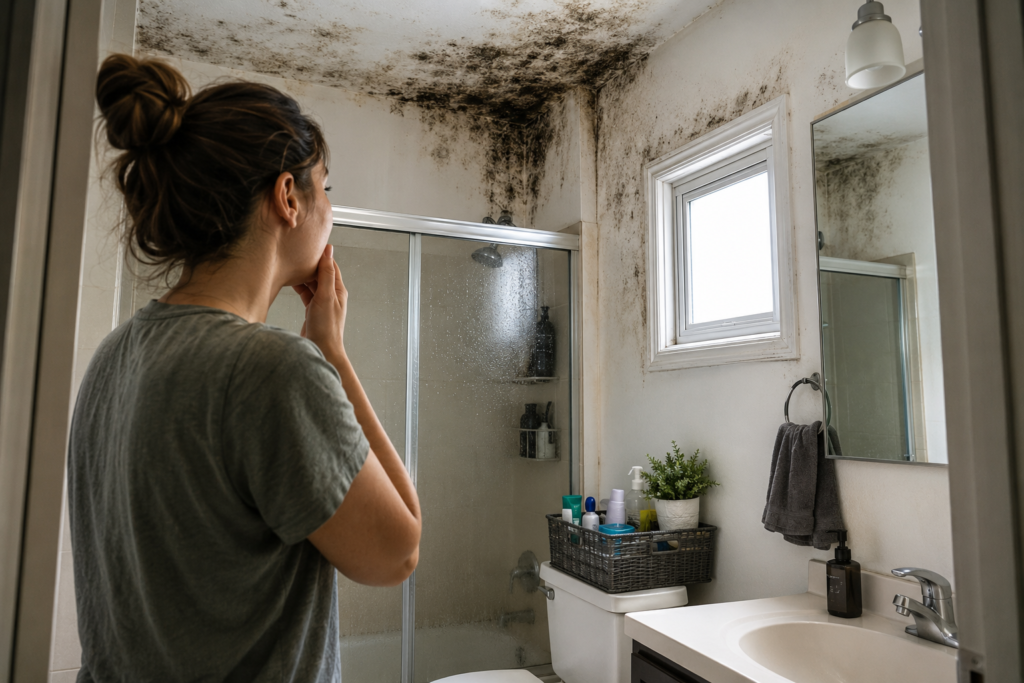
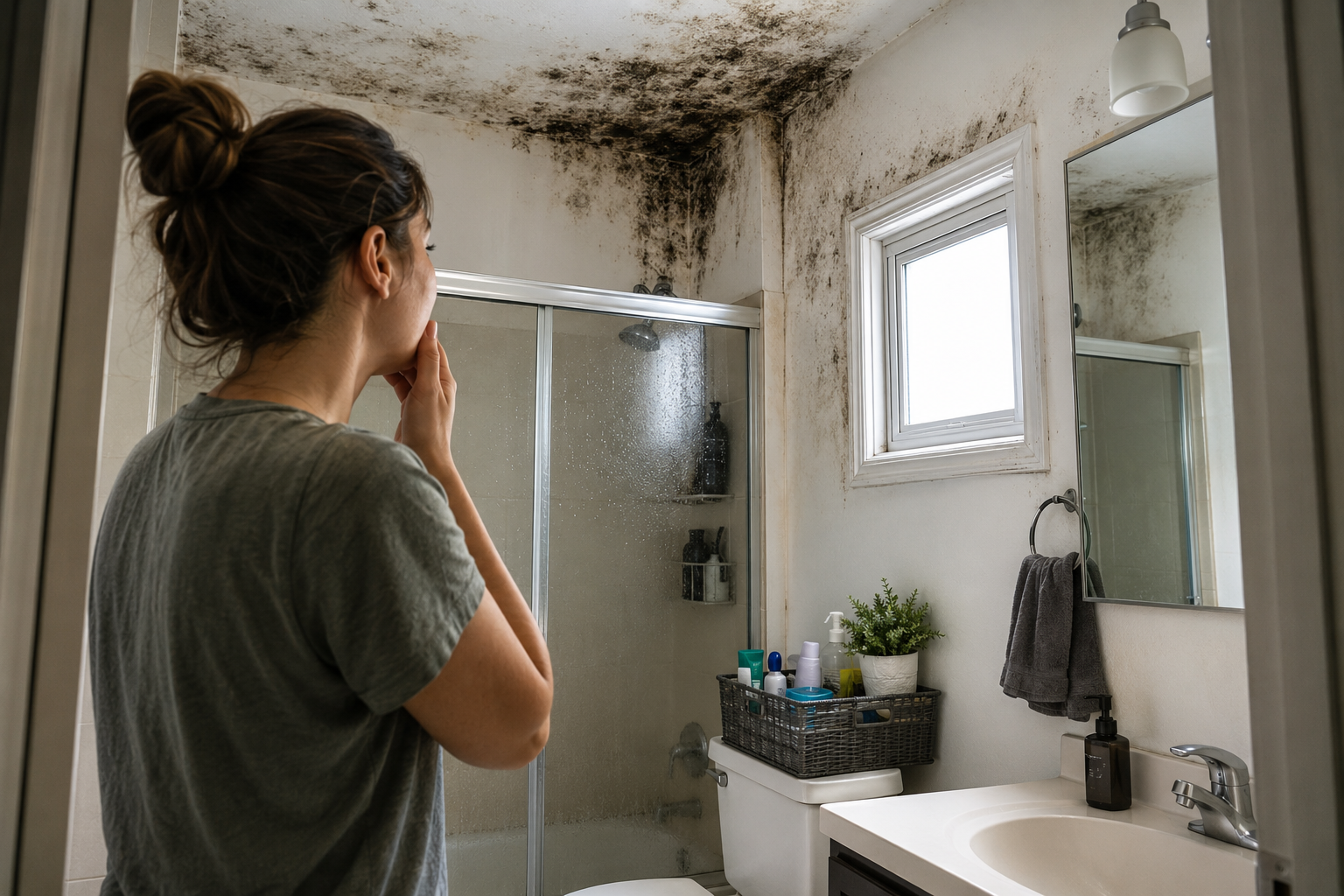
Mold is one of the most common problems in small apartment bathrooms. Limited ventilation, high humidity, and tight spaces create the perfect environment for moisture buildup, mildew, and black mold growth.
Many apartment residents notice mold appearing around:
- ceilings,
- shower corners,
- windows,
- grout lines,
- bathroom fans,
- and even behind storage cabinets.
The problem becomes even worse in apartments without windows or proper airflow.
The good news is that most small bathroom mold problems can be prevented with simple habits, better moisture control, and smart organization.
In this guide, you’ll learn:
- Why mold grows faster in small apartment bathrooms
- The most common hidden causes
- How to improve airflow in tight spaces
- The best daily habits for preventing mold
- Storage mistakes that trap moisture
- Affordable products that help reduce humidity
- Long-term prevention strategies that actually work
By the end of this article, you’ll know exactly how to keep a small apartment bathroom cleaner, drier, and mold-free year-round.
Why Small Apartment Bathrooms Develop Mold Faster
Small bathrooms trap moisture much more easily than larger bathrooms.
Because there is less airflow and less open space, steam from showers builds up quickly and stays trapped longer.
This creates ideal conditions for:
- mold,
- mildew,
- bacteria,
- condensation,
- musty odors.
Apartment bathrooms are especially vulnerable when they have:
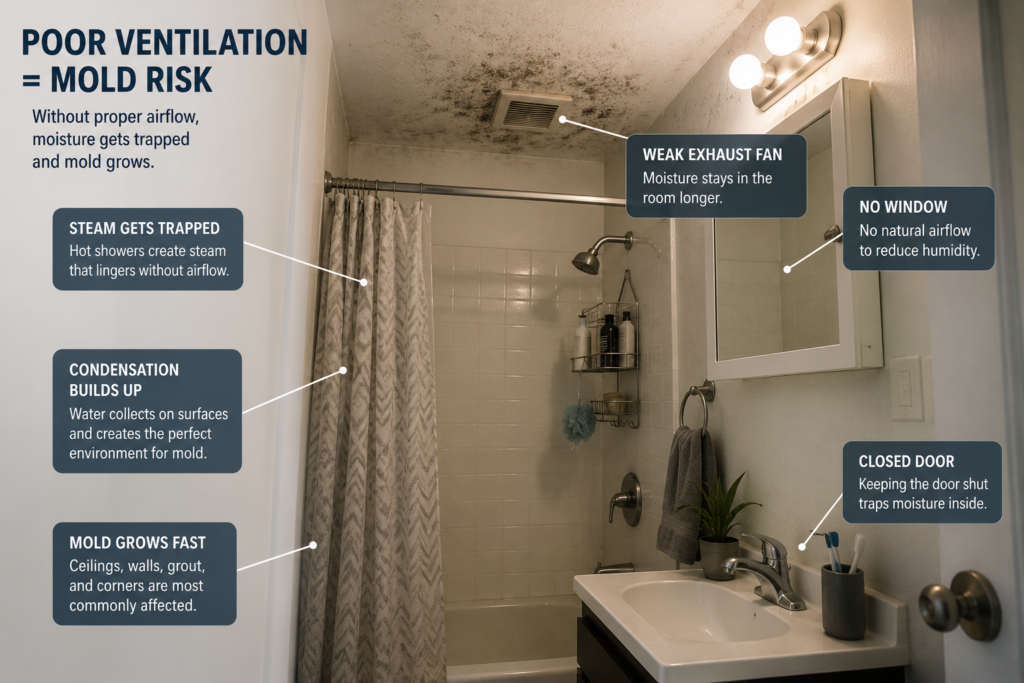
- no windows,
- weak exhaust fans,
- poor ventilation,
- crowded storage,
- damp towels,
- constant humidity.
Common Signs of Mold in Small Bathrooms
Mold problems often begin gradually.
Common warning signs include:
- black spots on ceilings,
- peeling paint,
- musty smells,
- mold around grout,
- condensation on mirrors,
- damp walls,
- mildew near shower curtains,
- mold around windows or vents.
Early prevention is much easier than dealing with large mold infestations later.
1. Poor Ventilation Is the Biggest Problem
Small apartment bathrooms often have very limited airflow.
Without proper ventilation, humidity stays trapped inside the room long after showers end.
This moisture settles onto:
- walls,
- ceilings,
- mirrors,
- towels,
- cabinets,
- and bathroom corners.
Over time, mold spores begin growing on damp surfaces.
Signs Your Bathroom Has Poor Ventilation
- Mirrors stay foggy for a long time
- Walls remain damp after showers
- The bathroom smells musty
- Condensation forms frequently
- Mold returns quickly after cleaning
Bathrooms without windows usually experience the worst moisture problems.
How to Improve Airflow in Small Bathrooms
Better airflow is one of the most effective mold prevention strategies.
Helpful solutions include:
- using the exhaust fan during and after showers,
- opening the bathroom door,
- using a small fan,
- leaving towels spaced apart,
- opening nearby windows in the apartment,
- reducing clutter around vents.
Even small airflow improvements can make a major difference over time.
2. Steam and Humidity Build Up Quickly
Small bathrooms fill with steam very fast.
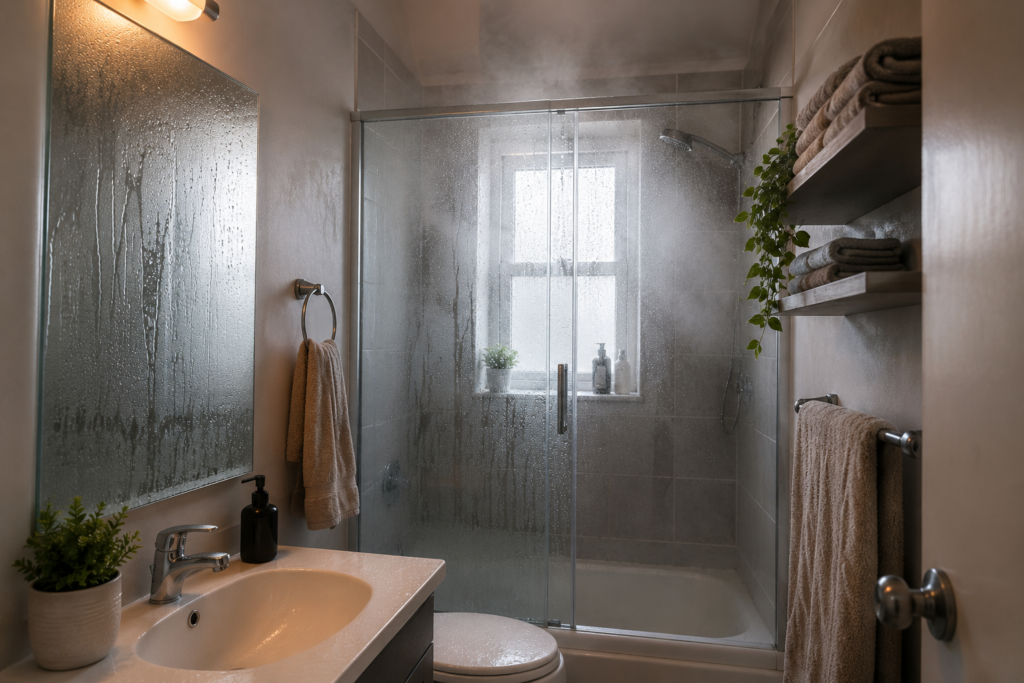
Hot showers create warm humid air that settles onto cooler surfaces.
This is why condensation often appears on:
- mirrors,
- windows,
- tiles,
- ceilings,
- metal fixtures.
Humidity levels above 60% increase mold risk significantly.
How to Reduce Bathroom Humidity
Several simple habits help reduce excess moisture.
Keep the Exhaust Fan Running
Leave the fan on for:
- 20–30 minutes after showers.
This helps remove lingering steam properly.
Use Cooler or Shorter Showers
Very hot long showers create large amounts of steam.
Shorter showers help reduce humidity buildup.
Dry Wet Surfaces Quickly

Use a towel or squeegee to dry:
- shower walls,
- mirrors,
- counters,
- glass doors.
Removing moisture quickly helps stop mold before it starts.
3. Damp Towels Create Hidden Moisture Problems
Wet towels are one of the biggest hidden causes of mold in apartment bathrooms.
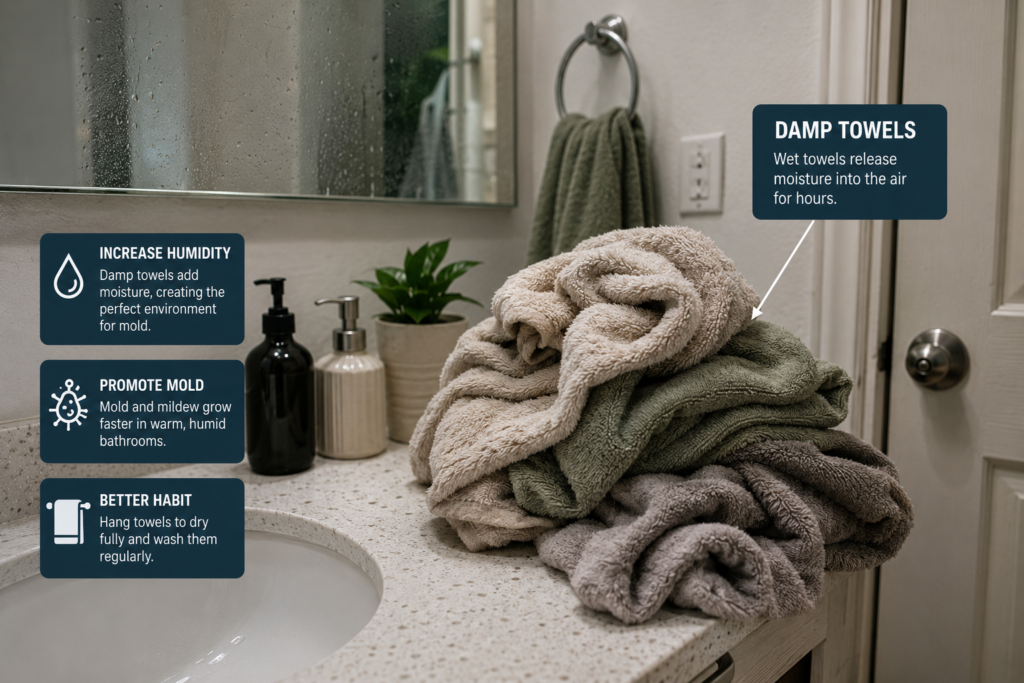
When towels stay damp for hours, they increase humidity levels dramatically.
This creates the perfect environment for:
- mildew,
- musty odors,
- bacteria growth.
Better Towel Habits
Helpful habits include:
- hanging towels separately,
- using towel hooks instead of piles,
- washing towels regularly,
- drying towels completely before reuse.
Overcrowded towel racks trap moisture and reduce airflow.
4. Bathroom Storage Can Trap Moisture
Small bathrooms often rely on:
- storage baskets,
- cabinets,
- shelves,
- organizers.
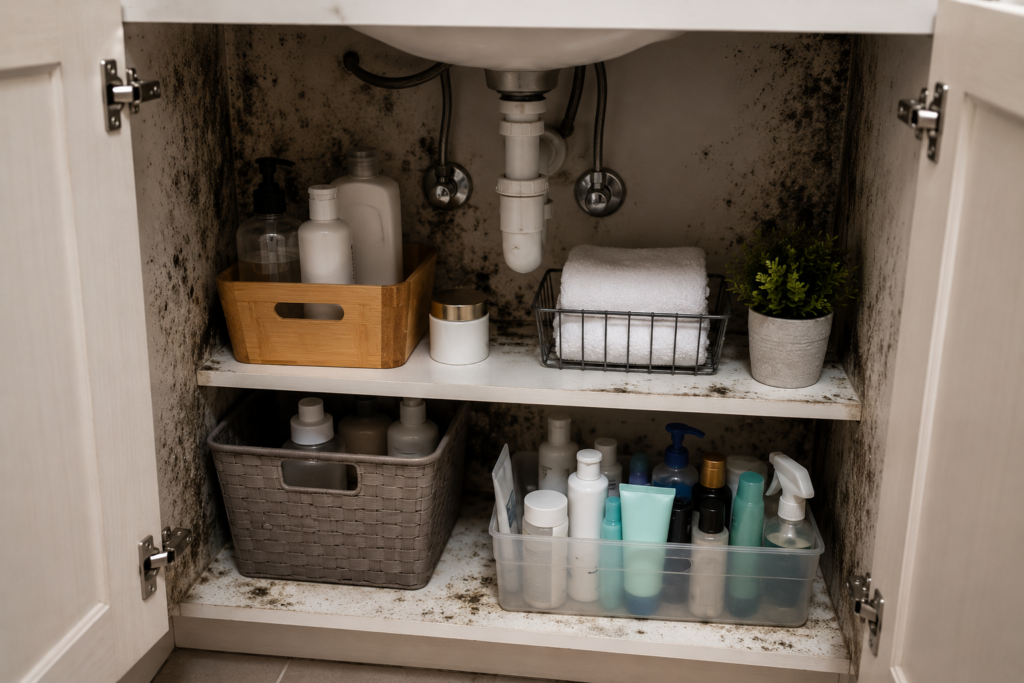
However, tightly packed storage areas trap humidity very easily.
Mold often develops:
- behind cabinets,
- under sinks,
- inside drawers,
- around toiletries,
- beneath bath mats.
How to Organize a Small Bathroom to Prevent Mold
Good organization improves airflow significantly.
Helpful tips include:
- avoiding overcrowded shelves,
- using ventilated storage baskets,
- keeping items off damp floors,
- leaving space between products,
- cleaning under storage containers regularly.
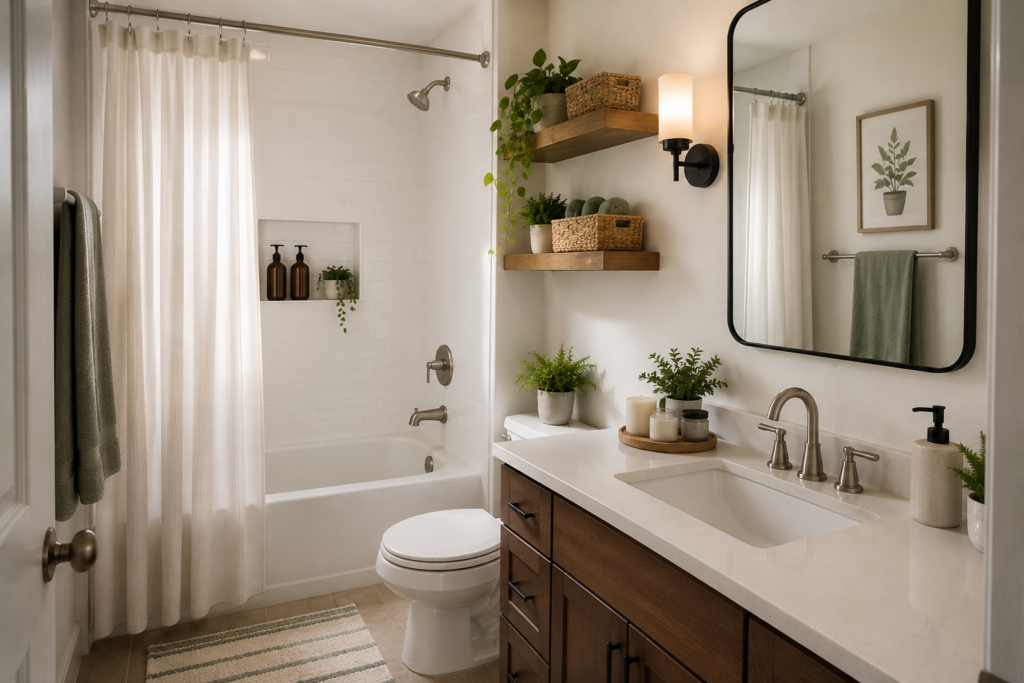
Minimal clutter helps reduce hidden moisture buildup.
5. Shower Curtains and Bath Mats Hold Moisture
Fabric shower curtains and thick bath mats absorb moisture constantly.
Without proper drying, they become major mildew hotspots.
Prevention Tips
- Spread shower curtains open after use
- Wash bath mats regularly
- Dry mats fully before reuse
- Replace moldy liners when necessary
Quick drying is one of the best mold prevention habits.
Best Affordable Products for Small Bathroom Mold Prevention
Many apartment residents use affordable tools such as:
- compact dehumidifiers,
- moisture absorbers,
- humidity monitors,
- shower squeegees,
- microfiber cloths,
- mold-resistant shower liners,
- portable fans,
- odor absorbers.
Small products can make a surprisingly large difference in tight spaces.
Should You Use a Dehumidifier in a Small Bathroom?
In many apartments, yes.
Compact dehumidifiers may help:
- reduce moisture,
- improve air quality,
- lower mold risk,
- reduce condensation.
They are especially useful in:
- windowless bathrooms,
- humid climates,
- poorly ventilated apartments.
How Often Should You Clean a Small Bathroom?
Frequent light cleaning works better than occasional deep cleaning.
Helpful routine:
- wipe damp surfaces daily,
- clean grout weekly,
- wash shower curtains monthly,
- check hidden corners regularly,
- clean vents every few months.
Consistent maintenance helps stop mold before it spreads.
Common Small Bathroom Mold Mistakes
Avoid these common problems:
Leaving Wet Towels in Piles
Trapped moisture increases humidity quickly.
Closing the Bathroom Immediately After Showering
Steam stays trapped inside.
Ignoring Small Mold Spots
Early mold spreads quickly in humid bathrooms.
Overcrowding Storage Areas
Poor airflow creates hidden moisture pockets.
Never Cleaning Exhaust Fans
Dust buildup reduces ventilation efficiency.
Frequently Asked Questions
Why do small bathrooms get mold faster?
Because humidity becomes trapped more easily in tight spaces with poor airflow.
Can mold grow without visible water leaks?
Yes. Condensation and steam alone can create enough moisture for mold growth.
Are dehumidifiers worth it for apartments?
In many cases, yes — especially in humid or poorly ventilated bathrooms.
How do I stop mold from returning?
The key is controlling moisture consistently, not just cleaning visible mold.
Should I leave the bathroom door open after showers?
Yes. Improved airflow helps moisture dry faster.
Final Thoughts
Small apartment bathrooms are naturally more vulnerable to mold because they trap humidity and moisture much more easily than larger spaces.
Fortunately, most mold problems can be prevented with:
- better airflow,
- reduced humidity,
- regular cleaning,
- proper towel drying,
- and smarter organization.
Simple daily habits make a major difference over time.
By improving ventilation and reducing trapped moisture consistently, you can keep even a very small apartment bathroom cleaner, fresher, and mold-free year-round.