
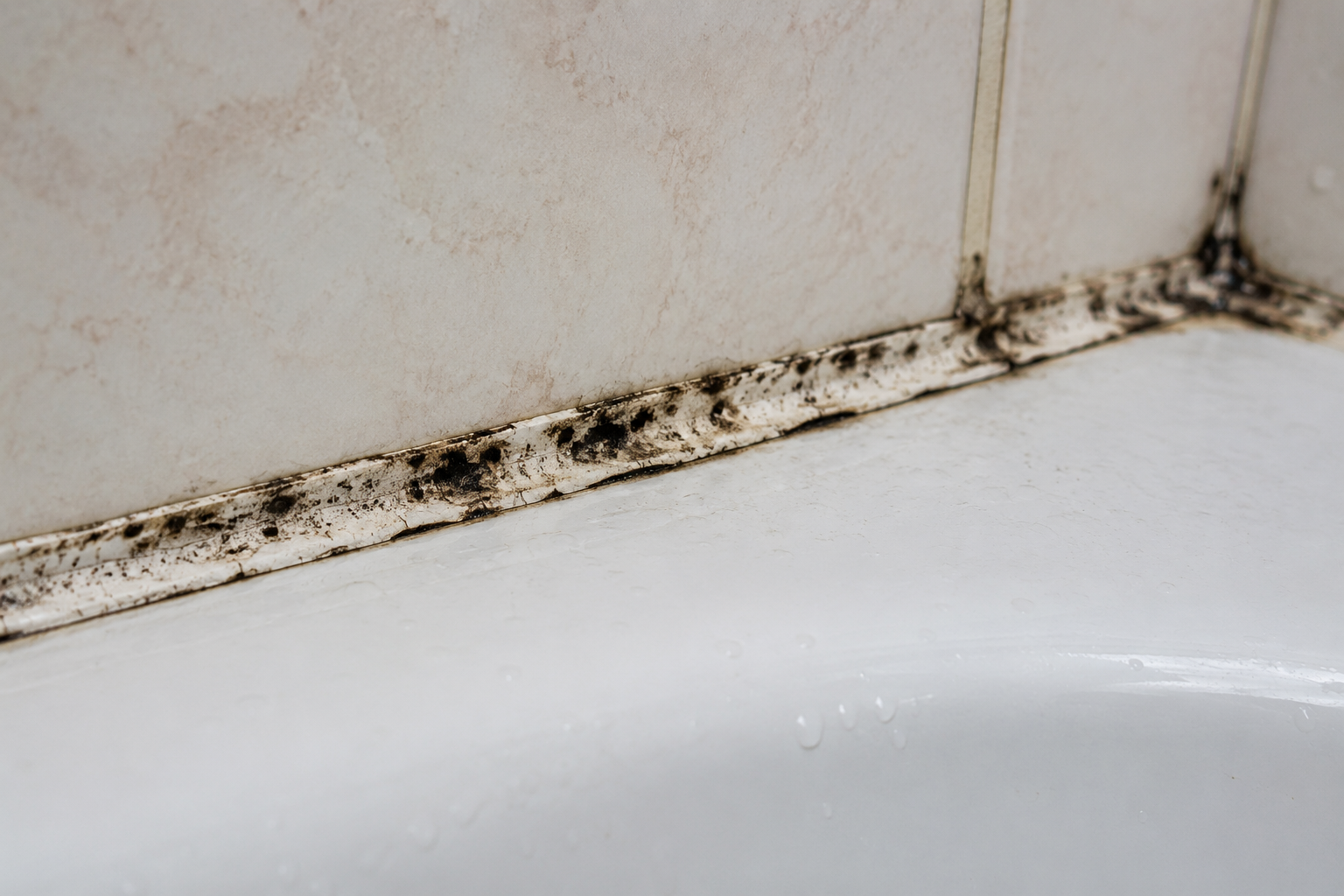
Bathroom caulk plays an important role in protecting surfaces from water damage and moisture buildup. However, because caulk is constantly exposed to humidity, soap residue, and standing water, it is also one of the most common places for mold and mildew to appear.
Many homeowners notice:
- black spots,
- pink stains,
- mildew buildup,
- musty smells,
- or dark discoloration
forming around bathtubs, sinks, showers, and bathroom corners.
The good news is that mold on bathroom caulk does not always mean the caulk must be replaced immediately. In many cases, surface mold can be cleaned successfully using the right methods and consistent moisture control.
In this guide, you’ll learn:
- Why mold grows on bathroom caulk
- The most common causes of mildew buildup
- How to clean mold from caulk safely
- Which cleaning methods actually work
- When caulk should be replaced
- How to prevent mold from returning
- The best products for long-term mold prevention
By the end of this article, you’ll know exactly how to remove mold from bathroom caulk and keep your bathroom cleaner and fresher long-term.
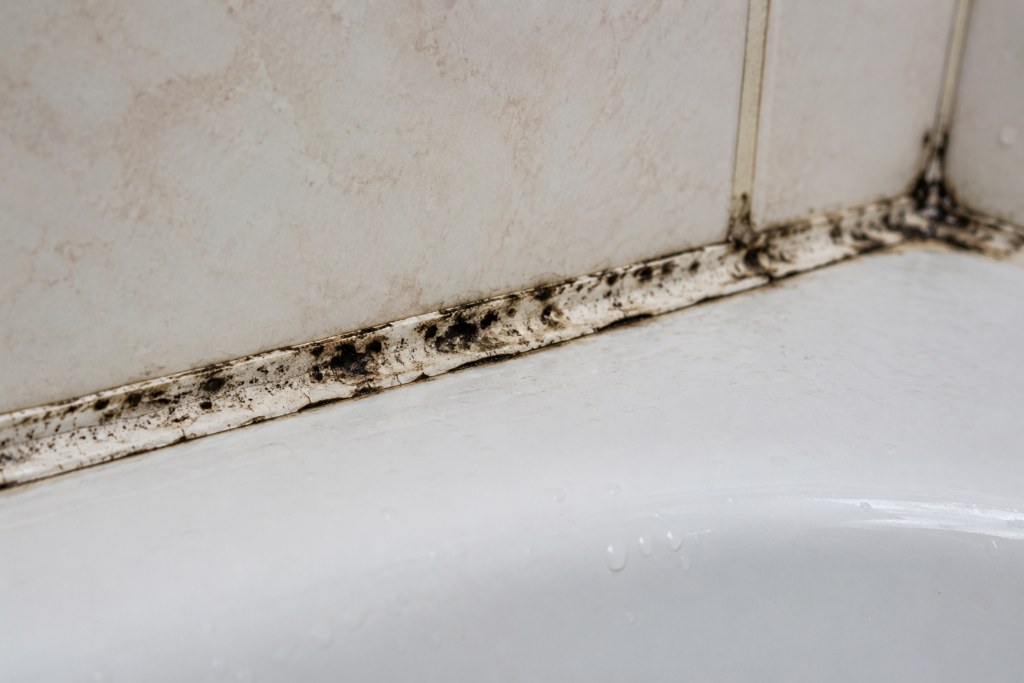
Why Does Mold Grow on Bathroom Caulk?
Bathroom caulk is constantly exposed to:
- moisture,
- steam,
- soap residue,
- body oils,
- shampoo buildup,
- and poor airflow.
Over time, mold spores feed on trapped organic residue and begin growing on damp surfaces.
This is especially common around:
- bathtubs,
- shower corners,
- sink edges,
- bathroom windows,
- glass shower doors.
Bathrooms with poor ventilation usually experience faster mold growth.
Common Signs of Mold on Bathroom Caulk
Moldy caulk often develops gradually.
Common warning signs include:
- black dots,
- pink slime,
- dark staining,
- musty smells,
- peeling caulk,
- soft or damaged caulk,
- discoloration near corners.
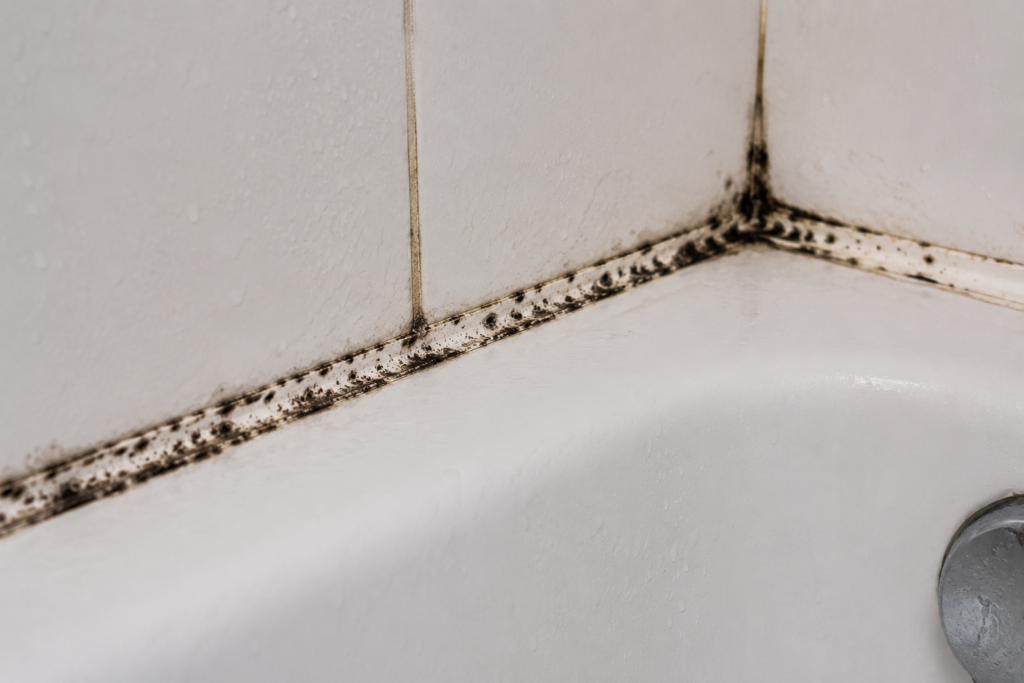
If mold keeps returning quickly after cleaning, trapped moisture is usually still present.
Why Caulk Develops Mold So Easily
Caulk is slightly porous, which means tiny amounts of moisture can become trapped over time.
Warm humid bathrooms create ideal conditions for:
- mildew,
- bacteria,
- mold growth.
This problem becomes worse when:
- bathrooms stay humid,
- water sits on caulk regularly,
- ventilation is poor,
- soap buildup accumulates.
Shower areas are usually the most affected.
1. Poor Ventilation Is the Biggest Cause
Steam from showers settles directly onto bathroom surfaces.
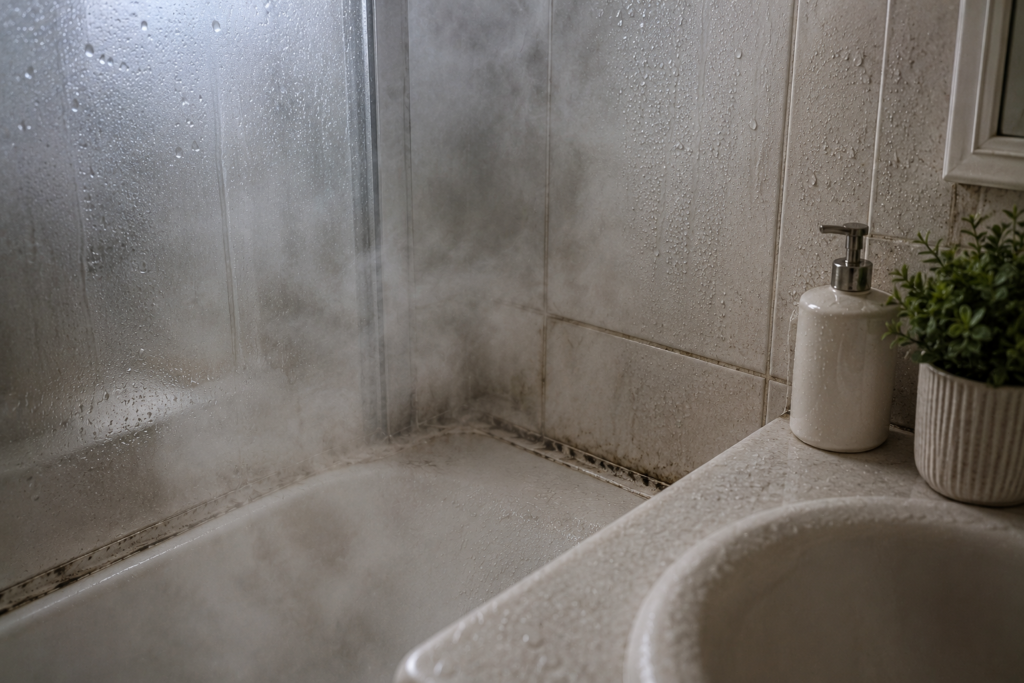
Without airflow, moisture remains trapped around:
- caulk lines,
- corners,
- shower edges,
- and sink seams.
This constant dampness allows mold spores to grow rapidly.
Signs Your Bathroom Has Excess Humidity
- Mirrors stay foggy
- Shower walls remain wet
- Musty smells develop quickly
- Mold returns repeatedly
- Condensation forms often
Improving airflow is one of the best long-term solutions.
How to Remove Mold From Bathroom Caulk
Several cleaning methods may help remove mold safely without damaging the caulk.
Method 1: Vinegar Spray
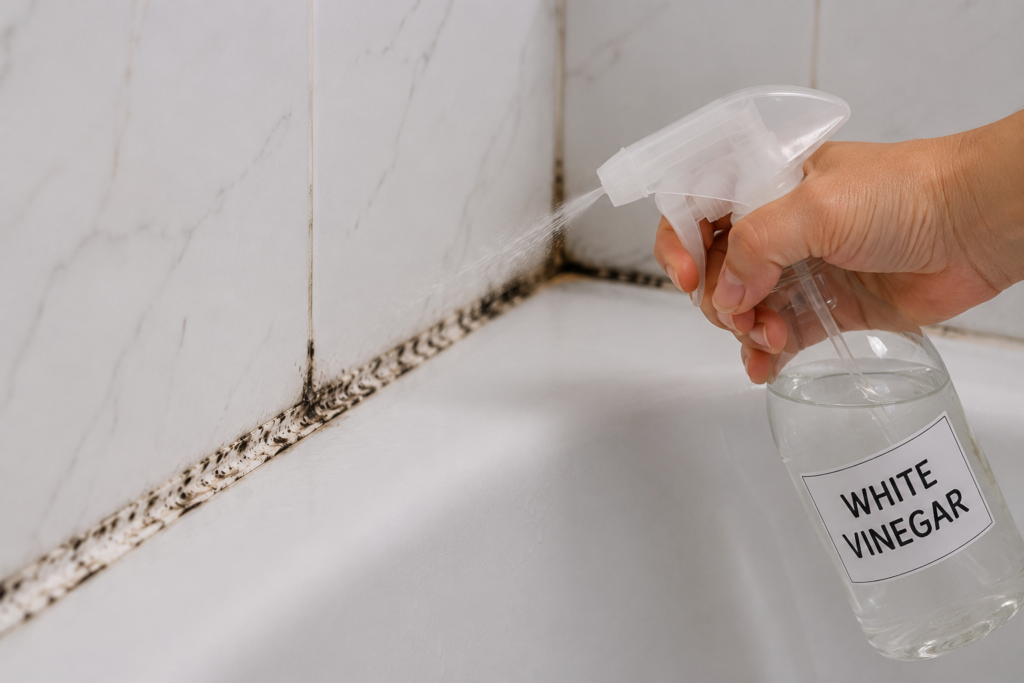
White vinegar is one of the most popular natural cleaning options.
It may help:
- loosen mildew,
- reduce bacteria,
- break down buildup,
- improve odors.
How to Use It
- Spray vinegar directly onto the moldy caulk
- Let it sit for 20–30 minutes
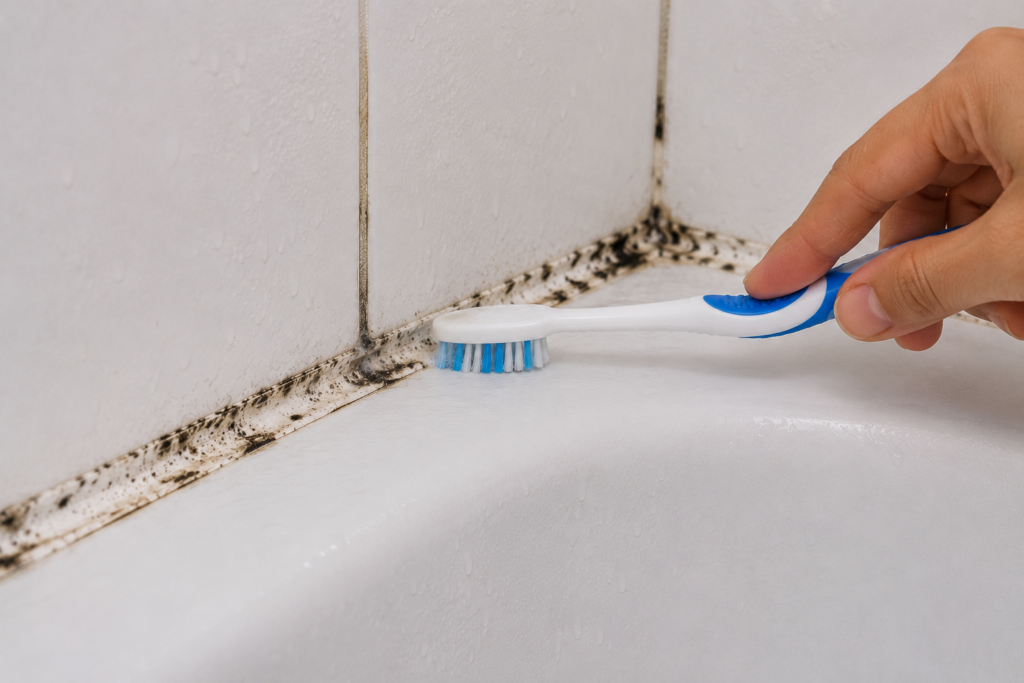
- Scrub gently with a soft brush
- Rinse thoroughly
- Dry completely
Allowing the area to dry fully is extremely important.
Method 2: Baking Soda Paste
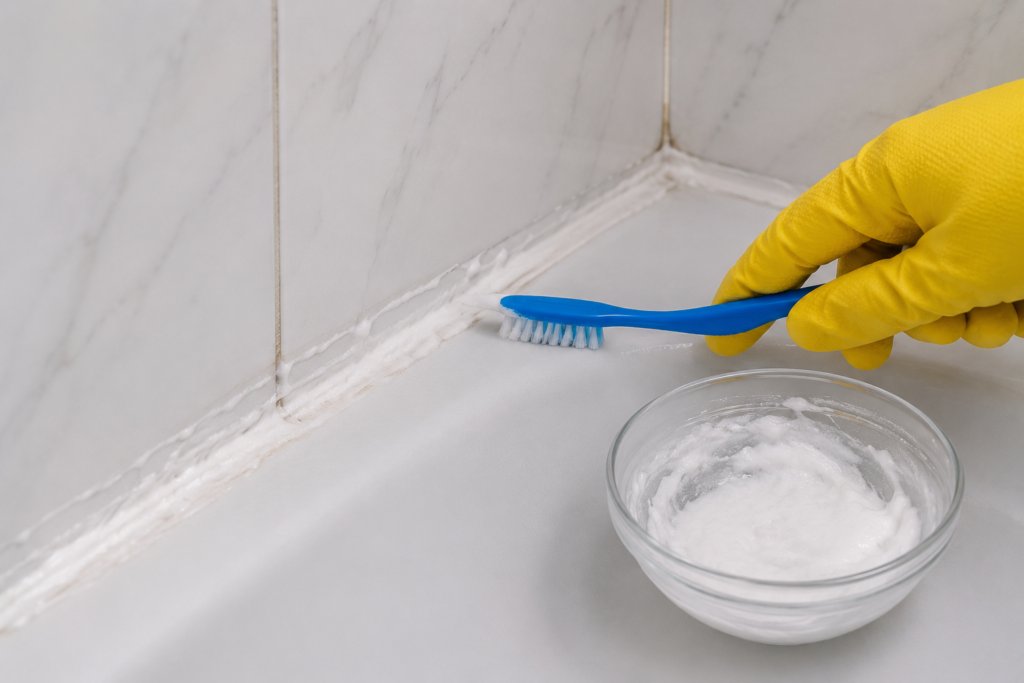
Baking soda helps scrub away surface buildup gently.
Instructions
Mix:
- baking soda,
- small amounts of water
to form a paste.
Apply the paste directly onto the caulk and scrub carefully using:
- a toothbrush,
- soft cleaning brush,
- microfiber cloth.
Method 3: Hydrogen Peroxide
Hydrogen peroxide is commonly used for bathroom mildew cleaning.
It may help:
- reduce staining,
- kill surface bacteria,
- brighten discolored areas.
Always test small areas first before heavy use.
Important Cleaning Tips
Avoid:
- overly aggressive scrubbing,
- metal brushes,
- sharp tools,
- excessive bleach use.
Damaging the caulk may allow water to penetrate behind surfaces.
Does Bleach Remove Mold From Caulk Permanently?
Bleach may temporarily lighten mold stains, but it does not always solve deeper moisture problems.
If humidity remains high, mold often returns quickly.
Long-term prevention matters more than temporary whitening.
When Should You Replace Bathroom Caulk?
Sometimes cleaning is no longer enough.
Caulk may need replacement if:
- it cracks,
- peels away,
- feels soft,
- separates from surfaces,
- traps deep mold stains,
- or allows water behind walls.
Damaged caulk can lead to larger moisture problems over time.
How to Prevent Mold From Returning
Prevention is usually easier than repeated deep cleaning.
Improve Bathroom Ventilation
Good airflow helps moisture dry faster.
Helpful habits include:
- running exhaust fans,
- opening windows,
- using portable fans,
- leaving shower doors open after use.
Better airflow significantly reduces humidity buildup.
Keep Caulk Dry
After showers:
- wipe excess water,
- dry corners,
- remove standing moisture.
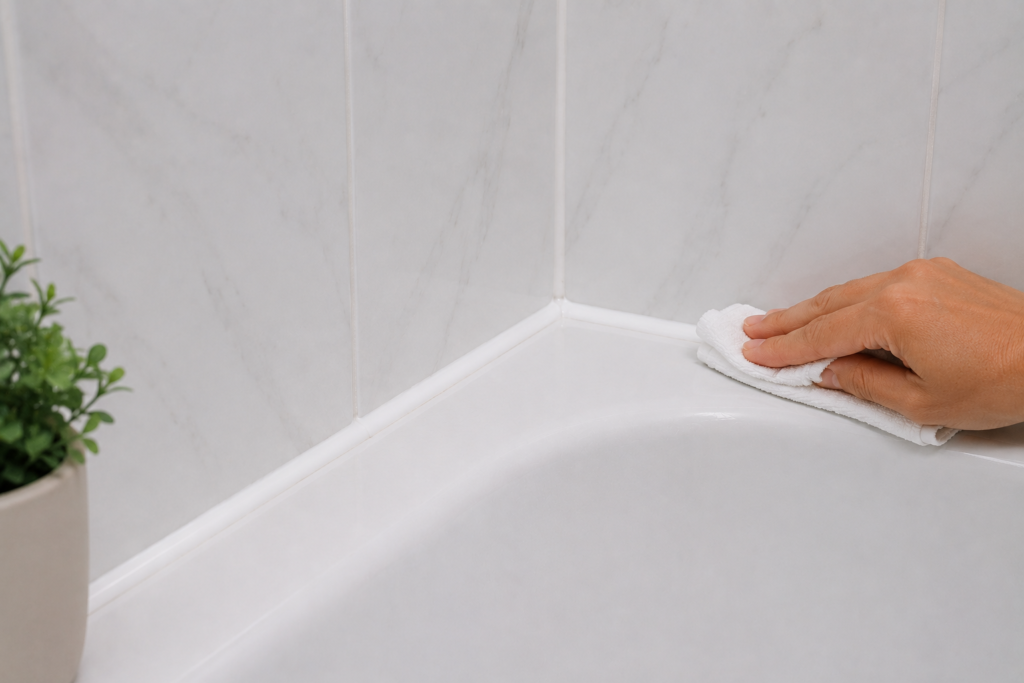
Dry surfaces slow mold growth dramatically.
Clean Soap Residue Regularly
Soap buildup feeds mildew and bacteria.
Light regular cleaning helps reduce long-term buildup.
Reduce Humidity Levels
Bathrooms with excessive humidity often experience recurring mold.
Helpful tools include:
- dehumidifiers,
- moisture absorbers,
- humidity monitors.
Best Products for Cleaning Moldy Caulk
Many homeowners use:
- white vinegar,
- baking soda,
- hydrogen peroxide,
- mold-removal sprays,
- soft cleaning brushes,
- microfiber cloths,
- bathroom ventilation fans.
The right tools help make maintenance easier.
Common Bathroom Caulk Mistakes
Avoid these common problems:
Leaving Water Sitting on Caulk
Standing moisture encourages mold growth.
Ignoring Small Mold Spots
Mildew spreads quickly in humid bathrooms.
Never Improving Ventilation
Humidity remains trapped after showers.
Scrubbing Too Aggressively
Damaged caulk becomes harder to protect.
Waiting Too Long to Replace Damaged Caulk
Water may spread behind surfaces.
Frequently Asked Questions
Can mold be removed from bathroom caulk permanently?
Surface mold may be removed successfully, but long-term prevention depends on controlling moisture and humidity.
Does vinegar kill mold on caulk?
White vinegar may help reduce mildew and bacteria buildup naturally.
Why does mold keep coming back on shower caulk?
Usually because moisture and humidity remain trapped after showers.
Should moldy caulk always be replaced?
Not always. Surface mold can often be cleaned if the caulk is still structurally intact.
What causes pink stains on bathroom caulk?
Pink buildup is often caused by bacteria growing in moist environments.
Final Thoughts
Bathroom caulk mold is extremely common because these areas stay exposed to moisture constantly.
Fortunately, many mold problems can be improved without replacing the caulk immediately.
By:
- improving ventilation,
- reducing humidity,
- cleaning regularly,
- and drying bathroom surfaces properly,
you can significantly reduce:
- mold buildup,
- mildew stains,
- recurring odors,
- and long-term moisture damage.
Consistent moisture control is the key to keeping bathroom caulk cleaner, safer, and mold-free long-term.