
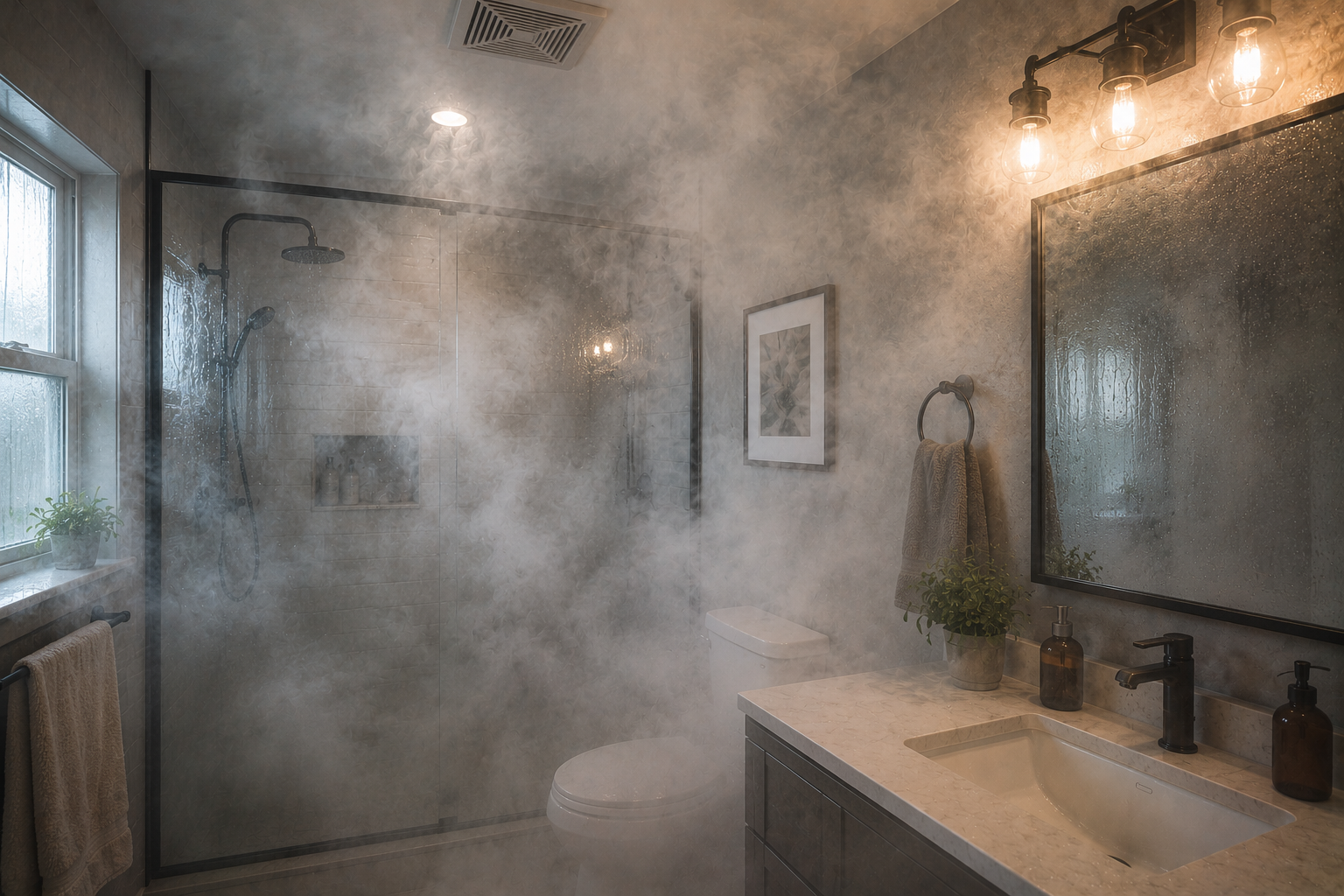
Bathroom steam may seem harmless, but over time, excess moisture can become one of the biggest causes of mold, mildew, peeling paint, musty odors, and long-term humidity damage inside a home.
Every hot shower releases large amounts of steam into the air. Without proper ventilation, this moisture settles onto bathroom surfaces and creates the perfect environment for mold spores to grow.
Many homeowners notice problems such as:
- black mold spots,
- foggy mirrors,
- peeling paint,
- mildew smells,
- dripping walls,
- damp ceilings,
- or recurring condensation
without realizing that trapped steam is often the main cause.
The good news is that most bathroom steam problems can be controlled with better airflow, moisture reduction, and consistent ventilation habits.
In this guide, you’ll learn:
- Why bathroom steam causes mold growth
- The hidden dangers of excess humidity
- Which bathroom areas trap moisture the most
- How steam damages walls and ceilings
- Signs your bathroom has poor ventilation
- The best ways to reduce steam buildup
- Long-term prevention strategies that actually work
By the end of this article, you’ll know exactly how to control bathroom steam and reduce mold problems before they become severe.
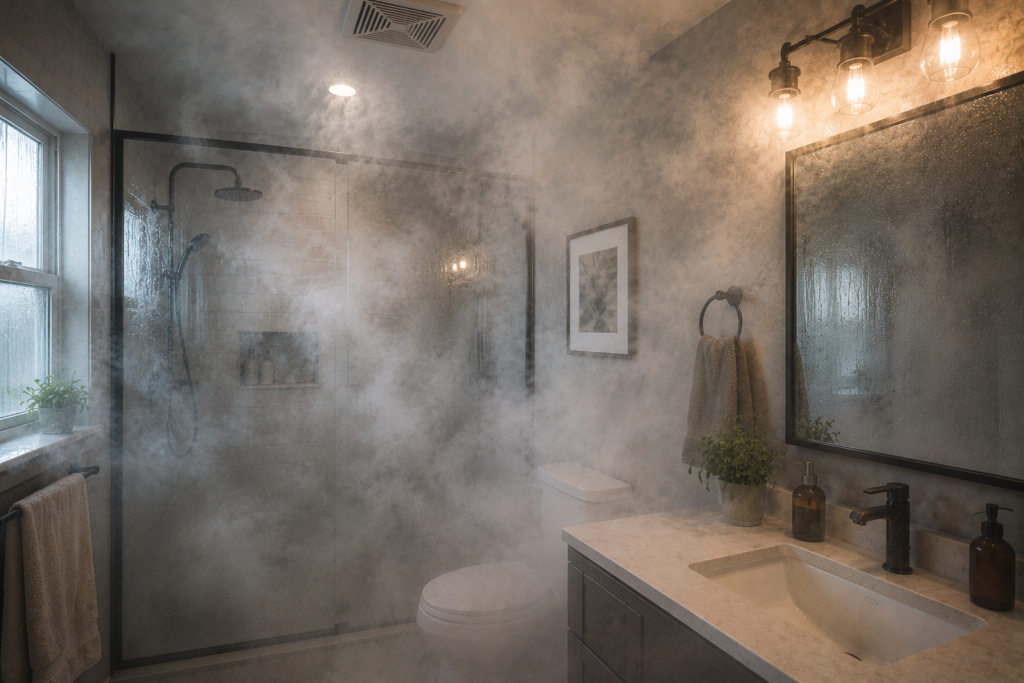
Why Bathroom Steam Causes Mold Problems
Hot showers create warm humid air that spreads quickly throughout the bathroom.
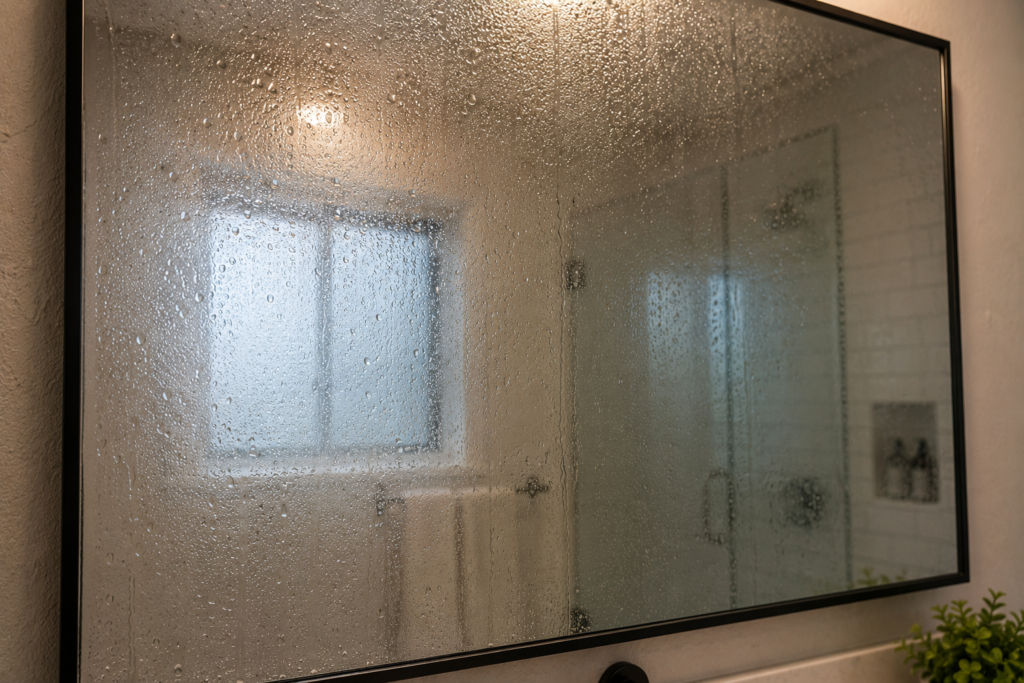
When this moisture touches cooler surfaces, condensation forms.
This is why water droplets often appear on:
- mirrors,
- ceilings,
- windows,
- walls,
- tiles,
- bathroom fixtures.
If the moisture does not dry properly, mold spores begin feeding on damp surfaces.
Bathrooms naturally create ideal conditions for:
- mold,
- mildew,
- bacteria,
- musty odors,
- condensation damage.
What Happens When Steam Stays Trapped?
Steam becomes a serious problem when bathrooms lack proper airflow.
Without ventilation:
- humidity rises quickly,
- surfaces stay wet longer,
- paint weakens,
- mold spores spread faster.
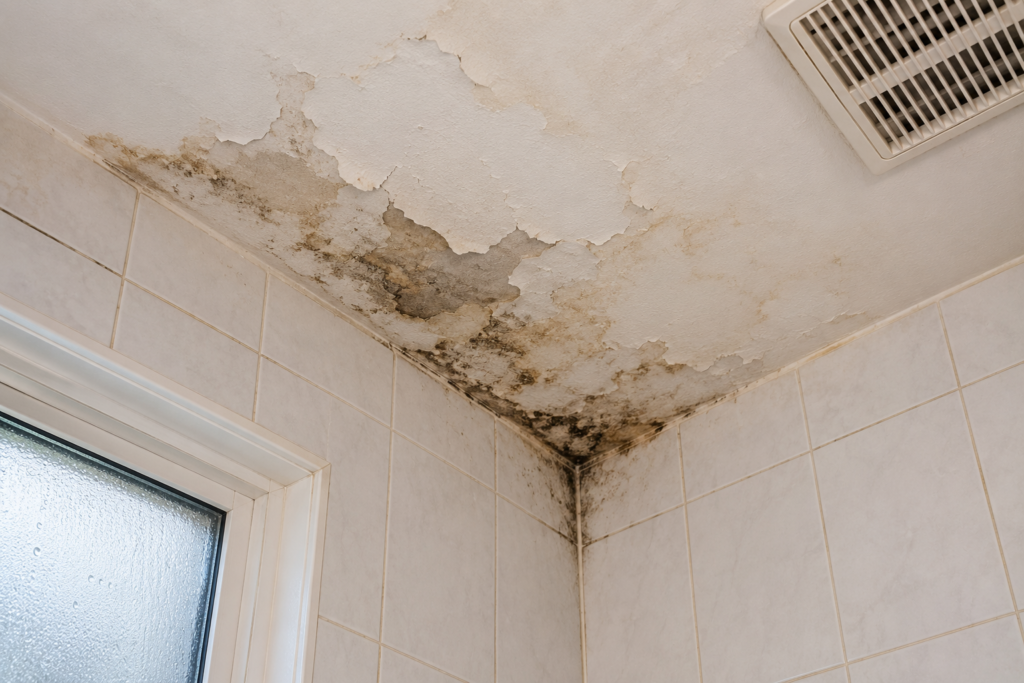
Over time, repeated moisture exposure may damage:
- drywall,
- paint,
- grout,
- caulk,
- wood cabinets,
- ceilings.
Small bathrooms usually experience the worst steam problems.
Common Signs of Excess Bathroom Steam
Many humidity problems begin gradually.
Common warning signs include:
- mirrors staying foggy,
- dripping walls,
- damp ceilings,
- peeling paint,
- mildew smells,
- black mold spots,
- condensation on windows,
- recurring moisture around corners.
If surfaces stay wet long after showers, excess steam is likely the problem.
1. Poor Ventilation Is the Biggest Cause
Bathrooms without proper ventilation trap steam for long periods.
This moisture settles into every corner of the room.
Areas especially vulnerable include:
- ceilings,
- upper wall corners,
- behind cabinets,
- around windows,
- shower grout,
- bathroom caulk.
Without airflow, moisture cannot evaporate properly.
Bathrooms Without Windows Are More Vulnerable
Windowless bathrooms often struggle with:
- trapped humidity,
- poor air circulation,
- slower drying,
- recurring mold problems.
Without natural airflow, steam remains inside much longer after showers end.
Signs Your Bathroom Ventilation Is Weak
- Mirrors stay foggy for long periods
- The room smells humid or musty
- Walls remain damp after showers
- Mold returns quickly after cleaning
- Condensation forms regularly
These signs usually indicate excessive moisture buildup.
2. Steam Can Damage Bathroom Paint and Drywall
Many people underestimate how damaging repeated steam exposure can be.
Constant humidity slowly weakens:
- paint,
- drywall,
- ceiling texture,
- wood trim,
- adhesives.
Over time, this may cause:
- bubbling paint,
- stains,
- soft drywall,
- discoloration,
- mold behind walls.
3. Steam Creates Ideal Conditions for Mold
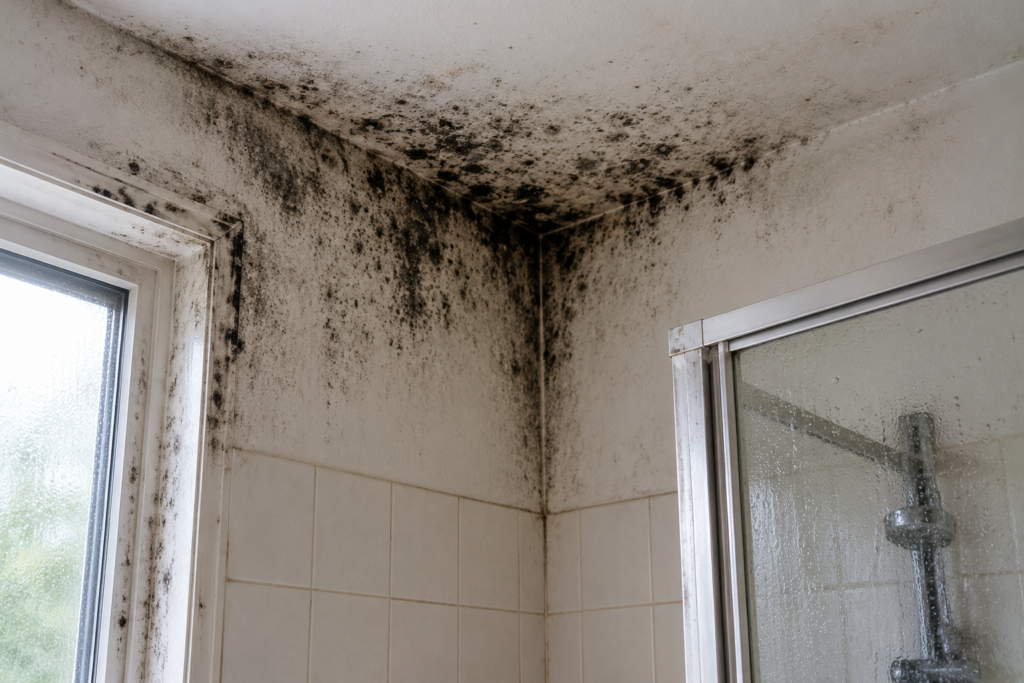
Mold thrives in:
- warm environments,
- damp surfaces,
- humid air,
- poor ventilation.
Bathrooms naturally combine all of these conditions.
Even if visible mold is cleaned repeatedly, moisture problems often continue underneath the surface.
Areas Most Affected by Steam and Mold
Common problem areas include:
- bathroom ceilings,
- shower corners,
- behind toilets,
- around windows,
- under sinks,
- near towel racks,
- grout lines,
- shower curtains.
These areas often stay damp longer than homeowners realize.
How to Reduce Bathroom Steam and Humidity
Reducing moisture consistently is the best long-term prevention strategy.
Use the Exhaust Fan Properly
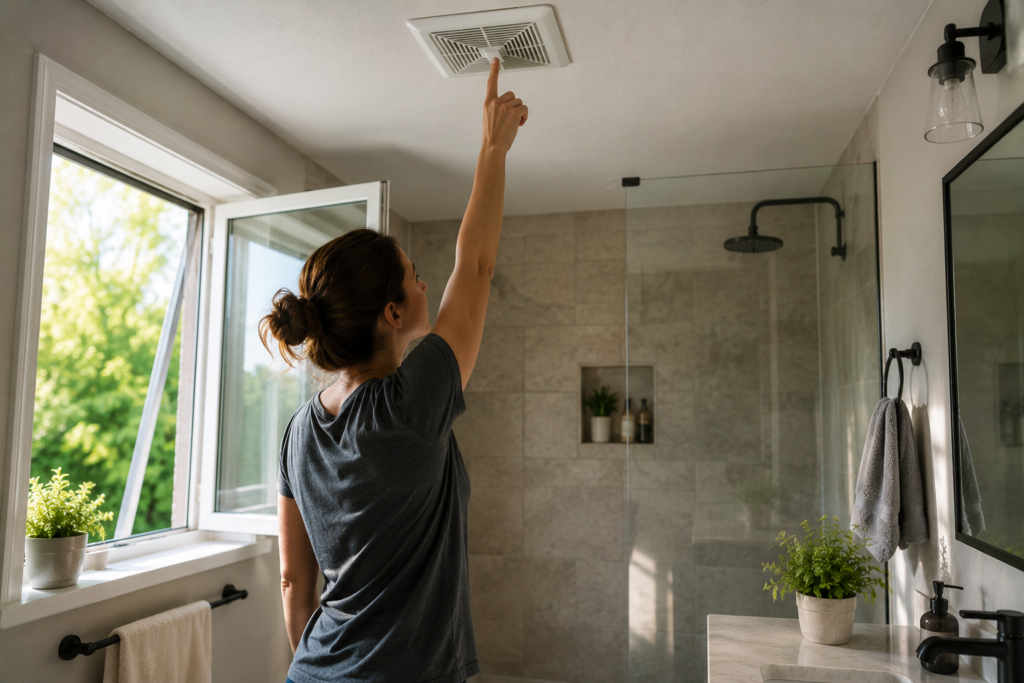
Bathroom fans help remove humid air from the room.
For best results:
- turn the fan on before showering,
- keep it running during showers,
- leave it on for 20–30 minutes afterward.
This helps remove lingering steam much more effectively.
Open Windows If Possible
Natural airflow helps moisture escape faster.
Even partially opening windows can improve ventilation significantly.
Use Shorter or Cooler Showers
Very hot long showers create large amounts of steam.
Shorter showers may help:
- reduce humidity,
- lower condensation,
- decrease mold risk.
Dry Wet Surfaces Quickly
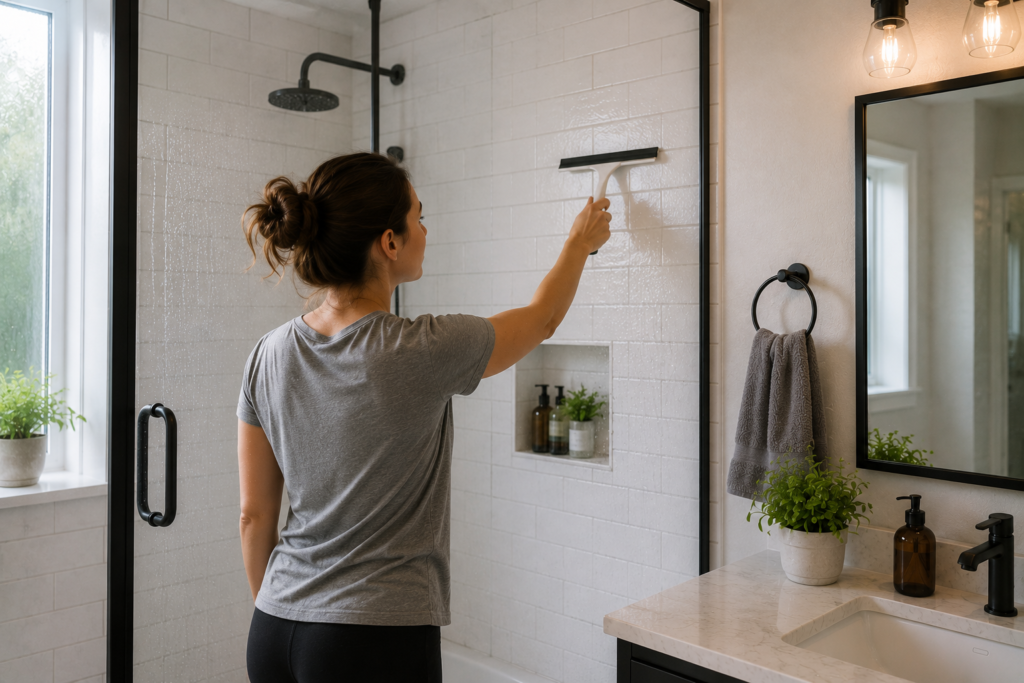
Using towels, squeegees, or microfiber cloths to remove moisture may help reduce long-term humidity damage.
Focus on:
- shower walls,
- mirrors,
- glass doors,
- counters,
- windows.
4. Damp Towels Increase Steam Problems
Wet towels release additional moisture into the bathroom while drying.
Bathrooms with:
- multiple towels,
- crowded towel racks,
- poor airflow
often stay humid much longer.
Proper towel drying helps reduce trapped humidity.
Should You Use a Dehumidifier in the Bathroom?
In many humid homes, yes.
Compact dehumidifiers may help:
- lower moisture levels,
- improve air quality,
- reduce condensation,
- slow mold growth.
They are especially useful in:
- apartments,
- windowless bathrooms,
- humid climates,
- poorly ventilated spaces.
Best Products for Bathroom Steam Control
Many homeowners use:
- bathroom exhaust fans,
- dehumidifiers,
- moisture absorbers,
- humidity monitors,
- shower squeegees,
- microfiber cloths,
- portable fans.
Small airflow improvements often make a major difference.
Common Bathroom Steam Mistakes
Avoid these common problems:
Leaving the Bathroom Closed After Showering
Steam remains trapped inside.
Never Using the Exhaust Fan
Humidity builds up rapidly.
Ignoring Small Mold Spots
Moisture problems continue spreading.
Taking Extremely Hot Long Showers
Extra steam increases condensation significantly.
Leaving Wet Towels Bunched Together
Damp fabrics release additional humidity.
Frequently Asked Questions
Why does steam cause mold?
Steam creates moisture and humidity that allow mold spores to grow on damp surfaces.
Can bathroom steam damage walls?
Yes. Long-term moisture exposure may weaken paint, drywall, and ceilings.
Are windowless bathrooms worse for mold?
Usually yes, because airflow is much more limited.
How long should I run the bathroom fan after showering?
Usually 20–30 minutes helps remove lingering humidity.
Can a dehumidifier help reduce bathroom mold?
Yes. Dehumidifiers may help lower moisture levels significantly.
Final Thoughts
Bathroom steam becomes a serious problem when moisture remains trapped inside the room repeatedly.
Over time, excess humidity may lead to:
- mold growth,
- peeling paint,
- mildew smells,
- condensation damage,
- and long-term bathroom deterioration.
Fortunately, most steam problems can be improved by:
- increasing airflow,
- improving ventilation,
- drying surfaces quickly,
- reducing humidity consistently.

Small daily habits make a major difference over time.
By controlling bathroom steam properly, you can create a cleaner, healthier, and more mold-resistant bathroom year-round.