
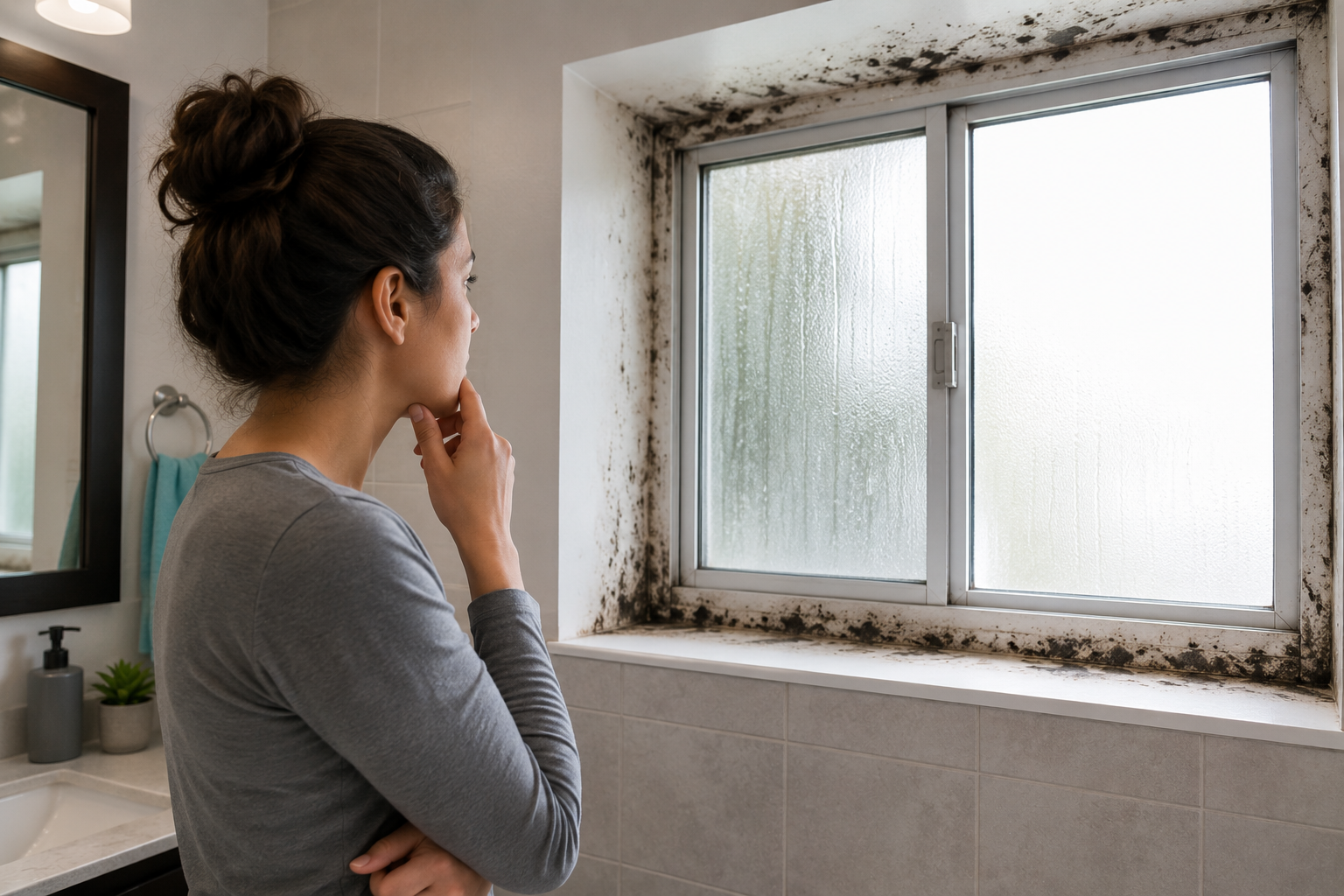
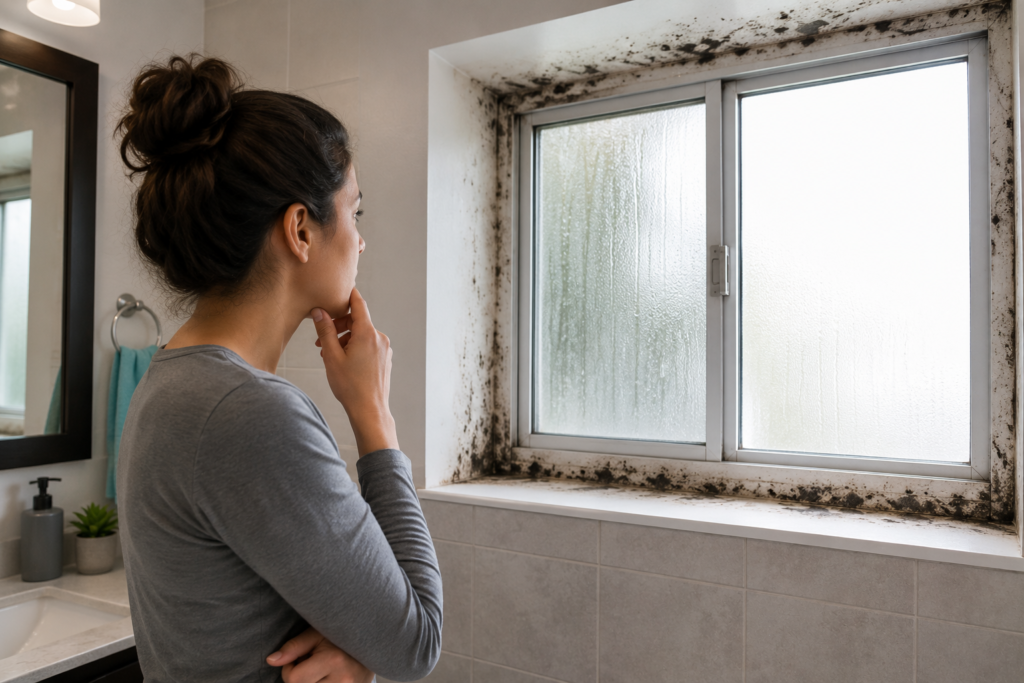
Bathroom mold around windows is a very common household problem, especially in homes with high humidity, poor ventilation, or older window frames. Many homeowners notice black spots forming around window corners, condensation collecting on glass, or peeling paint near the frame — even when the rest of the bathroom appears clean.
The reason is simple: bathroom windows are constantly exposed to moisture, steam, temperature changes, and limited airflow.
Over time, trapped condensation and damp surfaces create the perfect environment for mold and mildew growth.
The good news is that most bathroom window mold problems can be prevented with better moisture control, proper ventilation, and regular maintenance.
In this guide, you’ll learn:
- Why mold grows around bathroom windows
- The most common hidden causes
- How condensation contributes to mold growth
- The safest ways to clean bathroom window mold
- How to reduce moisture permanently
- Long-term prevention methods that actually work
By the end of this article, you’ll know exactly how to keep your bathroom windows cleaner, drier, and mold-free year-round.
Why Does Mold Grow Around Bathroom Windows?
Bathroom windows are exposed to constant humidity from:
- hot showers,
- steam,
- wet towels,
- poor ventilation,
- temperature differences between indoor and outdoor air.
When warm humid air touches a cooler window surface, condensation forms.
This moisture often collects around:
- window corners,
- window tracks,
- silicone seals,
- painted frames,
- wooden trim.
If the moisture does not dry properly, mold spores begin growing surprisingly quickly.
Common Signs of Bathroom Window Mold
Window mold problems often begin slowly.
Common warning signs include:
- black spots around the frame,
- peeling paint,
- musty odors,
- water droplets on glass,
- discoloration near corners,
- soft or damaged wood,
- mildew around silicone seals.
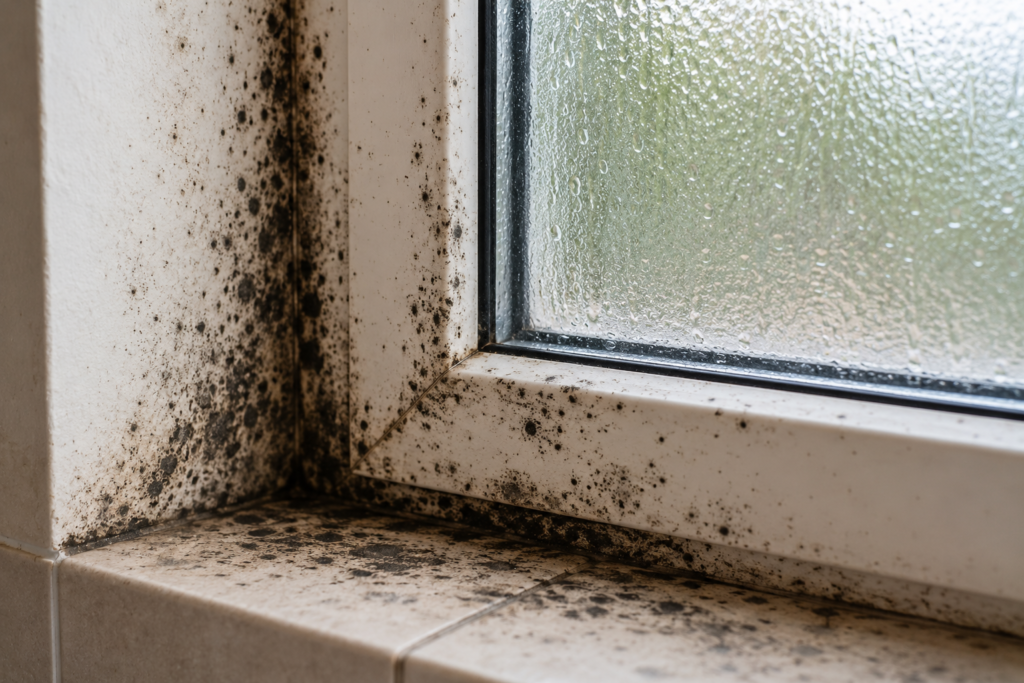
In severe cases, mold may spread behind the wall or beneath window trim.
1. Condensation Is the Biggest Cause
Condensation is one of the most common reasons mold appears around bathroom windows.
Bathrooms naturally produce large amounts of steam and humidity.
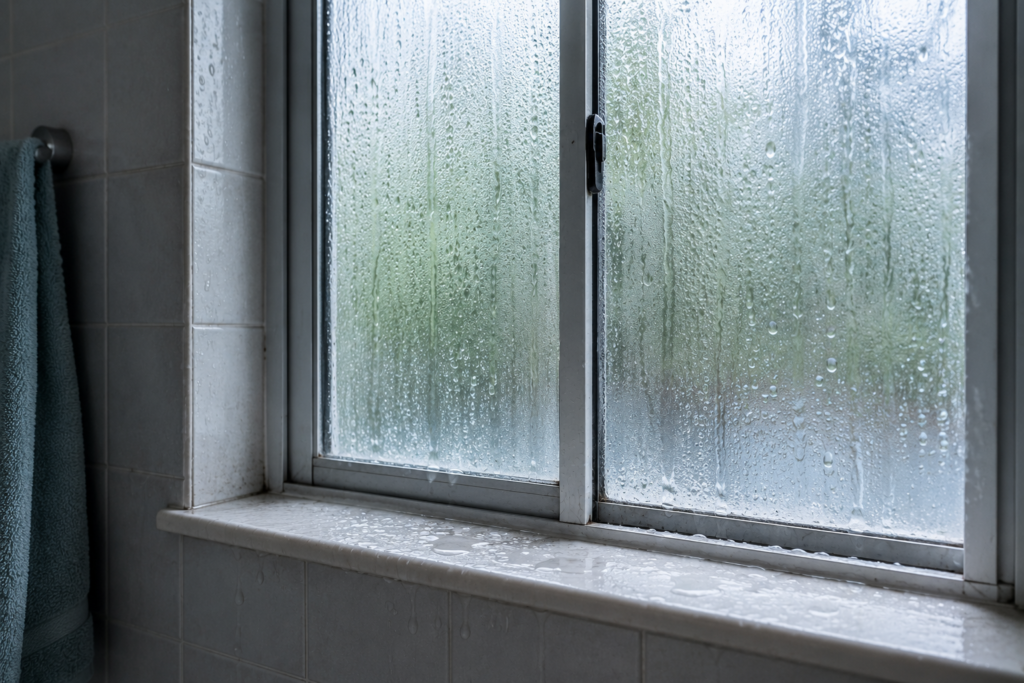
When warm air contacts a cold window surface, water droplets form quickly.
This constant moisture buildup creates ideal conditions for mold growth.
Signs of Excess Condensation
- Foggy windows after showers
- Water dripping from glass
- Wet window tracks
- Persistent dampness near frames
- Mold returning after cleaning
Homes in colder climates often experience worse window condensation problems during winter.
2. Poor Ventilation Traps Moisture
Bathrooms without proper airflow hold humidity much longer.
Even bathrooms with windows may still trap moisture if:
- windows stay closed,
- exhaust fans are weak,
- airflow is blocked,
- steam cannot escape properly.
Humidity remains trapped near the window area, encouraging mold growth.
3. Wooden Window Frames Absorb Moisture
Wood naturally absorbs moisture more easily than vinyl or aluminum.
Older wooden bathroom windows are especially vulnerable to:
- swelling,
- peeling paint,
- mold growth,
- water damage.
Once moisture penetrates beneath paint or sealant, mold can spread deeper into the frame.
4. Dirty Window Tracks Hold Moisture
Bathroom window tracks often collect:
- dust,
- soap particles,
- hair,
- moisture,
- mildew residue.
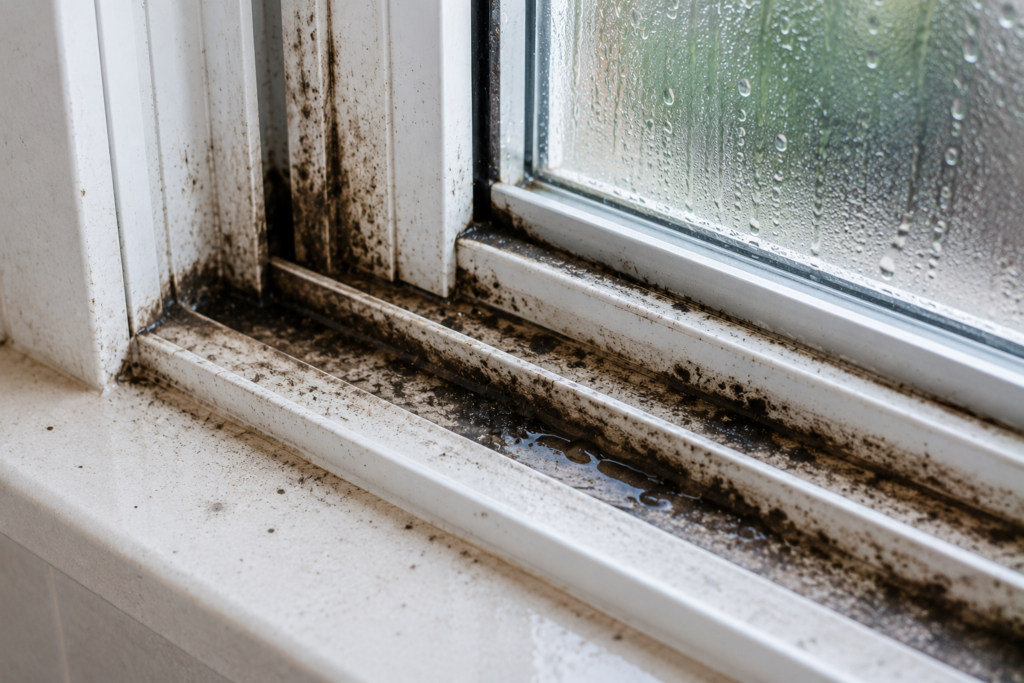
These damp areas create hidden mold hotspots that many homeowners overlook.
Is Bathroom Window Mold Dangerous?
Small amounts of surface mold are usually manageable for most healthy adults.
However, mold exposure may irritate:
- allergies,
- asthma,
- respiratory conditions,
- sensitive individuals.
Symptoms may include:
- sneezing,
- coughing,
- eye irritation,
- headaches,
- throat discomfort.
Recurring mold problems may also indicate deeper moisture issues inside walls or around insulation.
How to Clean Mold Around Bathroom Windows Safely
Before cleaning mold, reduce humidity and improve airflow first.
Open windows if weather allows and run bathroom ventilation during cleaning.
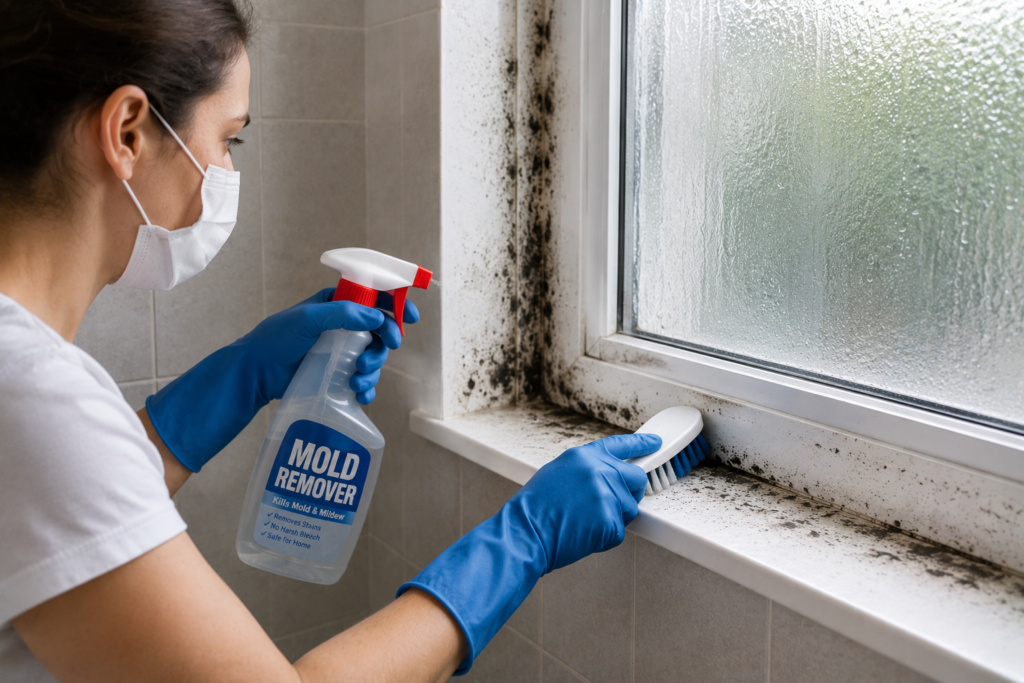
Step 1: Wear Protective Gear
When cleaning mold, use:
- gloves,
- protective mask,
- eye protection.
Especially in small bathrooms with limited ventilation.
Step 2: Remove Surface Moisture
Use a dry microfiber cloth or paper towel to remove excess condensation before cleaning.
Dry surfaces help cleaning solutions work more effectively.
Step 3: Use a Mold Cleaning Solution
Several cleaning methods may help remove mold safely.
White Vinegar
White vinegar is one of the most popular natural cleaning options.
It may help:
- reduce mold buildup,
- loosen mildew residue,
- neutralize odors.
How to Use It
- Spray directly onto affected areas
- Let sit for 30 minutes
- Wipe gently
- Dry thoroughly
Hydrogen Peroxide
Hydrogen peroxide may help penetrate porous surfaces more effectively than bleach.
It is commonly used for:
- mold stains,
- mildew,
- bacteria reduction.
Baking Soda
Baking soda helps absorb moisture and odors naturally.
It also works well for gentle scrubbing around delicate window frames.
Why Bleach Alone Often Doesn’t Solve the Problem
Bleach may temporarily whiten dark mold stains, but it often fails to remove deeper mold roots hidden inside porous materials.
This is why mold frequently returns after bleach cleaning.
The real solution is reducing moisture permanently.
How to Prevent Mold Around Bathroom Windows
Long-term prevention depends on controlling humidity and airflow consistently.
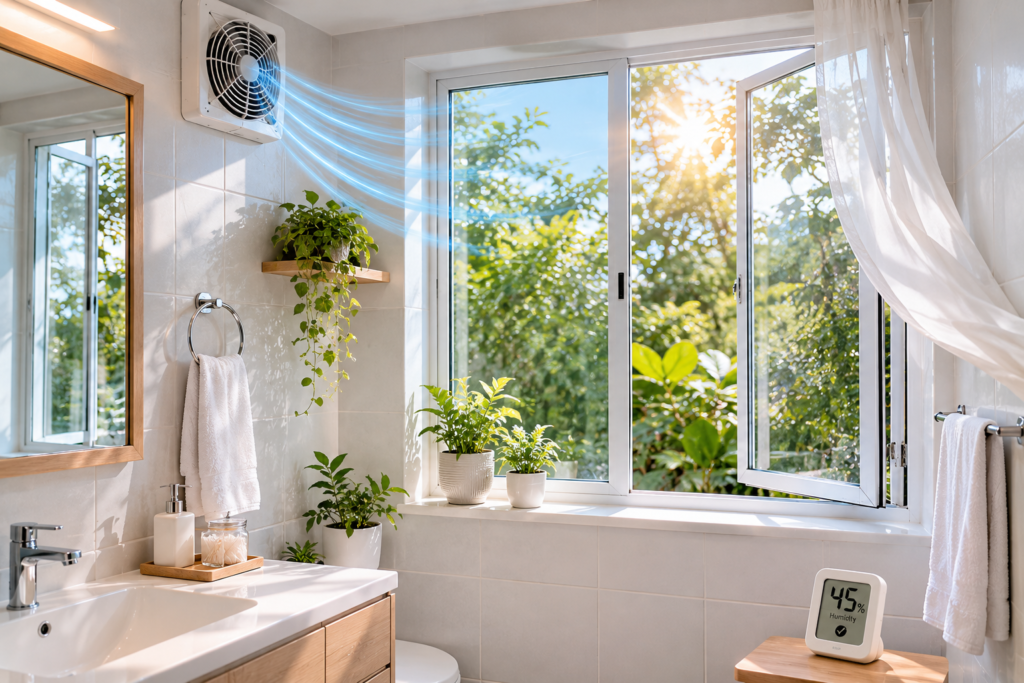
Improve Bathroom Ventilation
Good airflow is one of the most effective mold prevention strategies.
Helpful solutions include:
- opening windows after showers,
- using exhaust fans,
- keeping bathroom doors open,
- using small dehumidifiers,
- improving air circulation.
Dry Windows After Showers
One simple habit makes a huge difference:
- wipe condensation from windows after bathing.
Removing moisture quickly helps prevent mold before it starts.
Clean Window Tracks Regularly
Dust and moisture buildup inside tracks should be cleaned regularly.
Small cleaning brushes help reach:
- corners,
- tracks,
- hidden crevices.
Use Mold-Resistant Paint
Bathrooms with repeated moisture exposure may benefit from mold-resistant paint around windows and ceilings.
This helps protect surfaces from long-term humidity damage.
Check Silicone Seals and Caulking
Damaged seals allow moisture to penetrate deeper into walls and frames.
Inspect window seals regularly for:
- cracks,
- peeling,
- discoloration,
- trapped mold.
Replacing old caulking may help prevent recurring problems.
Reduce Indoor Humidity Levels
Humidity levels above 60% increase mold risk significantly.
Helpful tools include:
- compact dehumidifiers,
- moisture absorbers,
- humidity monitors,
- better exhaust systems.
Keeping humidity under control is one of the best long-term prevention methods.
Common Bathroom Window Mold Mistakes
Avoid these common problems:
Ignoring Small Mold Spots
Early mold is much easier to remove.
Leaving Condensation on Windows
Moisture buildup feeds mold growth.
Blocking Airflow
Poor ventilation traps humidity near windows.
Never Cleaning Window Tracks
Dirty tracks become hidden mold hotspots.
Painting Over Mold
This only hides the problem temporarily.
Recommended Products That May Help
Many homeowners use products such as:
- microfiber cloths,
- mold-resistant sprays,
- compact dehumidifiers,
- moisture absorbers,
- humidity monitors,
- mold-resistant paint,
- silicone sealants,
- small window cleaning brushes.
The right maintenance tools can make long-term prevention much easier.
Frequently Asked Questions
Why does mold grow around bathroom windows?
Usually because of condensation, trapped humidity, poor airflow, and damp surfaces.
Can condensation alone cause mold?
Yes. Constant moisture buildup from condensation creates ideal conditions for mold growth.
Is vinegar good for cleaning bathroom mold?
White vinegar may help reduce mold buildup and odors naturally.
Why does mold keep coming back around my window?
Usually because moisture problems remain unresolved.
Should I replace moldy window caulking?
If mold has deeply penetrated the sealant, replacement may help prevent recurring problems.
Final Thoughts
Bathroom mold around windows is usually caused by condensation, trapped humidity, poor ventilation, and lingering moisture.
Fortunately, most problems can be controlled by:
- improving airflow,
- reducing humidity,
- drying surfaces quickly,
- cleaning regularly,
- and maintaining window seals properly.
Small daily habits make a major difference over time.
By controlling moisture consistently and improving bathroom ventilation, you can prevent most bathroom window mold problems before they become severe.