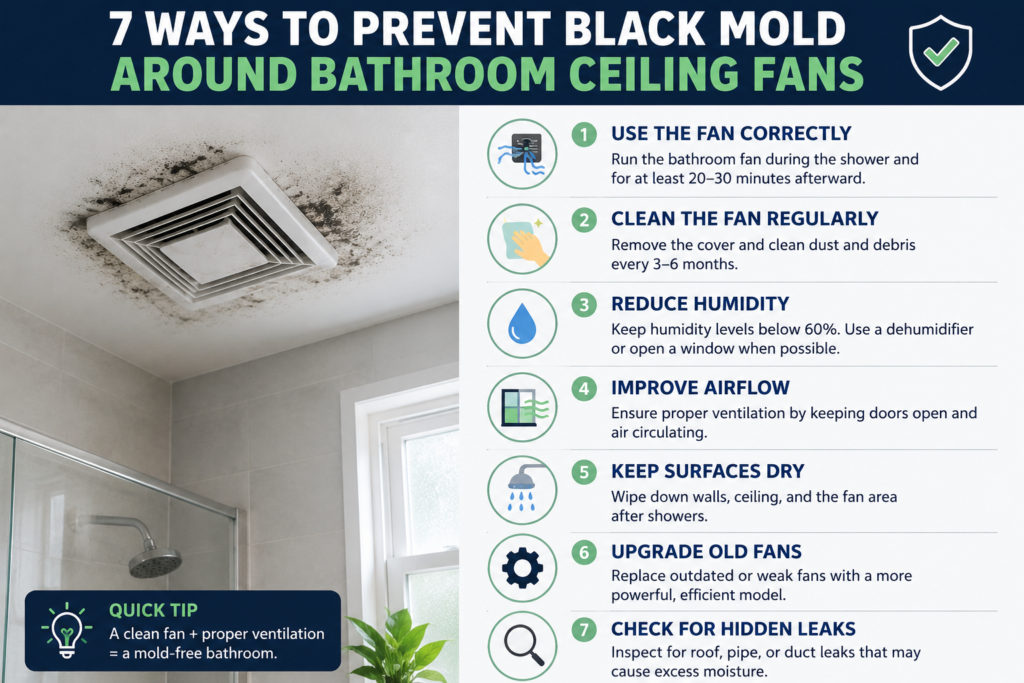
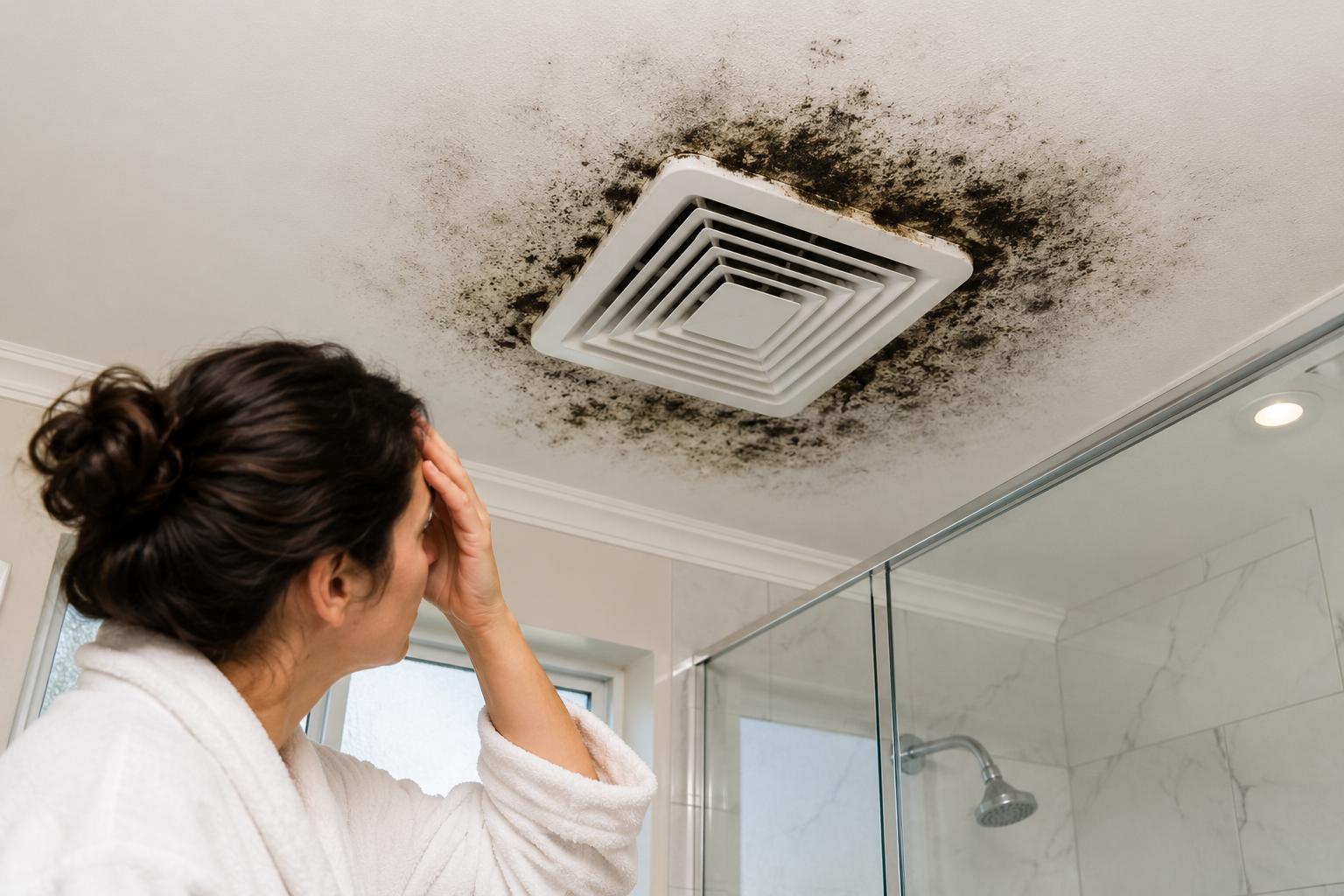
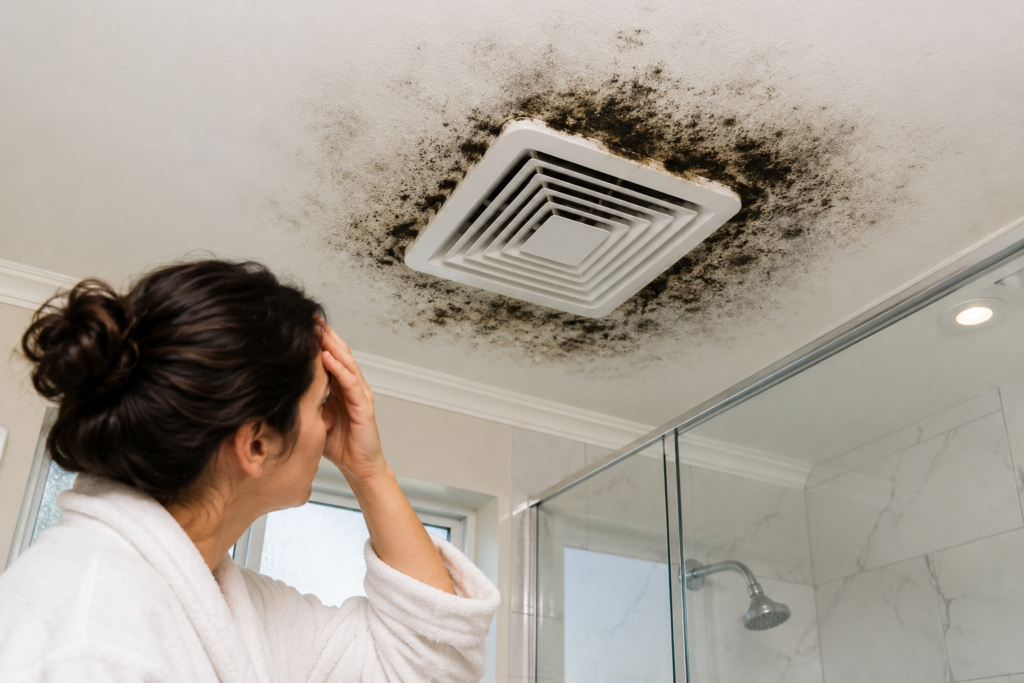
Black mold around bathroom ceiling fans is one of the most overlooked household problems. Many homeowners clean visible mold from walls or shower corners but completely ignore the ventilation fan mounted above them.
Unfortunately, bathroom ceiling fans are one of the most common places for hidden moisture and mold buildup.
Because warm steam rises after showers, moisture naturally collects around ceiling vents and exhaust fans. Over time, dust, humidity, and poor airflow create the perfect environment for black mold growth.
If left untreated, mold around bathroom ceiling fans can spread to ceilings, drywall, insulation, and nearby surfaces.
The good news is that most cases can be cleaned and prevented with proper maintenance and improved ventilation habits.
In this guide, you’ll learn:
- Why black mold forms around bathroom ceiling fans
- The most common hidden causes
- How to clean bathroom fan mold safely
- Signs your ventilation system may not be working properly
- The best ways to reduce bathroom humidity
- Long-term mold prevention strategies that actually work
By the end of this article, you’ll know how to keep your bathroom ceiling clean, dry, and mold-free year-round.
Why Does Black Mold Grow Around Bathroom Ceiling Fans?
Bathroom ceiling fans are constantly exposed to:
- steam,
- humidity,
- warm air,
- dust,
- trapped moisture.
When moisture combines with dust buildup around the fan cover and ceiling vent, mold spores can begin growing surprisingly quickly.
Bathrooms with poor airflow are especially vulnerable.
Many homeowners assume the fan automatically removes all humidity, but older or dirty exhaust fans often remove far less moisture than expected.
Common Signs of Mold Around Bathroom Ceiling Fans
Mold problems often begin gradually.
Common warning signs include:
- black spots around the fan cover,
- yellow or brown ceiling stains,
- peeling paint,
- musty bathroom odors,
- condensation that remains long after showers,
- dust buildup mixed with dark residue.
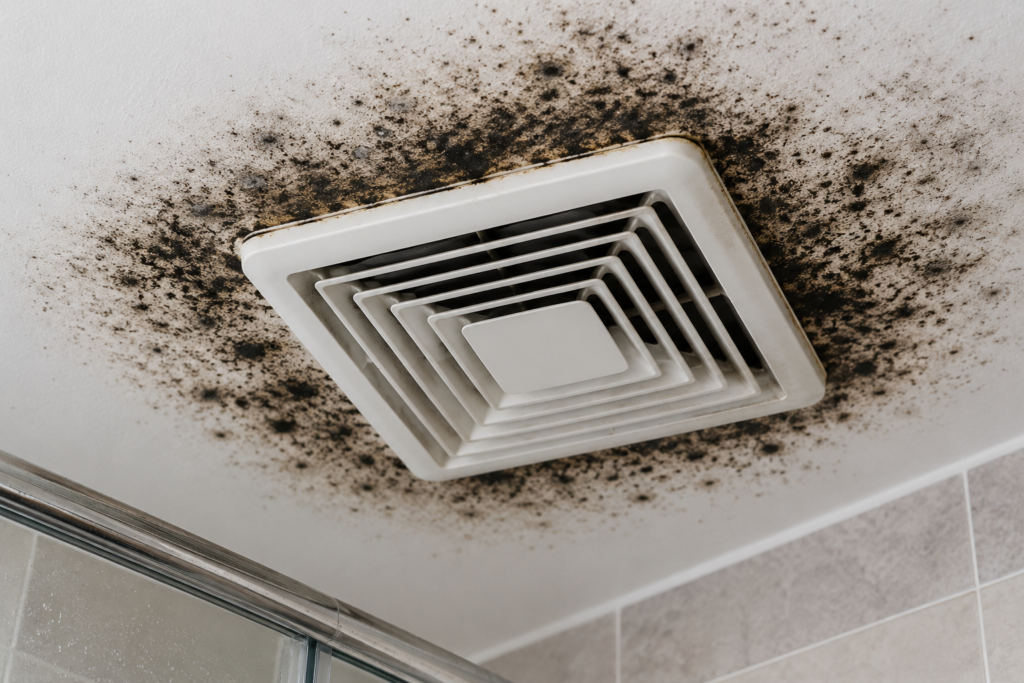
In some cases, mold may also spread inside the ventilation duct itself.
What Causes Mold Around Ceiling Fans?
Several different problems may contribute to mold growth.
1. Poor Bathroom Ventilation
One of the biggest causes is inadequate airflow.
A weak or outdated bathroom fan may fail to remove enough steam after showers.
As moisture stays trapped near the ceiling, mold begins forming around the vent area.
Signs Your Fan May Not Be Working Properly
- Mirrors stay foggy for long periods
- The bathroom feels humid after showers
- Paint near the ceiling bubbles or peels
- The fan sounds weak or unusually loud
- Moisture appears on walls and ceilings
Older fans often lose efficiency due to dust buildup and worn-out motors.
2. Dust Buildup Feeds Mold Growth
Dust may seem harmless, but it actually provides organic material that mold can feed on.
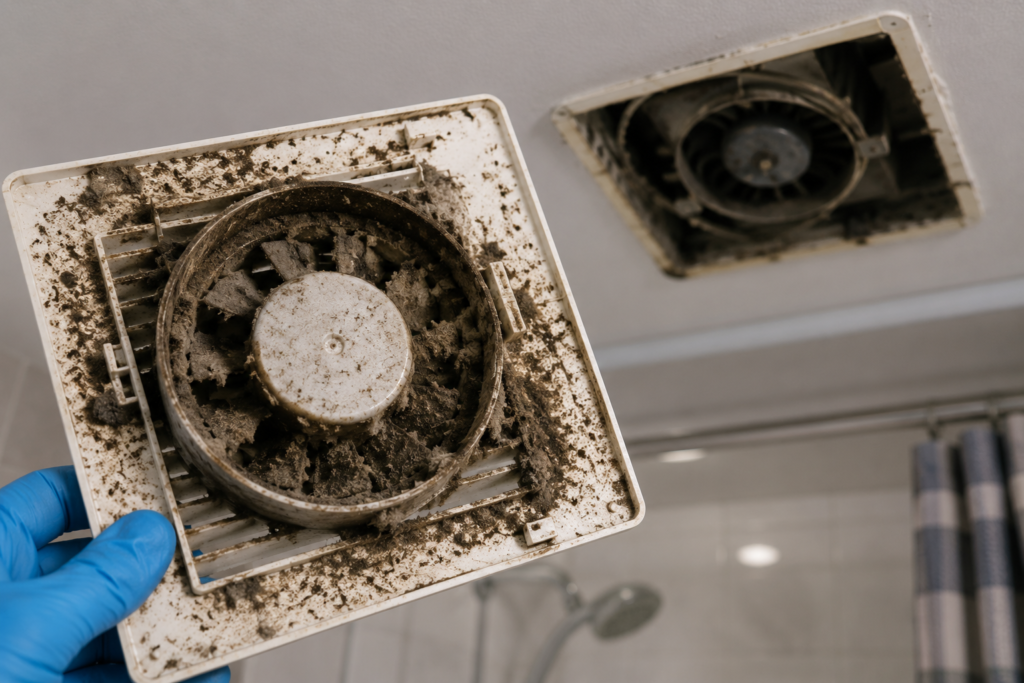
Bathroom fans collect dust very easily because they constantly pull air upward.
When dust combines with moisture, mold develops much faster.
Dirty fan covers are one of the most common hidden mold hotspots in bathrooms.
3. High Humidity Levels
Bathrooms naturally create high humidity because of:
- hot showers,
- baths,
- wet towels,
- limited airflow.
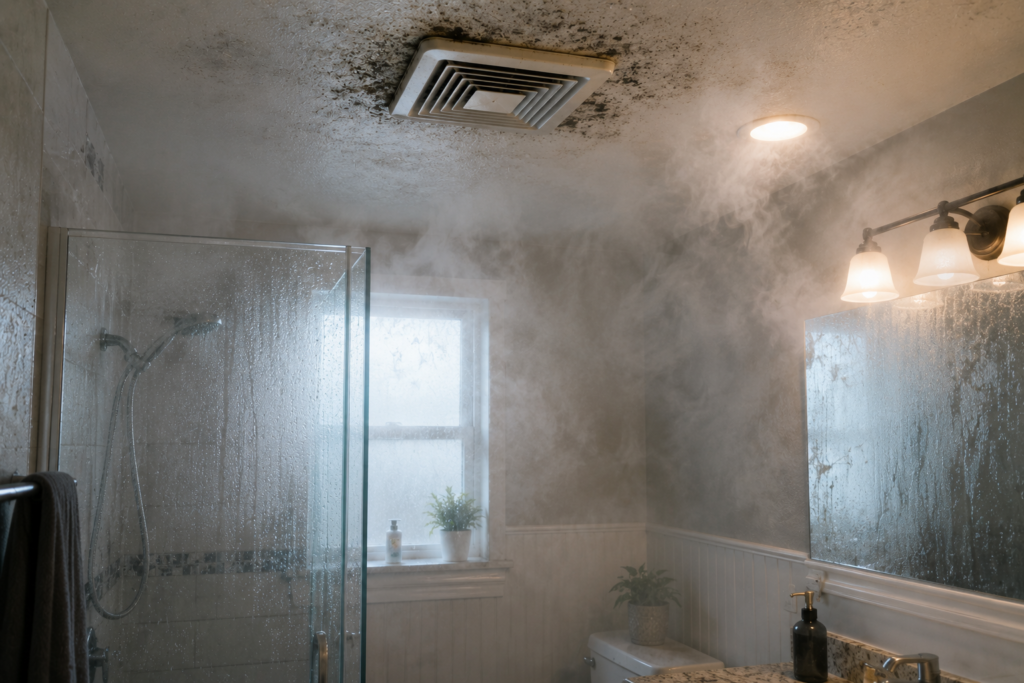
Humidity levels above 60% increase mold risk significantly.
Small bathrooms without windows are especially vulnerable.
4. Leaving Moisture Trapped After Showers
Many people turn off the exhaust fan immediately after showering.
However, steam and moisture remain in the air long after the shower ends.
This leftover humidity settles onto ceilings and ventilation covers.
Better Habit
Keep the fan running for at least:
- 20–30 minutes after showers.
This allows additional moisture to leave the room properly.
Is Black Mold Around Bathroom Fans Dangerous?
In small amounts, mold around a ceiling fan is usually manageable for most healthy adults.
However, mold exposure may irritate:
- allergies,
- asthma,
- respiratory conditions,
- sensitive individuals.
Some people experience:
- coughing,
- sneezing,
- eye irritation,
- headaches,
- throat discomfort.
Large or recurring mold problems may indicate deeper moisture issues behind ceilings or inside ventilation ducts.
How to Clean Black Mold Around Bathroom Ceiling Fans Safely
Before cleaning mold, always improve airflow first.
Open windows if possible and allow fresh air into the bathroom.
Step 1: Turn Off Electricity
Safety comes first.
Before cleaning:
- turn off the bathroom fan,
- disconnect power if necessary.
Avoid spraying liquids directly into electrical components.
Step 2: Remove the Fan Cover
Most bathroom fan covers can be removed carefully by pulling downward and releasing metal clips.
Once removed, you’ll likely notice:
- dust buildup,
- moisture residue,
- mold spots,
- trapped debris.
Step 3: Clean the Cover Thoroughly
Wash the fan cover using:
- warm water,
- mild soap,
- white vinegar,
- soft cleaning brush.
Allow the cover to dry completely before reinstalling it.
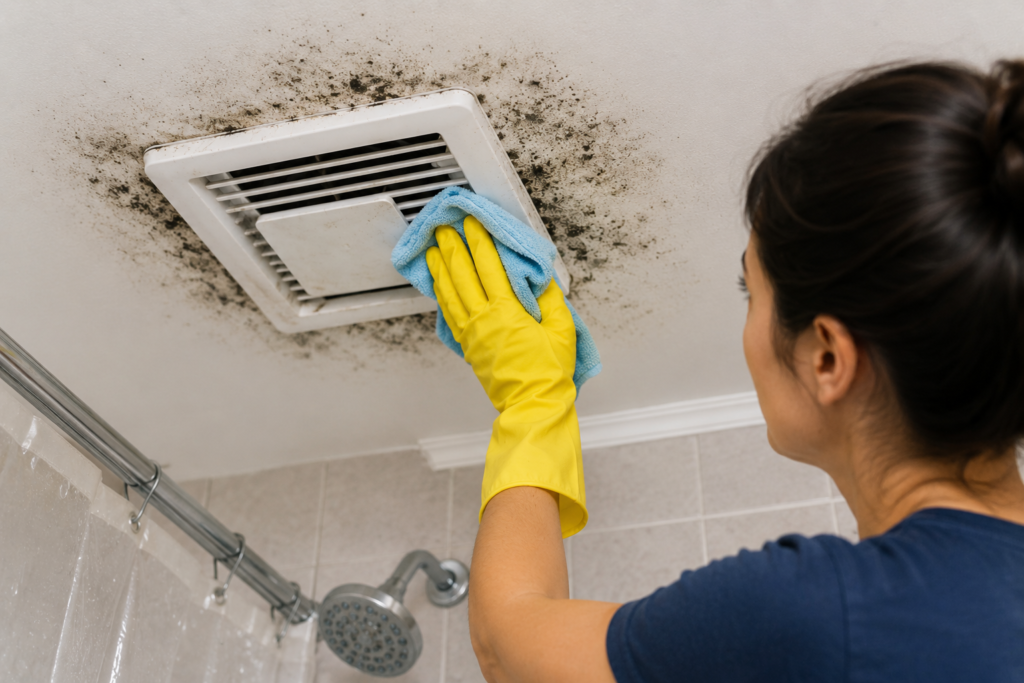
Step 4: Clean Visible Mold Around the Ceiling
Use a microfiber cloth or sponge with:
- vinegar solution,
- hydrogen peroxide,
- mold cleaner designed for bathrooms.
Gently wipe surrounding ceiling areas where mold appears.
Important:
Avoid soaking drywall with excessive liquid.
Step 5: Vacuum Dust Carefully
A vacuum with a brush attachment may help remove loose dust around the fan housing.
Reducing dust buildup helps slow future mold growth.
Best Natural Cleaning Methods for Bathroom Fan Mold
Many homeowners prefer lower-odor cleaning solutions.
White Vinegar
White vinegar is one of the most popular natural mold cleaning options.
It may help:
- reduce bacteria,
- loosen mold residue,
- remove odors.
Hydrogen Peroxide
Hydrogen peroxide penetrates surfaces more effectively than bleach in many cases.
It may help reduce:
- mold stains,
- mildew,
- bacteria.
Baking Soda
Baking soda helps absorb moisture and reduce odors naturally.
It also works well for gentle scrubbing.
Why Bleach Alone Often Fails
Bleach may temporarily whiten mold stains but often does not remove deeper mold roots from porous surfaces.
That’s why mold sometimes returns quickly after bleach cleaning.
Many homeowners mistakenly believe the problem is solved because the dark stains disappear temporarily.
How to Prevent Mold Around Bathroom Ceiling Fans
Prevention is much easier than repeated mold removal.
Keep the Fan Running Longer
Always allow the fan to run after showers.
This is one of the simplest and most effective habits.
Clean the Fan Regularly
Dust buildup should be cleaned every few months.
Regular cleaning improves:
- airflow,
- efficiency,
- moisture removal.
Reduce Bathroom Humidity
Helpful solutions include:
- opening windows,
- using dehumidifiers,
- drying wet towels quickly,
- improving airflow,
- keeping bathroom doors open after showers.

Upgrade Old Exhaust Fans
Older bathroom fans may simply be too weak for modern moisture levels.
Newer models often provide:
- stronger airflow,
- quieter operation,
- better energy efficiency.
Check for Hidden Leaks
Recurring mold near ceiling fans may indicate:
- roof leaks,
- attic condensation,
- hidden pipe leaks,
- insulation problems.
If mold returns quickly after cleaning, deeper moisture issues may need inspection.
Common Bathroom Fan Mold Mistakes
Avoid these common problems:
Ignoring Small Mold Spots
Early mold is much easier to remove.
Never Cleaning the Fan
Dust buildup encourages mold growth.
Turning the Fan Off Too Quickly
Steam remains in the room longer than many people realize.
Painting Over Mold
This hides the problem temporarily without fixing moisture.
Blocking Bathroom Airflow
Closed doors and poor ventilation trap humidity.
Recommended Products That May Help
Many homeowners use products such as:
- bathroom-safe mold removers,
- microfiber cloths,
- soft cleaning brushes,
- small dehumidifiers,
- moisture absorbers,
- replacement exhaust fans,
- humidity monitors.
The right maintenance tools can significantly reduce long-term mold problems.
Frequently Asked Questions
Why is mold growing around my bathroom ceiling fan?
Usually because of trapped humidity, dust buildup, and poor ventilation.
Can bathroom fan mold spread?
Yes. If moisture problems continue, mold may spread to ceilings, drywall, and nearby surfaces.
Should I use bleach to clean bathroom mold?
Bleach may remove surface stains temporarily but often does not solve deeper moisture problems.
How often should I clean my bathroom fan?
Most homeowners benefit from cleaning bathroom fans every 3–6 months.
Is black mold always dangerous?
Not always, but recurring or widespread mold should be taken seriously, especially for people with respiratory sensitivities.
Final Thoughts
Black mold around bathroom ceiling fans is usually caused by a combination of trapped humidity, dust buildup, and insufficient airflow.
Fortunately, most problems can be controlled with:
- regular cleaning,
- better ventilation,
- moisture reduction,
- and proper fan maintenance.
Small preventive habits make a major difference over time.
By keeping bathroom humidity under control and maintaining your ventilation system properly, you can prevent most ceiling fan mold problems before they become serious.