
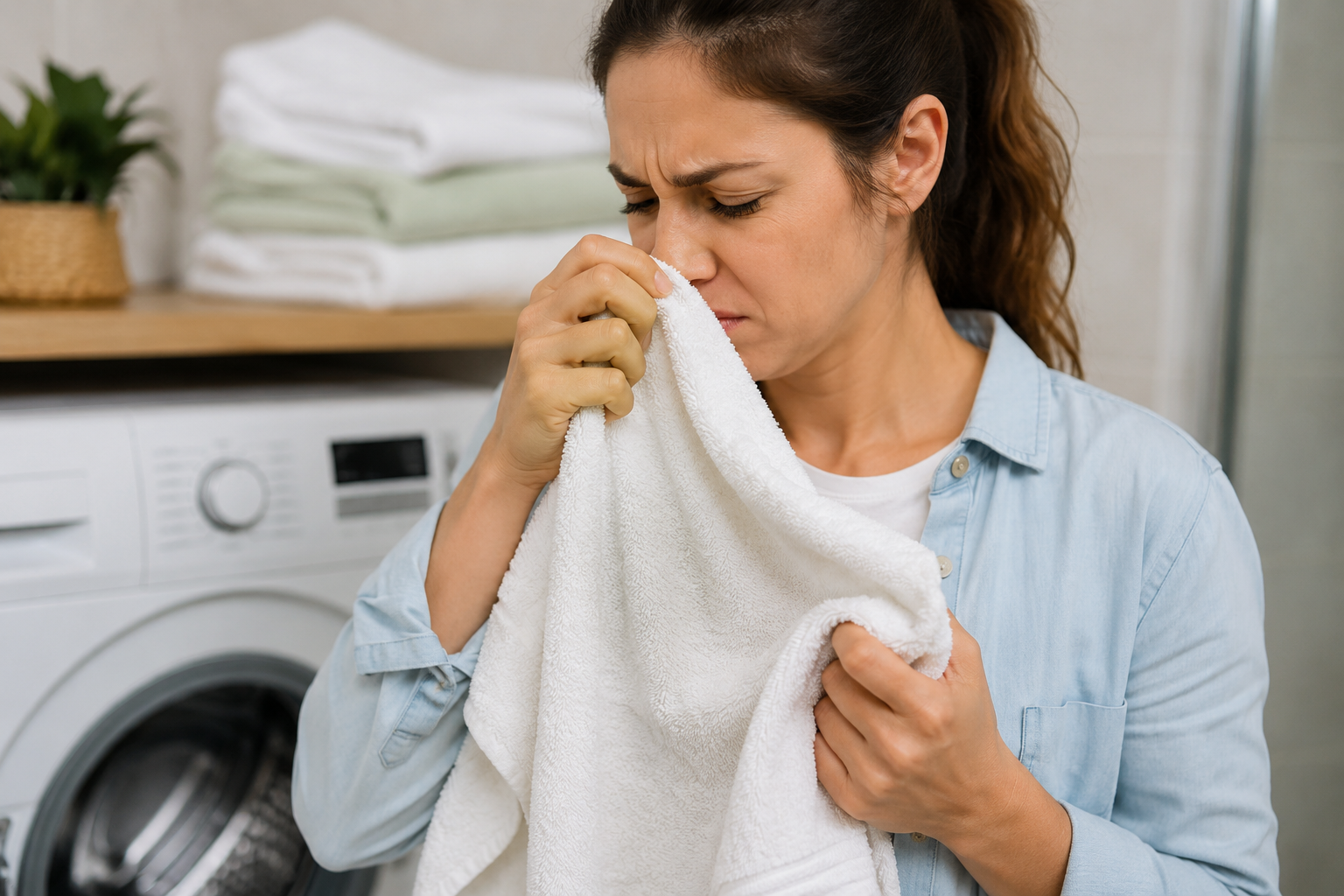

Few laundry problems are more frustrating than drying off with a towel that smells sour, musty, or unpleasant — even right after washing it. Many people assume the issue is caused by a bad washing machine or weak detergent, but towel odors are usually linked to bacteria buildup, trapped moisture, and improper laundry habits.
Towels absorb far more than just water. They collect:
- Sweat
- Body oils
- Dead skin cells
- Humidity from bathrooms
- Soap residue
- Moisture trapped deep inside fibers
Over time, this creates the perfect environment for bacteria and mildew growth.
The good news is that sour-smelling towels can often be restored with a few effective cleaning methods and better drying habits.
In this guide, you’ll learn:
- Why towels smell sour after washing
- The most common causes of towel odors
- How to remove musty smells properly
- Which laundry habits make odors worse
- Best washing and drying methods for towels
- How to keep towels fresh long-term
By the end of this article, you’ll know exactly how to fix towel odors and prevent them from coming back.
Why Towels Smell Sour Even After Washing

Most towel odors are caused by bacteria and moisture trapped inside thick fabric fibers.
Unlike lightweight clothing, towels are dense and highly absorbent. This means they hold moisture much longer, especially in humid bathrooms or poorly ventilated homes.
When towels stay damp for too long, bacteria begin multiplying quickly.
This often creates:
- sour smells,
- mildew odors,
- musty scents,
- or “wet dog” type smells.
1. Towels Stay Damp for Too Long
The number one cause of sour towels is prolonged moisture.
Many people:
- leave towels bunched up,
- hang towels without airflow,
- reuse damp towels repeatedly,
- or place wet towels in laundry baskets.
Even if towels eventually dry, bacteria may already be growing inside the fabric.
Common Problem Areas
- Humid bathrooms
- Poor ventilation
- Shared family bathrooms
- Small apartments
- Indoor drying during rainy seasons
2. Using Too Much Detergent

Excess detergent does not fully rinse out of thick towel fibers.
Instead, it creates residue buildup that traps:
- bacteria,
- body oils,
- moisture,
- and odors.
This buildup can make towels smell worse over time even if they appear clean.
Signs of Detergent Buildup
- Towels feel stiff
- Reduced absorbency
- Strong perfume smell mixed with mustiness
- Towels feel heavy after drying
Using less detergent often improves towel freshness.
3. Fabric Softener Can Trap Odors

Fabric softener is one of the biggest hidden causes of towel smells.
Although it makes towels feel soft initially, it coats fibers with residue that reduces absorbency and traps bacteria inside the fabric.
Over time, towels may:
- stop drying properly,
- absorb less water,
- and develop persistent sour odors.
Many laundry experts recommend avoiding fabric softener entirely for towels.
4. Washing Towels in Cold Water Only
Cold water saves energy, but towels sometimes require warmer temperatures to properly remove:
- body oils,
- sweat,
- bacteria,
- and soap residue.
Occasional warm or hot wash cycles can help deep clean towels more effectively.
Important:
Always check towel care labels before using high heat.
5. Overloading the Washing Machine
Towels absorb large amounts of water and become heavy during washing.
If the washer is overloaded:
- detergent cannot circulate properly,
- towels do not rinse fully,
- moisture becomes trapped,
- and odors remain inside the fibers.
Giving towels enough space during washing improves cleaning performance significantly.
How to Remove Sour Smells From Towels

If your towels already smell bad, several methods can help restore freshness.
Vinegar Wash Method
White vinegar helps break down detergent residue and neutralize odors naturally.
Instructions
Wash towels using:
- warm water,
- regular detergent,
- and 1 cup of white vinegar during the rinse cycle.
This helps dissolve buildup trapped inside the fabric.
Important:
Do not mix vinegar with bleach.
Baking Soda Deep Cleaning Method
Baking soda helps absorb and neutralize unpleasant smells.
How to Use It
Add:
- ½ cup baking soda directly into the washer drum.
This can help:
- reduce musty odors,
- soften towels naturally,
- and improve freshness.
Use Hot Water Occasionally
Periodic hot washes help kill bacteria and remove oils trapped inside towel fibers.
This is especially helpful for:
- gym towels,
- kitchen towels,
- heavily used bathroom towels,
- and humid households.
Again, always follow fabric care instructions.
Dry Towels Completely Before Folding
Even slightly damp towels can begin developing bacteria quickly.
Best Drying Practices
- Shake towels before drying
- Avoid overcrowding dryers
- Use proper airflow
- Hang towels fully open
- Never fold towels while damp
Complete drying is one of the most important steps in odor prevention.
Why Bathroom Humidity Makes Towels Smell Worse

Bathrooms naturally create high humidity levels from:
- showers,
- hot water steam,
- poor ventilation,
- and wet surfaces.
This moisture slows towel drying and encourages mildew growth.
Signs Your Bathroom Has Too Much Humidity
- Foggy mirrors lasting long after showers
- Mold around ceilings or corners
- Damp-smelling air
- Towels taking hours to dry
How to Improve Bathroom Airflow
Better airflow helps towels dry faster and prevents bacterial growth.
Helpful Solutions
- Use exhaust fans
- Open windows after showers
- Use dehumidifiers if necessary
- Hang towels spread out
- Avoid stacking wet towels together
Even small airflow improvements can reduce odors dramatically.
How Often Should Towels Be Washed?
Many people wash towels less often than recommended.
General guidelines:
- Bath towels: every 3–4 uses
- Gym towels: after every use
- Kitchen towels: every 1–2 days
- Hand towels: every few days
Frequent washing reduces bacteria buildup before odors develop.
Best Laundry Habits for Fresh Towels

Consistency matters more than harsh cleaning products.
Recommended Routine
After Use
- Hang towels fully open
- Allow airflow
- Avoid leaving towels on floors
During Washing
- Use moderate detergent
- Avoid excessive fabric softener
- Wash towels separately when possible
- Do not overload the washer
After Washing
- Dry completely
- Store only when fully dry
- Keep linen closets ventilated
Common Mistakes That Make Towels Smell Worse
Avoid these common problems:
Leaving Towels in the Washer Overnight
Moisture allows bacteria to multiply rapidly.
Using Too Much Fabric Softener
Residue traps moisture and odors.
Reusing Damp Towels Too Many Times
Repeated moisture exposure increases bacterial growth.
Poor Bathroom Ventilation
Humidity slows drying dramatically.
Overcrowding Drying Racks
Airflow is essential for proper drying.
Recommended Products That Help Prevent Towel Odors
Many homeowners use products such as:
- Washing machine cleaner tablets
- Moisture absorbers
- Dehumidifiers
- Ventilated towel racks
- Laundry odor removers
- Quick-dry towels
- Mesh laundry hampers
The right products can improve airflow, reduce humidity, and help towels stay fresh longer.
Frequently Asked Questions
Why do towels smell sour after washing?
Usually because of trapped moisture, detergent buildup, bacteria, or slow drying.
Does vinegar remove towel odors?
Yes. White vinegar helps dissolve residue and neutralize smells naturally.
Is fabric softener bad for towels?
In many cases, yes. Fabric softener can reduce absorbency and trap odor-causing residue.
Why do towels smell worse in humid weather?
Humidity slows drying and encourages bacterial growth inside thick fabric fibers.
How can I keep towels smelling fresh longer?
Dry towels completely, improve bathroom airflow, avoid detergent buildup, and wash towels regularly.
Final Thoughts

Sour-smelling towels are usually caused by moisture, bacteria buildup, poor airflow, and laundry residue — not because the towels are permanently ruined.
In most cases, improving a few simple habits can make a major difference.
By:
- drying towels properly,
- reducing excess detergent,
- avoiding fabric softener,
- improving ventilation,
- and cleaning towels consistently,
you can keep towels smelling fresh, soft, and clean much longer.
A proper towel care routine not only improves freshness but also helps towels stay more absorbent, hygienic, and durable over time.