
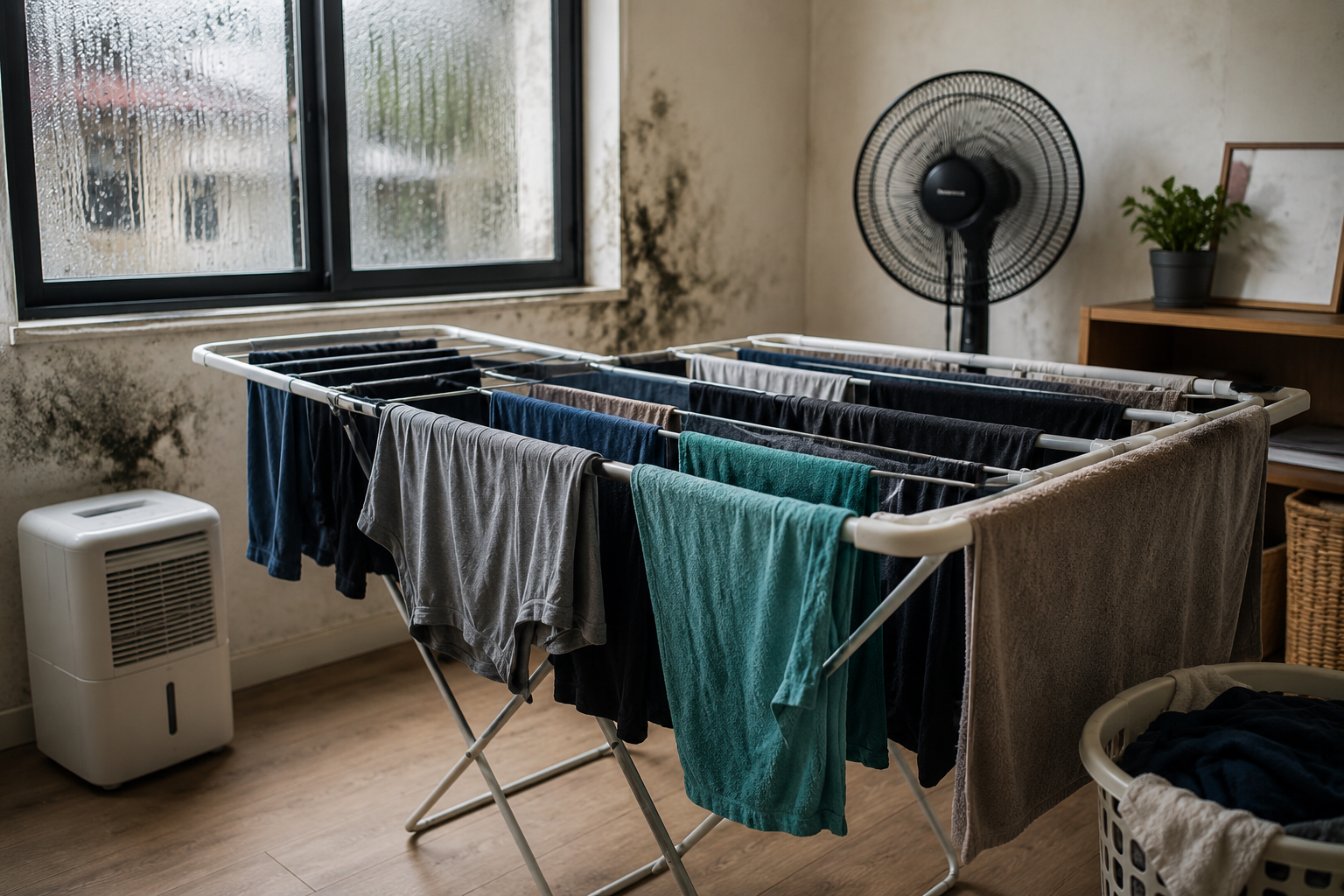

Drying clothes indoors is common in apartments, small homes, and during rainy or humid seasons. While it may seem convenient, many people notice that their clothes develop a damp or musty smell even after they appear completely dry.
If your laundry smells worse after drying indoors than it did coming out of the washing machine, the issue is not the detergent — it’s the drying process.
In this guide, you’ll learn why clothes smell damp after indoor drying, what causes the problem, and how to fix it permanently using simple, practical methods.
Why Clothes Smell Damp After Drying Indoors

The main reason for damp-smelling clothes is slow drying combined with trapped moisture.
When clothes stay wet for too long, bacteria begin to grow inside the fabric fibers. These bacteria produce the musty smell commonly associated with damp laundry.
Indoor environments often create ideal conditions for this problem:
- Limited airflow
- High humidity levels
- Poor ventilation
- Low temperatures
- Overcrowded drying spaces
Even if clothes feel dry on the surface, moisture can remain trapped inside thicker fabrics like towels, jeans, and hoodies.
What Actually Causes the Musty Smell

The smell is not caused by water itself, but by bacteria and mildew.
Here’s what happens:
- Sweat, body oils, and detergent residue remain in the fabric
- Moisture creates a perfect environment for bacteria
- Bacteria multiply and release odor compounds
- Smell becomes noticeable once clothes are dry or worn
This is why clothes may smell fine at first but develop a bad odor later.
Most Common Mistakes When Drying Clothes Indoors

1. Overcrowding the Drying Rack
When clothes are too close together, air cannot circulate properly.
This leads to:
- Slower drying
- Trapped moisture
- Higher risk of bad smells
Solution:
Leave space between each item and avoid stacking clothes on top of each other.
2. Drying in a Closed Room
Drying clothes in a room with no airflow traps humidity inside.
As a result:
- Moisture builds up in the air
- Clothes take longer to dry
- Odor-causing bacteria develop
Solution:
Open windows, doors, or use a fan to improve air circulation.
3. High Humidity Levels
If the air is already humid, it becomes harder for water to evaporate from clothes.
Signs of high humidity include:
- Condensation on windows
- Damp walls or furniture
- Persistent musty smells in the room
Solution:
Use a dehumidifier or avoid drying clothes in naturally humid areas like bathrooms.
4. Clothes Taking Too Long to Dry
The longer clothes stay damp, the more time bacteria have to grow.
Ideally, clothes should dry within:
- 6 to 8 hours in good conditions
- Up to 24 hours maximum
Anything longer increases the risk of odors.
5. Clothes Coming Out Too Wet From the Washer
If clothes are too wet after washing, indoor drying becomes much more difficult.
Solution:
- Use a higher spin cycle
- Avoid overloading the washing machine
- Run an extra spin cycle if needed
Less water means faster drying.
How to Dry Clothes Indoors Without Bad Smell
Improve Airflow
Airflow is the most important factor for indoor drying.
You can improve it by:
- Using a fan
- Opening windows
- Keeping doors slightly open
- Positioning clothes where air can circulate freely
Choose the Right Location

Avoid drying clothes in:
- Small closed rooms
- Bathrooms
- Poorly ventilated spaces
Better options include:
- Rooms with windows
- Areas with natural airflow
- Covered balconies
Use a Fan to Speed Up Drying

A simple fan can make a big difference.
It helps:
- Move air around the clothes
- Increase evaporation
- Reduce drying time
Even a small fan can significantly reduce odor problems.
Use a Dehumidifier

If your home has high humidity, a dehumidifier is one of the best solutions.
It works by:
- Removing excess moisture from the air
- Helping clothes dry faster
- Reducing mold and mildew risk
Separate Heavy and Light Fabrics
Thick fabrics take longer to dry and can affect other clothes.
Best practice:
- Dry towels separately
- Give jeans extra space
- Avoid mixing heavy and light items
Turn Clothes Occasionally
If clothes stay in the same position for too long, moisture can get trapped.
Turning them helps:
- Improve airflow
- Ensure even drying
- Prevent damp spots
Useful Tools That Help Prevent Indoor Drying Smells
You don’t need expensive solutions, but some tools can make the process easier:
- Drying racks with good spacing
- Portable fans
- Dehumidifiers
- Moisture absorbers
- Ventilation systems
- Breathable laundry baskets
These help improve airflow and reduce humidity.
Frequently Asked Questions
Why do my clothes smell damp even after drying?
Because they stayed wet for too long, allowing bacteria to grow inside the fabric.
Is it bad to dry clothes indoors?
No, as long as you have good airflow and control humidity.
Can I fix damp-smelling clothes without rewashing?
Sometimes airing them out helps, but usually rewashing is the best solution.
How can I make clothes dry faster indoors?
Improve airflow, use a fan, reduce humidity, and avoid overcrowding.
Do dehumidifiers really work?
Yes, they significantly reduce moisture in the air and help prevent odors.
Final Thoughts
Clothes that smell damp after indoor drying are usually the result of slow drying, poor airflow, and excess humidity — not a problem with your washing machine or detergent.
The key to solving this issue is improving your drying environment.
Simple changes like spacing clothes properly, increasing airflow, using a fan, and reducing humidity can completely eliminate bad smells.
With the right habits, you can dry clothes indoors efficiently and keep them fresh every time.