
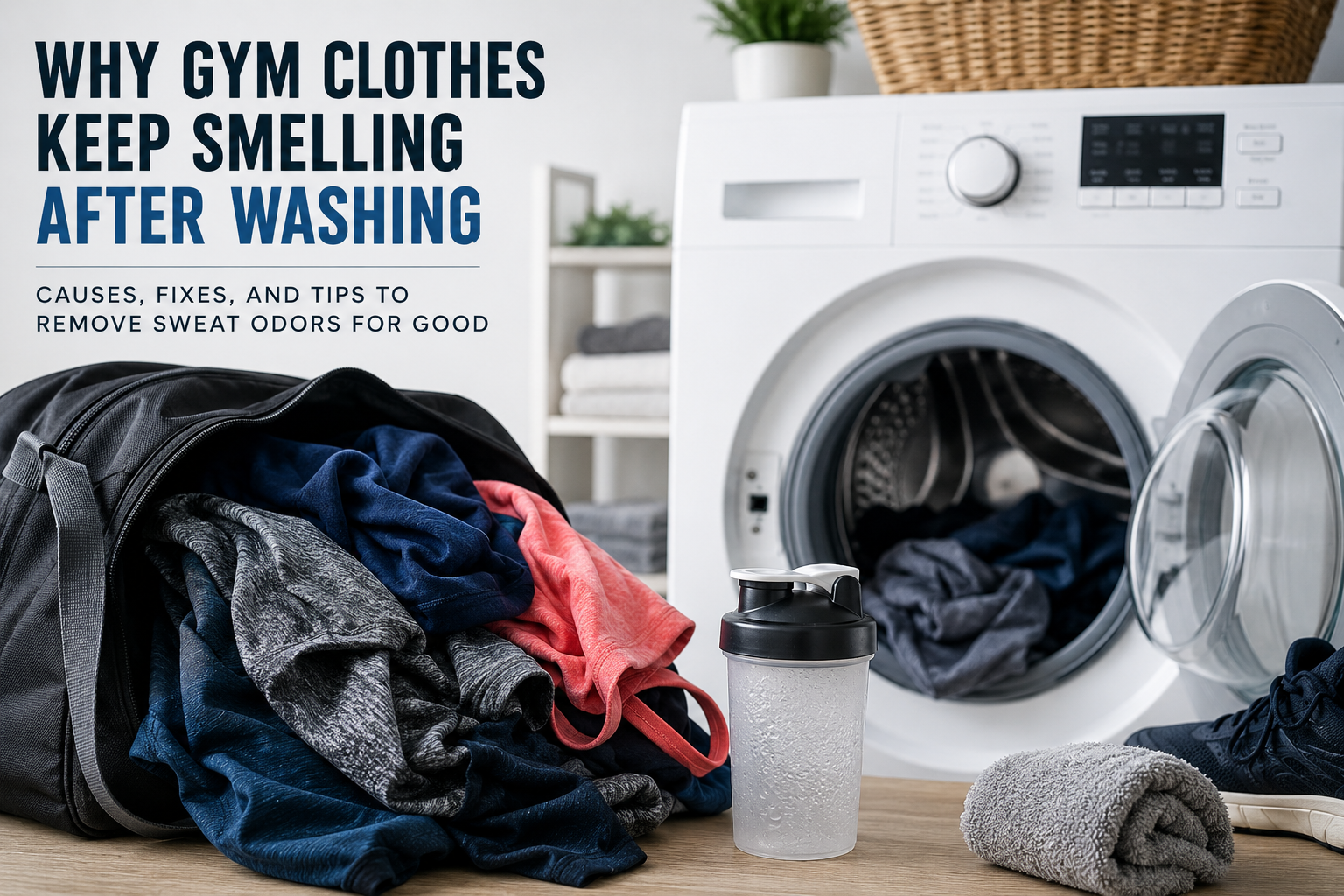

Many people assume the washing machine is broken or the detergent is weak. In reality, several common laundry habits make the problem worse.
1. Synthetic Fabrics Trap More Bacteria
Most workout clothes are made from:

- Polyester
- Nylon
- Spandex
- Elastic blends
These materials hold body oils differently than natural fibers like cotton.
As sweat accumulates, bacteria remain trapped inside microscopic fabric pores, creating long-term odor buildup.
Common Signs
- Clothes smell clean at first but become smelly during workouts
- Armpit areas keep odor permanently
- Shirts smell musty after drying
- Leggings develop sweat smells quickly
2. Leaving Sweaty Clothes in Bags or Hampers

One of the worst habits is leaving damp workout clothes inside:
- gym bags,
- laundry baskets,
- backpacks,
- lockers.
Warm, moist environments allow bacteria to multiply rapidly.
Even a few hours can create strong odors that become difficult to remove later.
Better Habit
After workouts:
- Hang clothes to dry immediately
- Allow airflow before washing
- Avoid sealed plastic bags
- Wash activewear as soon as possible
3. Using Too Much Detergent

Many people add extra detergent hoping it will eliminate sweat smells.
However, excess detergent creates residue that traps bacteria and odor inside synthetic fibers.
This buildup becomes worse over time.
Signs of Detergent Buildup
- Clothes feel sticky or stiff
- Strong perfume mixed with sweat odor
- Reduced breathability
- White residue on dark fabrics
Using the correct detergent amount is usually more effective than overusing soap.
4. Fabric Softener Makes Activewear Worse
Fabric softeners coat fibers with a thin layer of chemicals designed to create softness and fragrance.
On gym clothes, this coating can:
- trap sweat,
- reduce breathability,
- lock bacteria inside fibers,
- reduce moisture-wicking performance.
Many athletic clothing brands actually recommend avoiding fabric softener completely.
Best Ways to Remove Sweat Odors From Gym Clothes
Fortunately, there are several effective methods that work well without damaging fabrics.
Vinegar Pre-Soak Method

White vinegar helps break down odor-causing residue naturally.
How to Do It
Mix:
- cold water
- 1 cup white vinegar
Let clothes soak for 30–60 minutes before washing.
Then wash normally using mild detergent.
Important:
Do not mix vinegar with bleach.
Baking Soda Method
Baking soda helps neutralize strong odors trapped inside synthetic fabrics.
Instructions
Add:
- ½ cup baking soda directly into the washing drum.
This can help:
- reduce odor,
- soften fabrics,
- improve washing performance.
Wash Gym Clothes in Cold Water
Hot water can sometimes “lock” odors into synthetic materials permanently.
Cold water is often better for activewear because it:
- protects elastic fibers,
- reduces fabric damage,
- preserves moisture-wicking technology.
Always check clothing labels first.
Use Sport-Specific Laundry Detergents
Some detergents are designed specifically for activewear.
These products target:
- sweat oils,
- bacteria,
- synthetic fabric buildup.
They can be especially helpful for:
- runners,
- athletes,
- gym-goers,
- sports uniforms.
Turn Clothes Inside Out Before Washing
The dirtiest part of workout clothing is usually the inside surface that touches skin directly.
Turning clothes inside out helps detergent reach:
- sweat buildup,
- body oils,
- bacteria more effectively.
This simple habit improves cleaning significantly.
Air Dry When Possible

High dryer heat can damage elastic materials and trap odors deeper into fibers over time.
Air drying often helps activewear last longer.
Best Practices
- Dry clothes in ventilated areas
- Avoid damp rooms
- Use drying racks with airflow
- Dry completely before storing
How to Remove Odor From Gym Shoes
Sometimes the smell is not coming from clothing alone.
Sweaty shoes can spread odor throughout laundry rooms, closets, and gym bags.
Helpful Tips
- Let shoes air out after workouts
- Use moisture-absorbing inserts
- Rotate shoes regularly
- Wash removable insoles
- Avoid storing damp shoes in closed spaces
Best Laundry Habits for Fresh-Smelling Activewear
Good habits prevent odors before they become permanent.
Recommended Routine
After Exercise
- Hang sweaty clothes immediately
- Allow airflow
- Avoid leaving items in gym bags
During Washing
- Use mild detergent
- Avoid fabric softener
- Wash in cold water
- Turn clothes inside out
After Washing
- Dry quickly
- Store only when fully dry
- Keep laundry areas ventilated
Consistency matters more than aggressive cleaning products.
Common Mistakes That Make Gym Clothes Smell Worse
Avoid these common problems:
Overloading the Washer
Clothes need enough space for water circulation.
Using Too Much Detergent
Excess soap creates buildup.
Leaving Wet Laundry Overnight
Bacteria multiply rapidly in damp fabric.
Using High Heat Constantly
Heat may damage fibers and trap odor permanently.
Ignoring Gym Bags
Bacteria often spread from dirty bags to clean clothes.
How Often Should You Wash Workout Clothes?
In most cases:
- Shirts: after every workout
- Socks: after every use
- Sports bras: after each workout
- Leggings and shorts: usually after each use
Even if clothes do not smell immediately, bacteria and sweat oils remain inside fibers.
Recommended Products for Gym Clothes Odor
Many people use products like:
- Sports laundry detergents
- Moisture absorbers
- Mesh laundry bags
- Drying racks
- Odor-eliminating sprays
- Activated charcoal inserts for shoes
Choosing proper laundry tools can improve freshness and help activewear last longer.
Frequently Asked Questions
Why do gym clothes smell worse than regular clothes?
Synthetic fabrics trap bacteria and sweat oils more easily than cotton.
Does vinegar remove sweat smells?
Yes. White vinegar helps break down odor-causing residue naturally.
Can I use bleach on workout clothes?
Usually not recommended. Bleach may damage elastic fibers and performance fabrics.
Why do gym clothes smell when I start sweating again?
Residual bacteria inside fibers reactivate with heat and moisture during workouts.
Is fabric softener bad for activewear?
Yes. Fabric softener can trap odor and reduce moisture-wicking performance.
Final Thoughts

Gym clothes odors are frustrating, but they are usually caused by trapped bacteria, sweat oils, detergent buildup, and poor drying habits — not because your clothes are permanently ruined.
With the right laundry routine, most activewear can stay fresh much longer.
Simple changes like:
- washing clothes quickly,
- avoiding fabric softener,
- using less detergent,
- air drying properly,
- and improving airflow
can make a major difference.
Keeping workout clothes clean not only improves freshness but also helps fabrics last longer, perform better, and stay comfortable during exercise.