
Small rooms can become uncomfortable very quickly during hot weather.
Many people living in:
- apartments,
- dorms,
- offices,
- RVs,
- or rental spaces
often struggle to stay cool without installing a traditional air conditioning system.
That’s why portable air conditioners have become increasingly popular.
These compact cooling devices offer flexibility, easier installation, and the ability to cool specific rooms without permanent modifications.
But are portable air conditioners actually worth the investment?
The answer depends on:
- room size,
- energy usage,
- climate,
- insulation,
- and your cooling expectations.
In this guide, you’ll learn:
- How portable air conditioners work
- Their biggest advantages and disadvantages
- Energy consumption considerations
- How to choose the right BTU size
- Common mistakes people make
- Maintenance requirements
- And whether portable AC units are truly effective for small rooms
By the end of this article, you’ll know exactly whether a portable air conditioner is the right cooling solution for your space.

What Is a Portable Air Conditioner?
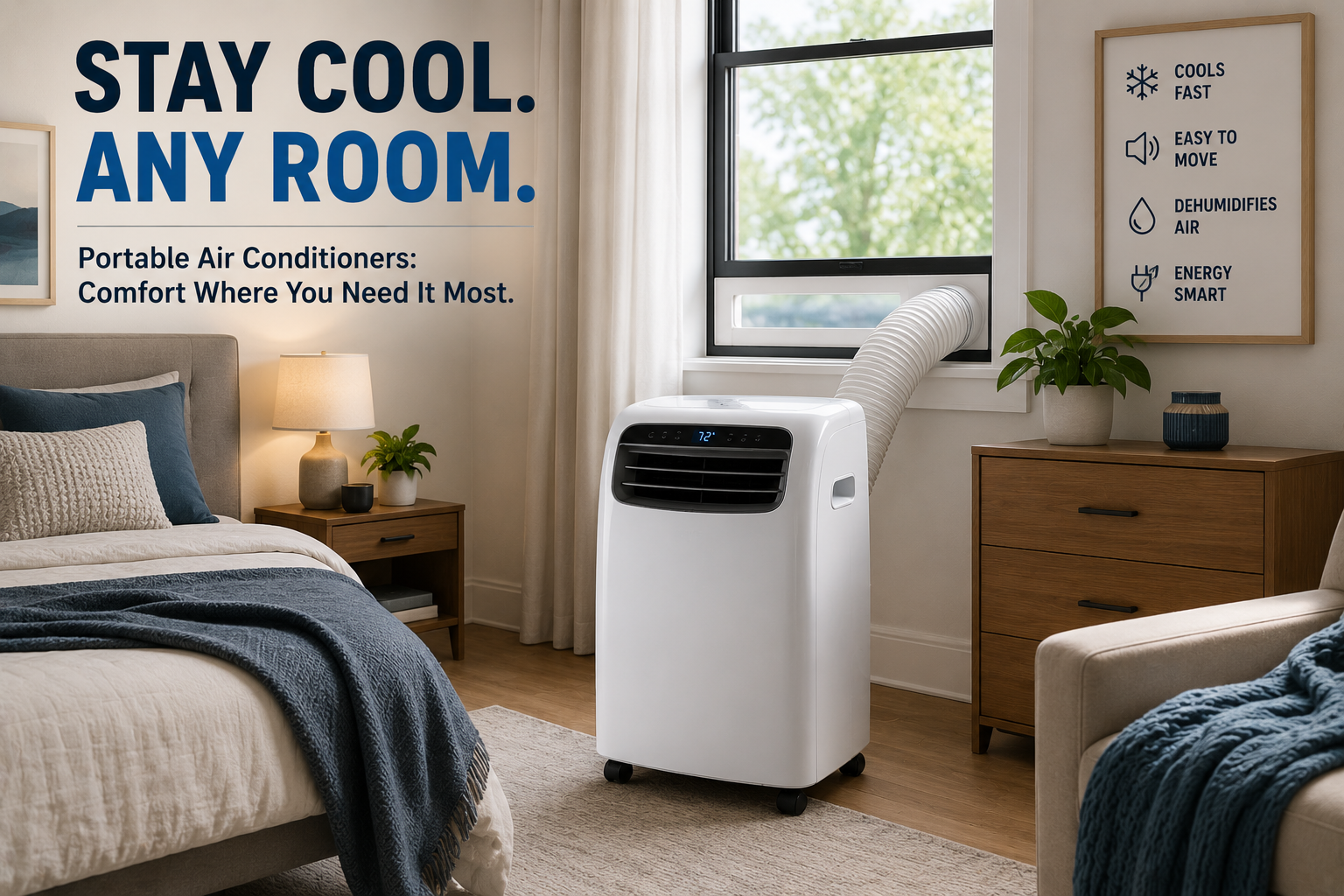
A portable air conditioner is a movable cooling unit designed to cool individual rooms.
Unlike central air systems, portable ACs:
- do not require permanent installation,
- can be moved between rooms,
- and usually connect to a nearby window for ventilation.
Most models use:
- wheels for mobility,
- exhaust hoses,
- and standard electrical outlets.
Portable AC units are especially popular in:
- apartments,
- rental homes,
- dormitories,
- and temporary living spaces.
How Portable Air Conditioners Work
Portable air conditioners remove:
- heat,
- humidity,
- and warm air
from a room.

The unit pulls warm air inside, cools it using refrigeration components, and then releases:
- cool air back into the room,
- while venting hot air outside through an exhaust hose.
Many portable ACs also include:
- fan modes,
- dehumidifier functions,
- and programmable timers.
Why Portable Air Conditioners Are Popular for Small Rooms
Small rooms cool faster and require less power compared to larger spaces.
This makes portable air conditioners practical for:
- bedrooms,
- home offices,
- studio apartments,
- dorm rooms,
- and small living rooms.
They also provide targeted cooling instead of cooling an entire home unnecessarily.
Main Advantages of Portable Air Conditioners
Easy Installation
Most portable AC units require:
- minimal setup,
- no permanent construction,
- and simple window vent kits.

This makes them ideal for renters.
Portability
Unlike window units, portable ACs can be moved between rooms.
This flexibility helps users cool:
- bedrooms at night,
- offices during the day,
- or temporary spaces when needed.
Better for Apartments and Rentals
Many apartment buildings restrict:
- window units,
- permanent modifications,
- or complex HVAC installations.
Portable units are often allowed because they are temporary appliances.
Additional Features
Modern portable air conditioners may include:
- remote controls,
- sleep modes,
- air purification,
- Wi-Fi connectivity,
- and dehumidifier settings.
Main Disadvantages of Portable Air Conditioners
While useful, portable ACs also have limitations.
Less Efficient Than Central Air
Portable air conditioners are usually less efficient than:
- central HVAC systems,
- mini splits,
- or large window units.
Some energy is lost through the exhaust process.
Noise Levels
Portable ACs can be noisy because:
- the compressor remains inside the room.
Noise sensitivity is important in:
- bedrooms,
- offices,
- and study environments.
Limited Cooling Range
Portable ACs work best in:
- smaller spaces,
- enclosed rooms,
- and properly insulated areas.
Large rooms may not cool effectively.
Exhaust Hose Requirements
Portable units need:
- proper window ventilation,
- secure hose placement,
- and airflow management.
Improper setup reduces efficiency significantly.
Choosing the Right BTU Size
BTU (British Thermal Units) measures cooling capacity.
Choosing the wrong BTU size is one of the biggest mistakes buyers make.

Recommended BTU Guide for Small Rooms
Small Bedroom or Office
- 6,000–8,000 BTU
Medium Small Room
- 8,000–10,000 BTU
Studio Apartment
- 10,000–12,000 BTU
Room insulation,
sunlight exposure,
and ceiling height also affect cooling performance.
Portable AC vs Window AC
Many people compare portable units with window air conditioners.

Portable AC Advantages
- Easier to move
- Simpler installation
- Better for renters
- Flexible room usage
Window AC Advantages
- Usually more energy efficient
- Often quieter
- Better cooling power per dollar
The best choice depends on:
- mobility needs,
- room layout,
- and apartment restrictions.
Energy Consumption and Electricity Costs
Portable air conditioners can increase electricity usage.
However, cooling a single room is often cheaper than cooling an entire home.
Energy costs depend on:
- BTU size,
- usage hours,
- room insulation,
- and climate conditions.

Energy-saving tips include:
- keeping doors closed,
- sealing windows,
- using blackout curtains,
- and cleaning filters regularly.
Maintenance Tips
Portable ACs require regular maintenance for best performance.

Helpful habits include:
- cleaning filters,
- checking exhaust hoses,
- draining moisture when necessary,
- and keeping vents unobstructed.
Dirty filters reduce:
- airflow,
- efficiency,
- and cooling performance.
Common Mistakes to Avoid
Avoid these common problems.
Choosing the Wrong BTU Size
Undersized units struggle to cool rooms properly.
Oversized units may waste energy.
Poor Window Vent Installation
Leaky vent kits reduce cooling efficiency.
Blocking Airflow
Never place portable ACs:
- too close to walls,
- behind furniture,
- or in tight corners.
Ignoring Room Insulation
Poor insulation allows cool air to escape quickly.
Not Cleaning Filters
Dirty filters reduce cooling performance dramatically.
Are Portable Air Conditioners Worth It?
For many people, yes.
Portable AC units are especially useful for:
- renters,
- apartment residents,
- students,
- remote workers,
- and people needing flexible cooling.
They work best in:
- smaller rooms,
- moderate climates,
- and spaces without central air conditioning.
While not perfect, they provide:
- convenience,
- flexibility,
- and targeted comfort.
Final Thoughts
Portable air conditioners can be an excellent solution for cooling small rooms.
They offer:
- easy installation,
- flexible usage,
- and practical cooling for apartments and rentals.
However, choosing the correct:
- BTU size,
- room setup,
- and maintenance routine
is essential for good performance.
Instead of expecting whole-home cooling, portable ACs work best when used strategically in smaller enclosed spaces.
With proper setup and realistic expectations, they can significantly improve comfort during hot weather.
Quick Summary
- Portable ACs are ideal for small rooms and apartments
- They require minimal installation
- Proper BTU sizing is very important
- Portable units are flexible and movable
- They are usually less efficient than central air
- Noise level matters for bedrooms and offices
- Good ventilation improves performance
- Regular maintenance keeps efficiency high
- Best for renters and temporary spaces
- Small rooms cool faster and more efficiently
Portable air conditioners are a practical cooling solution for many modern living spaces.