
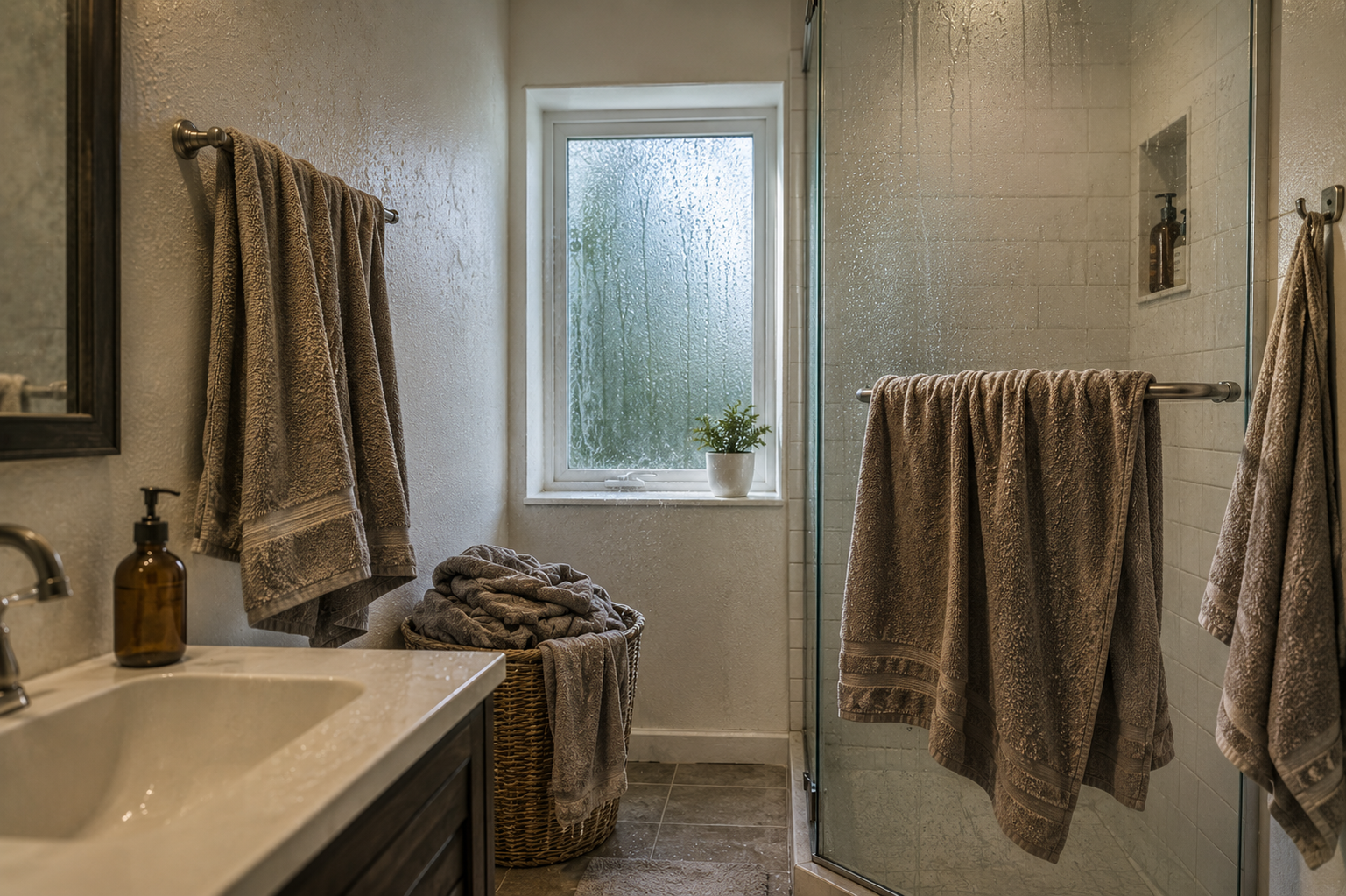
Bathroom towels may seem harmless, but they are actually one of the biggest hidden sources of moisture inside bathrooms. Wet towels constantly release humidity into the air, trap bacteria, and create ideal conditions for mold and mildew growth — especially in small or poorly ventilated bathrooms.
Many homeowners focus on cleaning visible mold around ceilings, walls, grout, and shower curtains while completely overlooking the impact towels have on overall bathroom humidity.
The truth is that damp towels can significantly increase:
- moisture buildup,
- mildew smells,
- condensation,
- bacteria growth,
- and recurring bathroom mold problems.
The good news is that simple towel habits can dramatically improve bathroom air quality and reduce long-term humidity issues.
In this guide, you’ll learn:
- Why towels increase bathroom humidity
- How damp towels contribute to mold growth
- The most common towel-related mistakes
- Why towels develop mildew smells
- How to dry towels properly
- The best storage methods for small bathrooms
- Long-term prevention tips that actually work
By the end of this article, you’ll know exactly how to manage bathroom towels in a way that helps keep your bathroom cleaner, fresher, and mold-free.
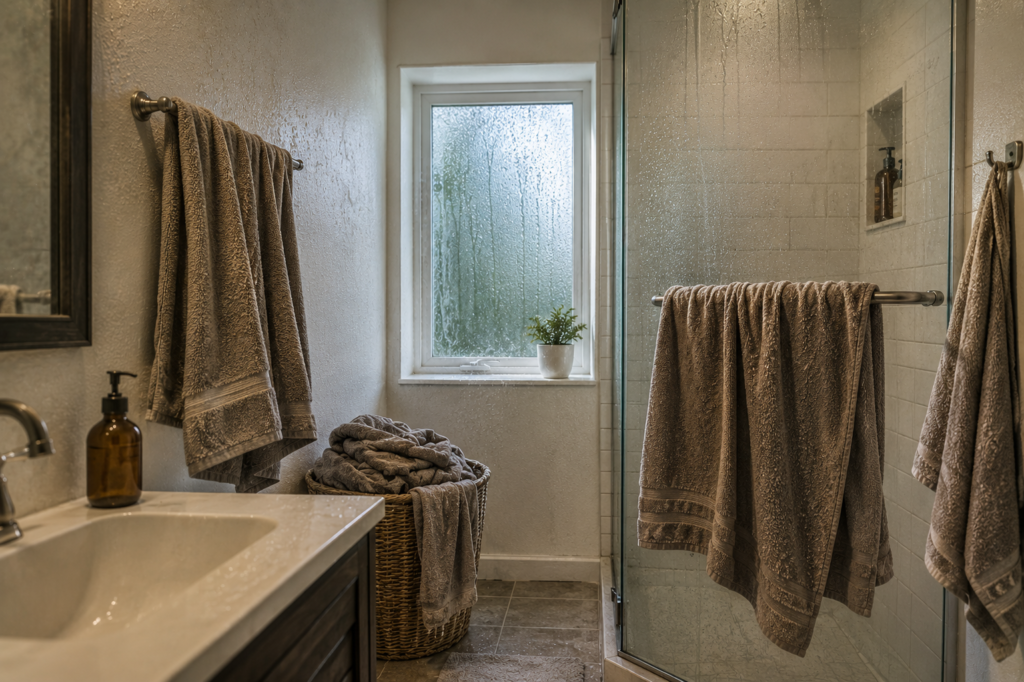
Why Towels Increase Bathroom Humidity
Towels absorb large amounts of water every time they are used.
After showers, towels often stay damp for hours — especially in bathrooms with:
- poor ventilation,
- limited airflow,
- no windows,
- crowded towel racks,
- or constant humidity.
As wet towels slowly dry, they release moisture back into the air.
This additional humidity creates ideal conditions for:
- mold,
- mildew,
- condensation,
- musty odors,
- bacteria buildup.
Small bathrooms are especially vulnerable because moisture becomes trapped much more easily.
Damp Towels Can Create Hidden Mold Problems
Many mold problems begin in areas people rarely inspect.
Damp towels may contribute to mold growth:
- behind doors,
- near towel hooks,
- around walls,
- beside cabinets,
- near laundry baskets,
- and around bathroom corners.
Over time, moisture from towels spreads into nearby surfaces.
This is why some bathrooms continue developing mold even after regular cleaning.
Common Signs Towels Are Increasing Humidity
Bathroom towels may be causing moisture problems if you notice:
- towels smell musty quickly,
- walls feel damp,
- mirrors stay foggy,
- mildew appears near towel racks,
- bathrooms smell humid,
- towels dry very slowly,
- mold appears repeatedly near storage areas.
Persistent moisture is usually the biggest warning sign.
1. Poor Towel Drying Habits Trap Moisture
One of the most common mistakes is leaving towels:
- folded while wet,
- piled together,
- hanging too closely,
- or inside poorly ventilated spaces.
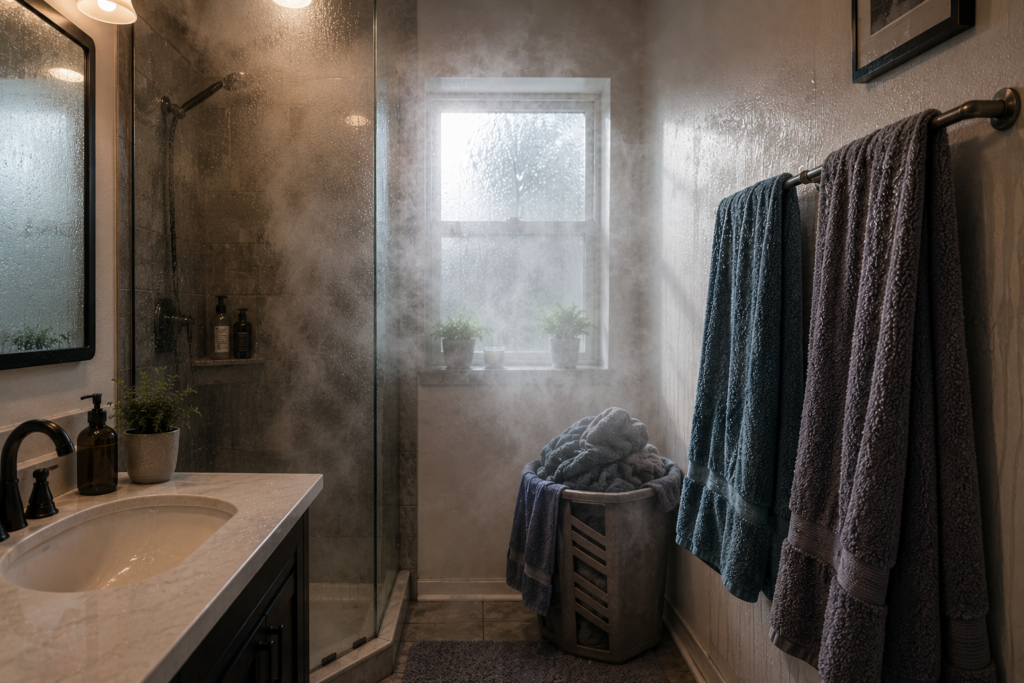
Without airflow, moisture becomes trapped inside the fabric.
This creates ideal conditions for:
- mildew,
- bacteria,
- unpleasant odors.
Why Towels Start Smelling Bad
Many people think towel odors come from dirty water alone.
However, towels also trap:
- body oils,
- dead skin cells,
- soap residue,
- moisture,
- bacteria.
When towels stay damp too long, bacteria begin multiplying rapidly.
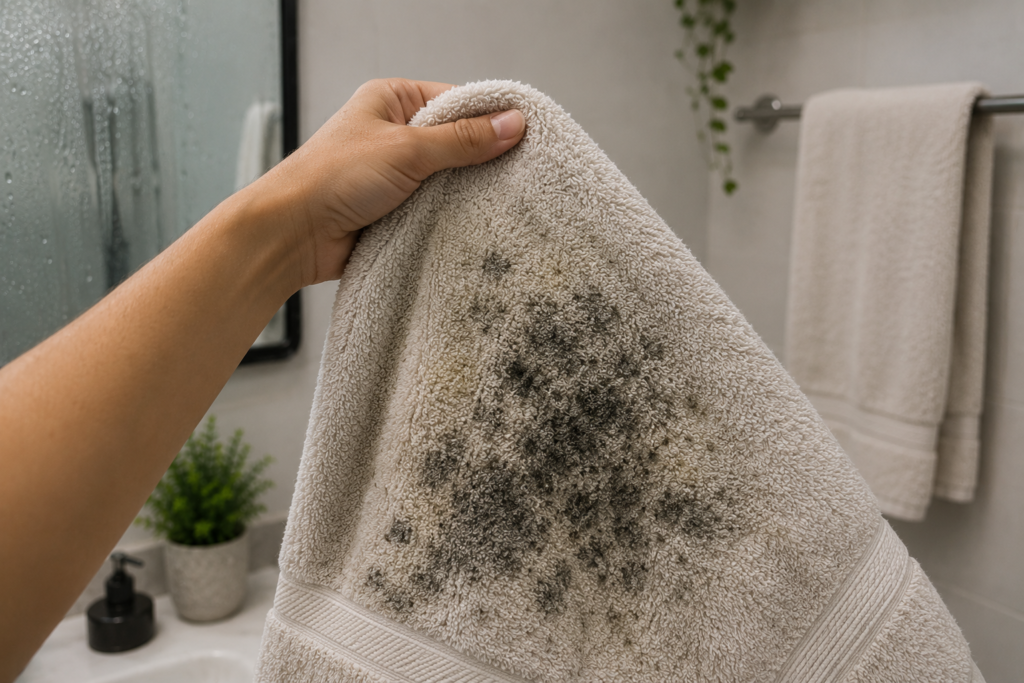
This creates the sour or musty smell many people notice.
2. Small Bathrooms Make the Problem Worse
Small apartment bathrooms often struggle with:
- limited ventilation,
- weak airflow,
- trapped humidity.
Even one damp towel can noticeably raise humidity levels in tight spaces.
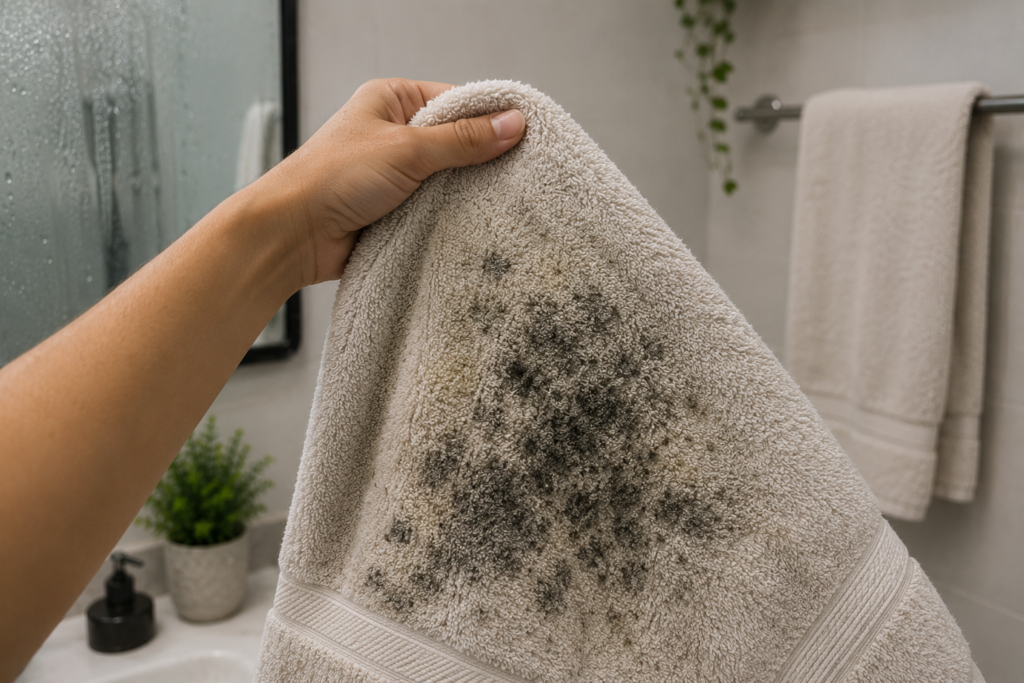
Multiple wet towels increase the problem even faster.
Bathrooms without windows are usually affected the most.
How to Dry Bathroom Towels Properly
Proper drying is one of the best ways to reduce bathroom mold problems.
Spread Towels Open Fully
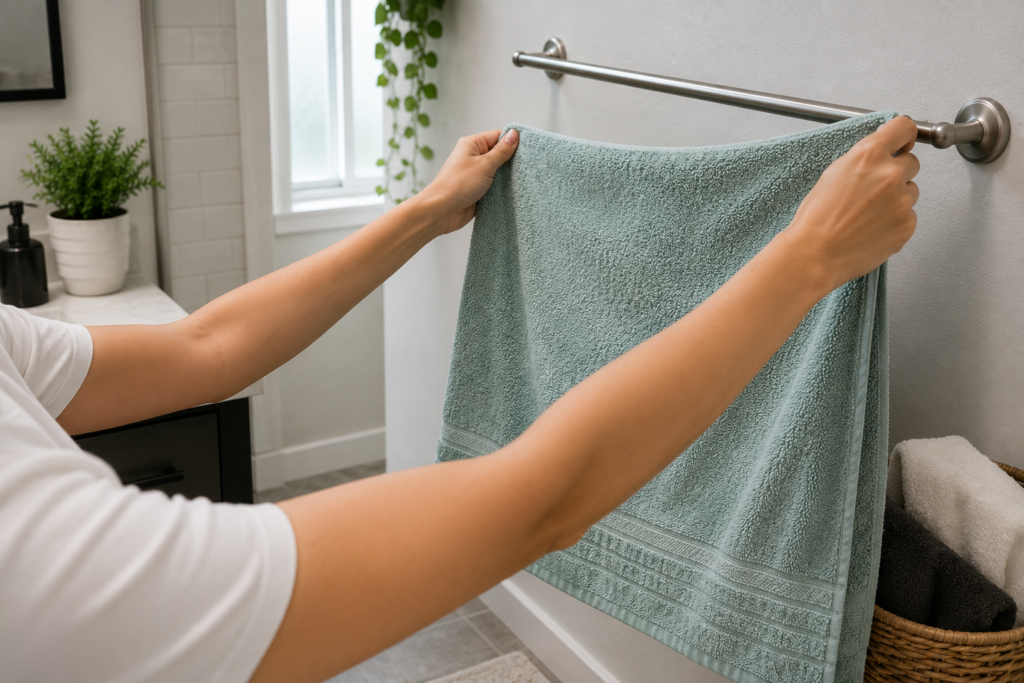
Never leave towels folded or bunched together after use.
Spreading towels fully helps:
- increase airflow,
- speed up drying,
- reduce trapped moisture.
Use Proper Towel Spacing
Towels dry much faster when spaced apart properly.
Avoid:
- overlapping towels,
- crowded towel bars,
- stacked towel hooks.
Better airflow helps prevent mildew smells.
Improve Bathroom Ventilation
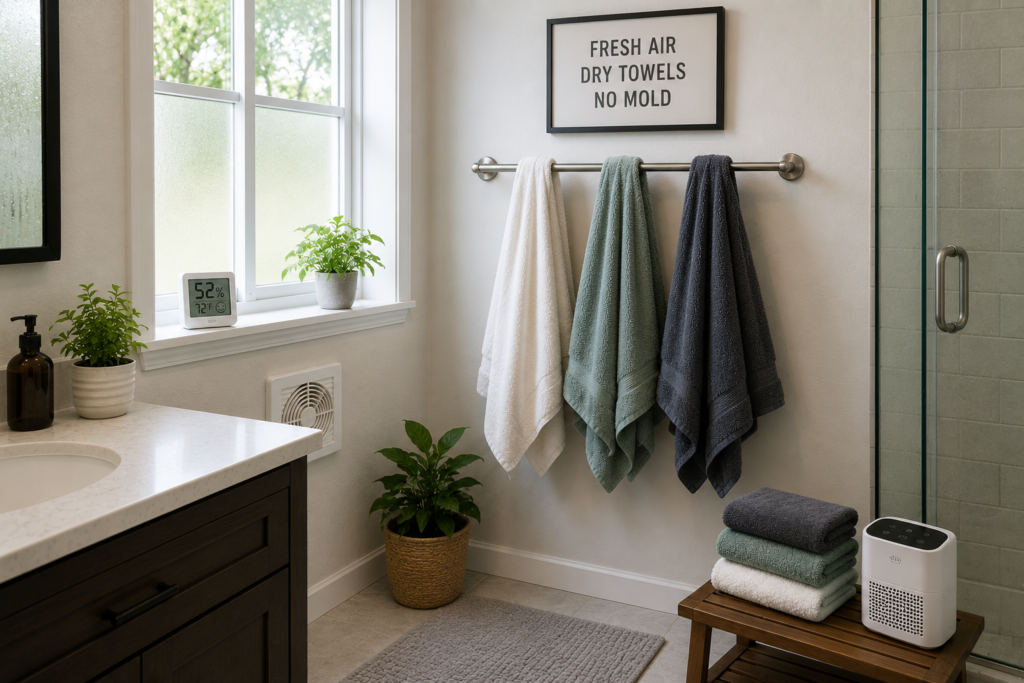
Ventilation is critical for towel drying.
Helpful habits include:
- running the exhaust fan,
- opening windows,
- leaving the bathroom door partially open,
- using portable fans.
Better airflow helps moisture evaporate faster.
3. Laundry Baskets Can Trap Moisture Too
Damp towels inside laundry hampers create another hidden humidity source.
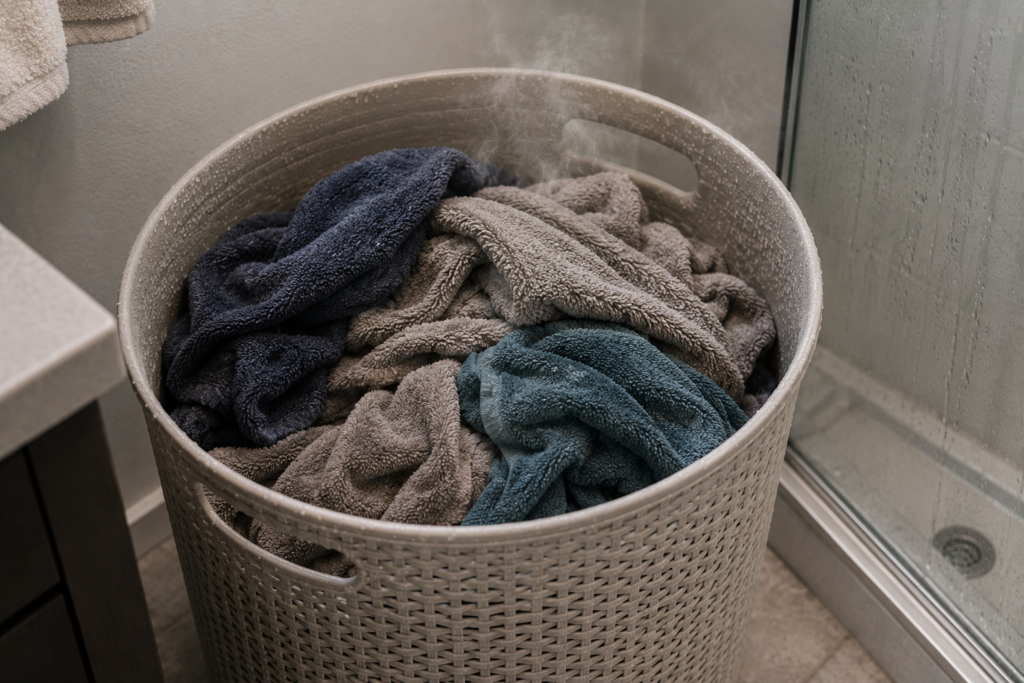
Closed laundry baskets often trap:
- moisture,
- heat,
- bacteria,
- mildew odors.
This environment allows mold and bacteria to multiply quickly.
Better Laundry Habits
Helpful habits include:
- allowing towels to dry before placing them in hampers,
- using ventilated laundry baskets,
- washing towels regularly,
- avoiding overcrowded laundry areas.
How Often Should Bathroom Towels Be Washed?
Towels collect moisture and bacteria very quickly.
Many households benefit from washing towels:
- every 3–4 uses,
- more frequently in humid climates,
- sooner if towels smell musty.
Fresh towels help reduce long-term humidity and odor problems.
Why Thick Towels Hold More Moisture
Heavy plush towels absorb more water and dry more slowly.
This means they:
- hold humidity longer,
- increase mildew risk,
- trap bacteria more easily.
In humid bathrooms, lighter towels sometimes dry more efficiently.
Best Towel Materials for Humid Bathrooms
Some towel materials dry faster than others.
Popular options include:
- lightweight cotton towels,
- waffle weave towels,
- quick-dry microfiber towels,
- Turkish towels.
Fast-drying materials help reduce trapped moisture.
Can Wet Towels Cause Mold on Walls?
Yes, especially in small or poorly ventilated bathrooms.
Repeated humidity from towels may contribute to:
- wall condensation,
- peeling paint,
- mildew around hooks,
- mold near corners,
- damp drywall.
Over time, excess humidity affects nearby surfaces significantly.
Best Products That Help Reduce Towel Humidity Problems
Many homeowners use:
- towel warmers,
- dehumidifiers,
- moisture absorbers,
- ventilated towel racks,
- humidity monitors,
- portable fans.
Small airflow improvements can make a major difference over time.
Common Bathroom Towel Mistakes
Avoid these common problems:
Leaving Towels in Piles
Moisture becomes trapped easily.
Hanging Towels Too Close Together
Poor airflow slows drying.
Never Washing Towels Frequently
Bacteria and odors build up quickly.
Keeping Damp Towels in Laundry Hampers
Closed baskets trap moisture.
Ignoring Bathroom Ventilation
Humidity remains trapped longer.
Frequently Asked Questions
Can towels really increase bathroom humidity?
Yes. Wet towels slowly release moisture into the air while drying.
Why do towels smell musty so quickly?
Usually because bacteria multiply inside damp fabric.
Should towels dry inside the bathroom?
Only if airflow and ventilation are adequate.
Are thick towels worse for humidity?
Heavy towels usually dry slower and hold more moisture.
Can towels contribute to bathroom mold?
Yes. Repeated humidity from damp towels may increase mold risk significantly.
Final Thoughts
Bathroom towels are one of the most overlooked sources of excess humidity and mold problems inside bathrooms.
Fortunately, small towel habits can make a major difference.
By:
- drying towels properly,
- improving airflow,
- washing towels regularly,
- and reducing trapped moisture,
you can significantly reduce:
- mildew smells,
- bathroom humidity,
- condensation,
- and recurring mold problems.
Better towel management helps create a cleaner, fresher, and healthier bathroom long-term.