
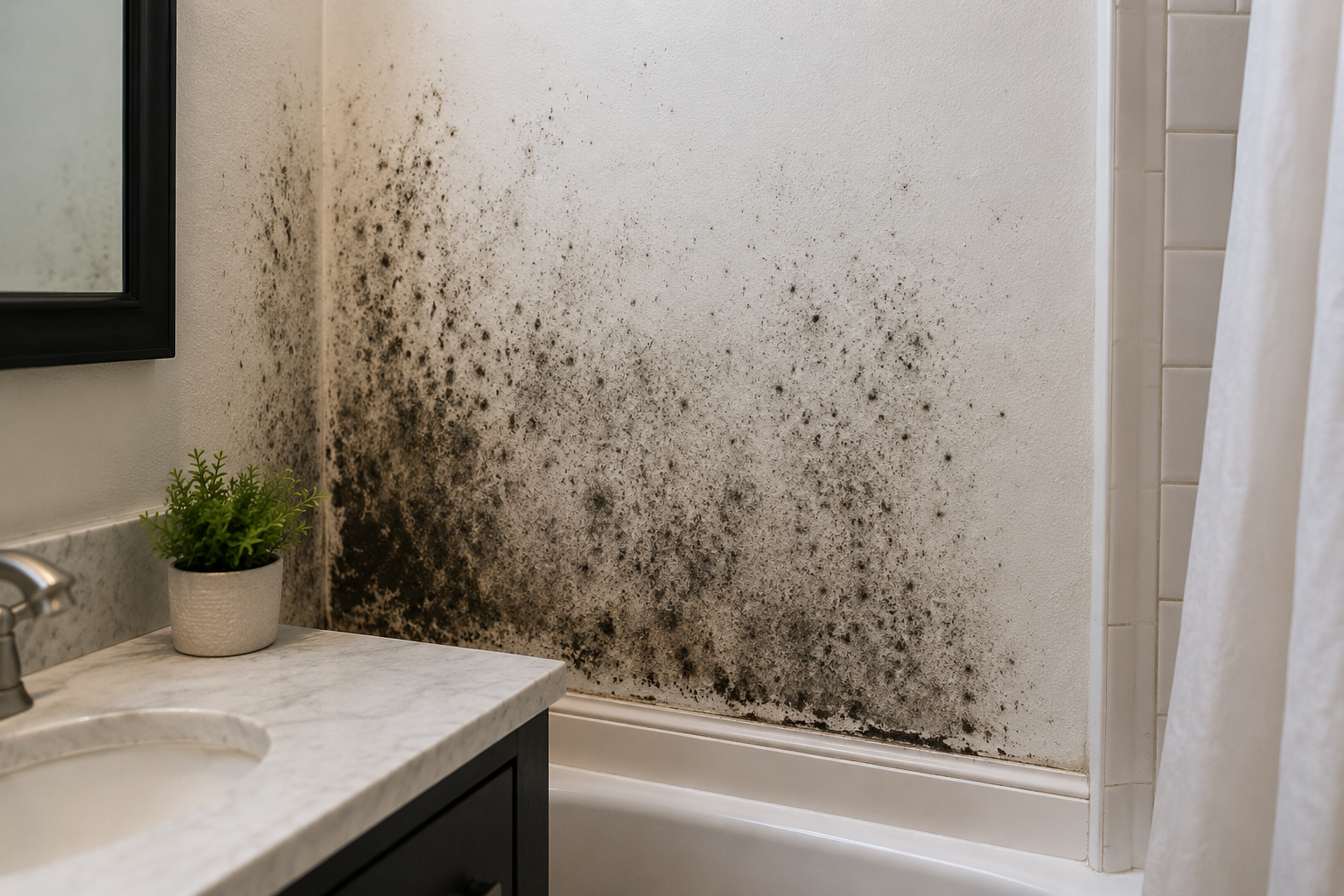
Bathroom mold on painted walls is a very common problem in homes and apartments — especially in bathrooms with poor ventilation, frequent humidity, or recurring condensation.
Many homeowners notice:
- black spots,
- peeling paint,
- yellow stains,
- bubbling walls,
- mildew smells,
- or dark patches
appearing around painted bathroom surfaces over time.
In many cases, simply repainting the wall does not solve the problem because the real issue is trapped moisture and excess humidity.
The good news is that most bathroom wall mold problems can be fixed and prevented with proper cleaning, moisture control, and better ventilation habits.
In this guide, you’ll learn:
- Why mold grows on painted bathroom walls
- The most common hidden causes
- How condensation damages painted surfaces
- Safe cleaning methods that actually work
- When repainting is necessary
- How to prevent mold from returning
- The best products and tools for mold prevention
By the end of this article, you’ll know exactly how to keep painted bathroom walls cleaner, safer, and mold-free long-term.
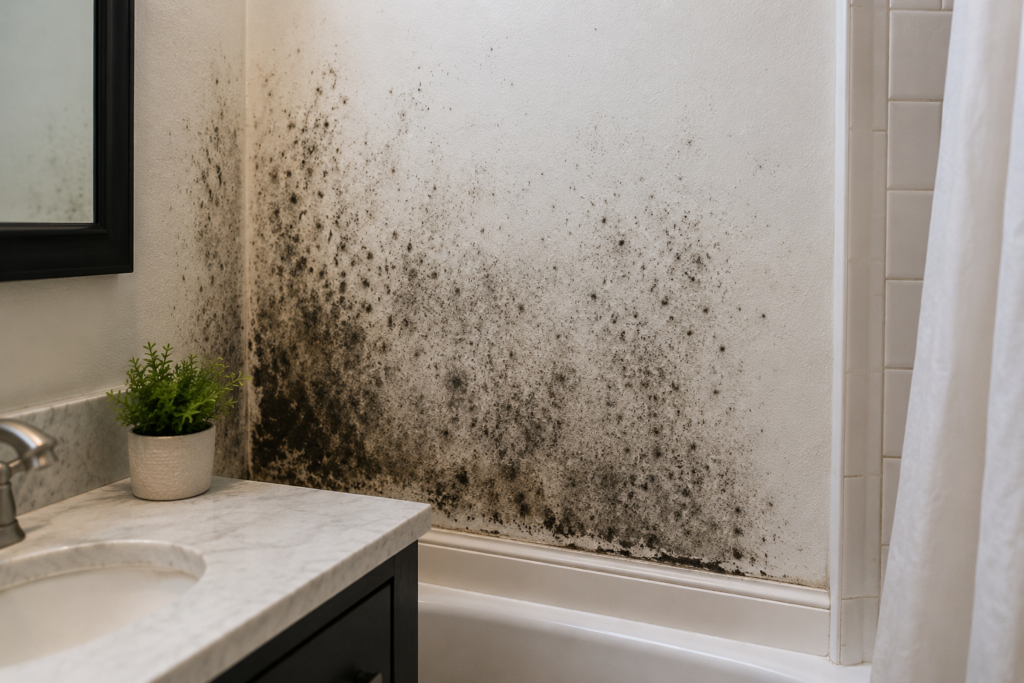
Why Does Mold Grow on Painted Bathroom Walls?
Bathrooms create ideal conditions for mold because they combine:
- moisture,
- warmth,
- humidity,
- poor airflow,
- and water vapor.
Painted walls absorb small amounts of moisture over time, especially if ventilation is poor.
When steam repeatedly settles onto walls after showers, mold spores begin growing on the surface and inside tiny paint imperfections.
This is especially common near:
- ceilings,
- shower walls,
- corners,
- windows,
- mirrors,
- vents,
- and behind cabinets.
Common Signs of Mold on Painted Walls
Bathroom mold often begins slowly.
Common warning signs include:
- black or gray spots,
- peeling paint,
- bubbling paint,
- yellow stains,
- musty odors,
- damp wall texture,
- dark corners,
- recurring mildew.
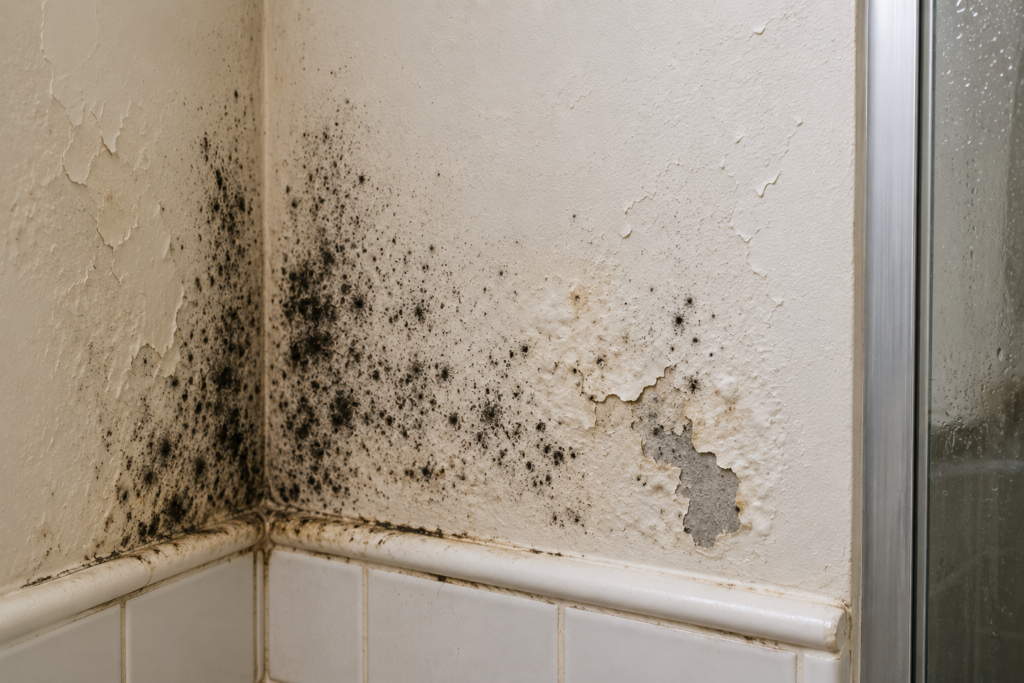
If mold keeps returning after cleaning, excess moisture is usually still present.
1. Poor Ventilation Is the Main Cause
Bathrooms without proper airflow trap steam for long periods after showers.
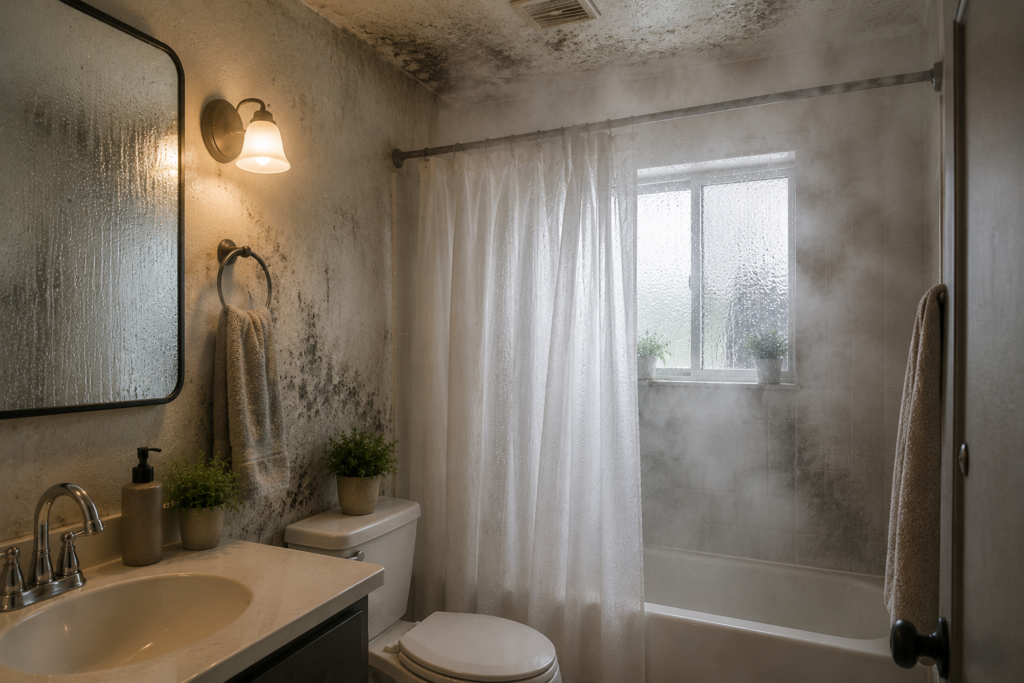
This humidity settles directly onto painted surfaces.
Over time:
- condensation forms,
- paint weakens,
- moisture penetrates walls,
- mold spores begin multiplying.
Small bathrooms without windows are especially vulnerable.
Signs Your Bathroom Has Excess Humidity
- Mirrors stay foggy for long periods
- Walls feel damp after showers
- Paint peels repeatedly
- Musty smells remain in the room
- Mold returns quickly after cleaning
If humidity stays trapped regularly, painted walls become ideal mold surfaces.
2. Condensation Damages Painted Walls
Many people assume mold only appears after leaks.
However, simple condensation can create enough moisture for mold growth.
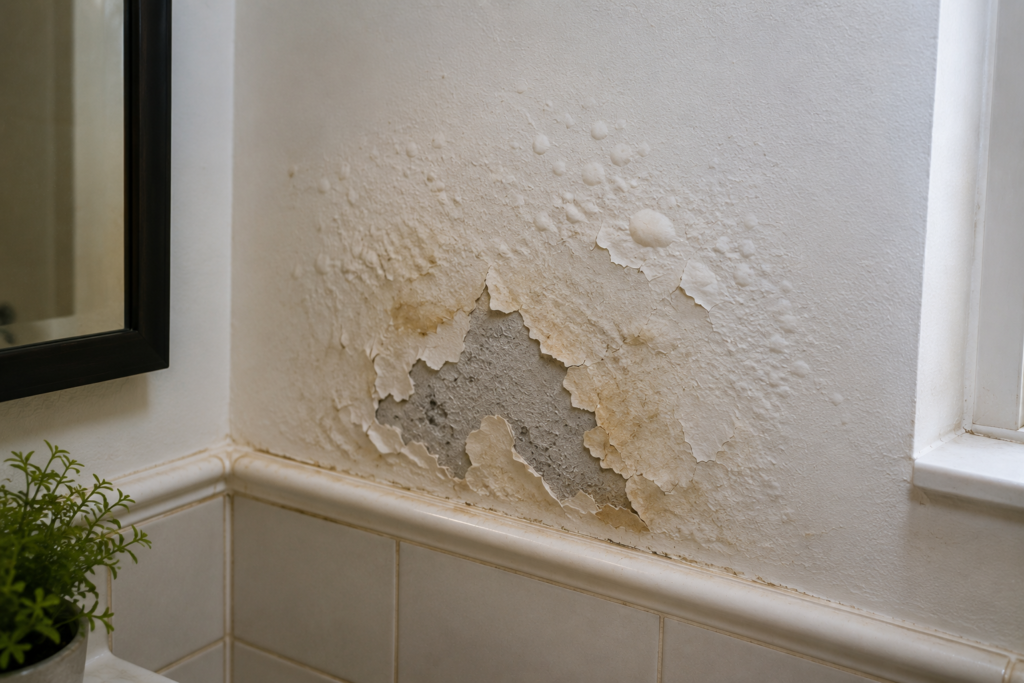
Hot showers release steam that turns into water droplets when touching cooler walls.
This repeated moisture exposure slowly damages painted surfaces.
Areas Most Vulnerable to Condensation
- upper wall corners,
- ceilings,
- walls near showers,
- areas around mirrors,
- spaces behind cabinets,
- poorly ventilated corners.
Even small daily condensation can cause long-term damage over time.
3. Low-Quality Paint Can Worsen Mold Problems
Not all paint handles bathroom humidity well.
Standard wall paint may:
- absorb moisture,
- trap humidity,
- peel faster,
- develop stains more easily.
Bathrooms benefit more from:
- mold-resistant paint,
- semi-gloss paint,
- satin finishes,
- moisture-resistant coatings.
These surfaces are easier to clean and resist moisture better.
4. Hidden Moisture Behind Walls
Sometimes mold problems come from hidden moisture sources.
Possible causes include:
- leaking pipes,
- damaged grout,
- cracked caulking,
- roof leaks,
- poor insulation.
If mold keeps returning in the exact same area, hidden moisture may be the real issue.
How to Clean Mold From Painted Bathroom Walls Safely
Cleaning mold properly is important because aggressive scrubbing can damage paint.
Step 1: Improve Ventilation First
Before cleaning:
- open windows,
- turn on exhaust fans,
- improve airflow.
Reducing humidity helps stop mold spores from spreading further.
Step 2: Wear Protective Gear
Mold cleaning may release spores into the air.
Helpful protection includes:
- gloves,
- masks,
- eye protection.
Especially during larger cleaning jobs.
Step 3: Use Gentle Cleaning Solutions
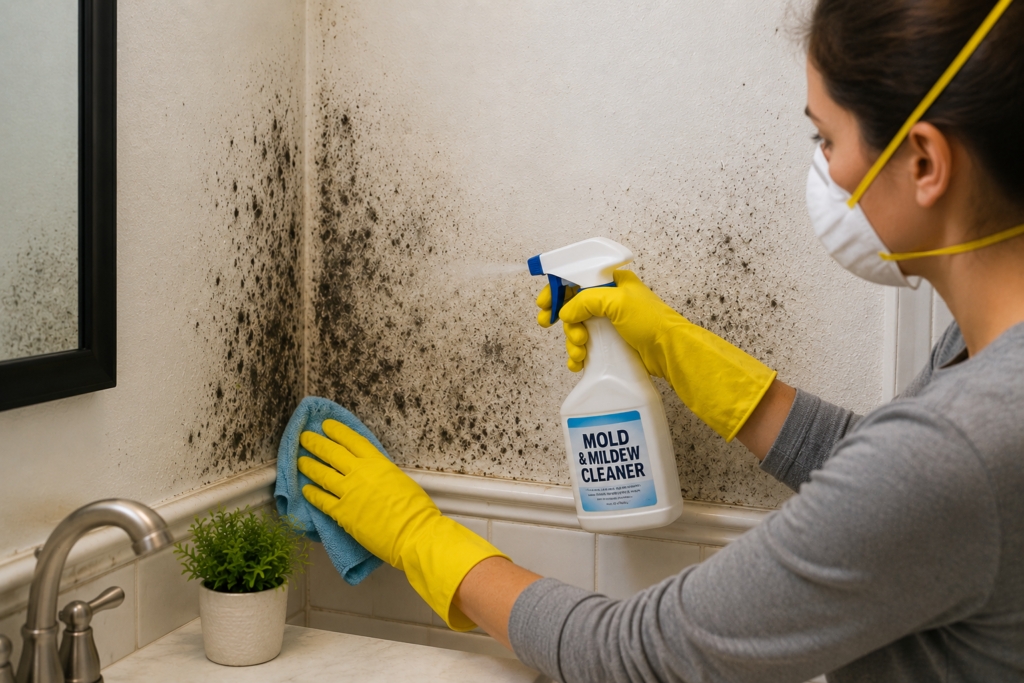
Common cleaning options include:
- white vinegar,
- mild soap,
- hydrogen peroxide,
- mold-specific cleaners.
Avoid overly harsh scrubbing that may damage painted surfaces.
Step 4: Wipe and Dry Completely
After cleaning:
- wipe the area thoroughly,
- remove all moisture,
- allow proper drying.
Damp walls encourage mold to return quickly.
Does Vinegar Kill Bathroom Mold?
White vinegar may help remove surface mold and reduce mildew smells naturally.
It may also help:
- loosen buildup,
- reduce bacteria,
- slow future growth.
However, severe mold problems sometimes require stronger treatment or professional repair.
When Should You Repaint Moldy Bathroom Walls?
Sometimes repainting becomes necessary.
Consider repainting if:
- paint bubbles repeatedly,
- stains remain permanently,
- mold damaged the finish,
- moisture caused discoloration.
However, repainting without fixing humidity problems usually leads to mold returning.
Best Paint Types for Bathrooms
Bathrooms benefit from paints designed for humid environments.
Popular options include:
- semi-gloss paint,
- satin paint,
- mildew-resistant paint,
- bathroom-specific paint formulas.
These paints are generally:
- easier to clean,
- more moisture resistant,
- longer lasting.
How to Prevent Mold on Painted Bathroom Walls
Prevention is usually much easier than repeated cleaning.
Improve Bathroom Airflow
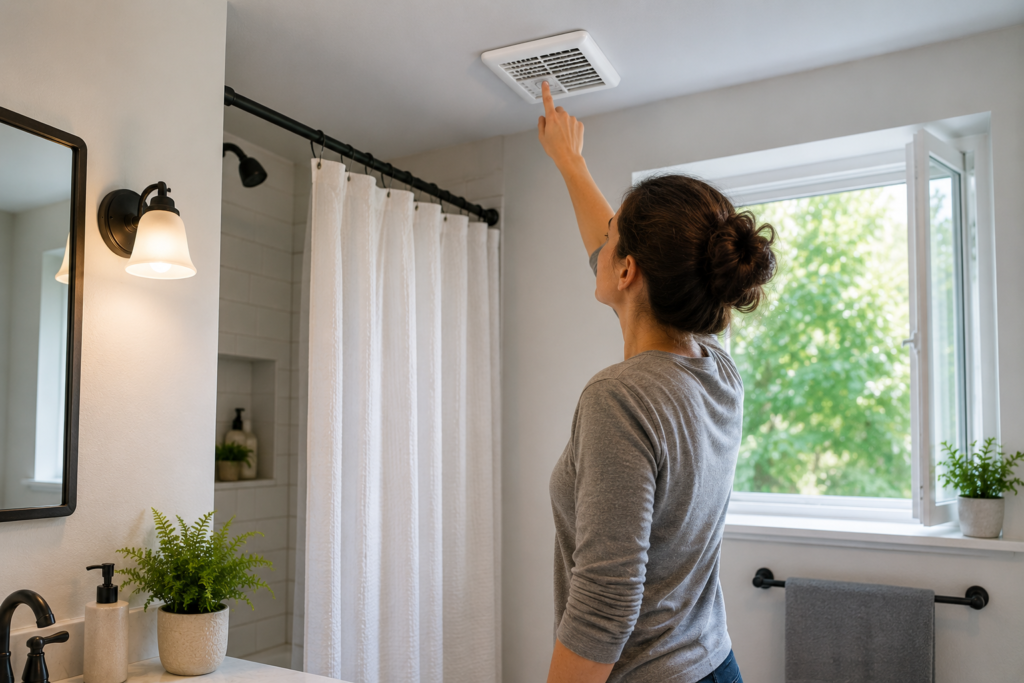
Good airflow is the most important prevention step.
Helpful habits include:
- running exhaust fans,
- opening windows,
- leaving the bathroom door partially open,
- using portable fans.
Better airflow reduces trapped humidity significantly.
Reduce Steam Buildup
Helpful habits include:
- shorter showers,
- slightly cooler water,
- drying wet surfaces quickly.
Less steam means less condensation on walls.
Keep Walls Dry
Using towels or microfiber cloths to remove excess moisture may help reduce mold growth.
Clean Small Mold Spots Early
Small mold patches spread quickly in humid bathrooms.
Early cleaning helps prevent larger infestations later.
Best Products for Bathroom Wall Mold Prevention
Many homeowners use:
- compact dehumidifiers,
- moisture absorbers,
- mold-resistant paints,
- exhaust fans,
- humidity monitors,
- microfiber cloths,
- bathroom ventilation fans.
These tools help reduce long-term humidity damage.
Common Bathroom Wall Mold Mistakes
Avoid these common problems:
Repainting Without Solving Humidity
Mold often returns quickly.
Ignoring Small Mold Spots
Small patches spread easily.
Never Using Ventilation
Steam remains trapped after showers.
Using Flat Paint in Bathrooms
Flat paint absorbs moisture more easily.
Leaving Damp Towels Near Walls
Extra humidity increases mold risk.
Frequently Asked Questions
Why does mold keep returning on bathroom walls?
Usually because excess humidity or hidden moisture is still present.
Can bathroom paint absorb moisture?
Yes. Some paints absorb moisture more easily than others.
Is bathroom wall mold dangerous?
Small surface mold is common, but large infestations may affect air quality and should be addressed quickly.
Does repainting solve mold problems?
Only if the underlying moisture problem is fixed first.
What type of paint is best for bathrooms?
Semi-gloss and mildew-resistant paints are usually better for humid environments.
Final Thoughts
Bathroom mold on painted walls is usually caused by excess humidity, poor ventilation, condensation, and trapped moisture.
Fortunately, most problems can be prevented with:
- better airflow,
- proper cleaning,
- moisture control,
- and humidity-resistant paint.
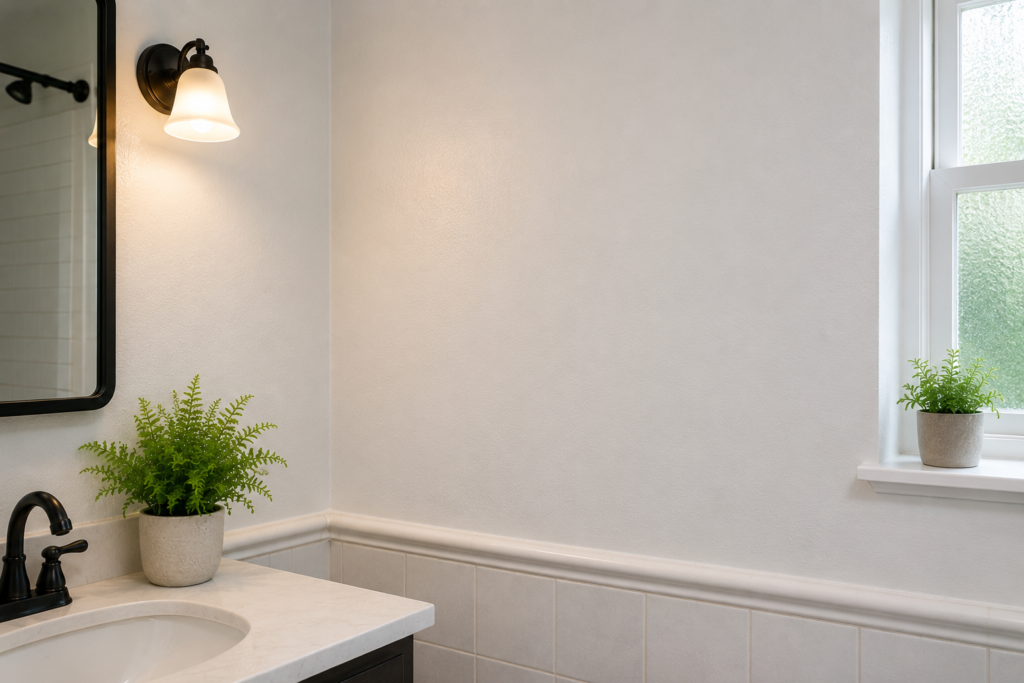
Simple daily habits make a major difference over time.
By reducing moisture consistently and maintaining proper ventilation, you can keep painted bathroom walls cleaner, healthier, and mold-free year-round.