
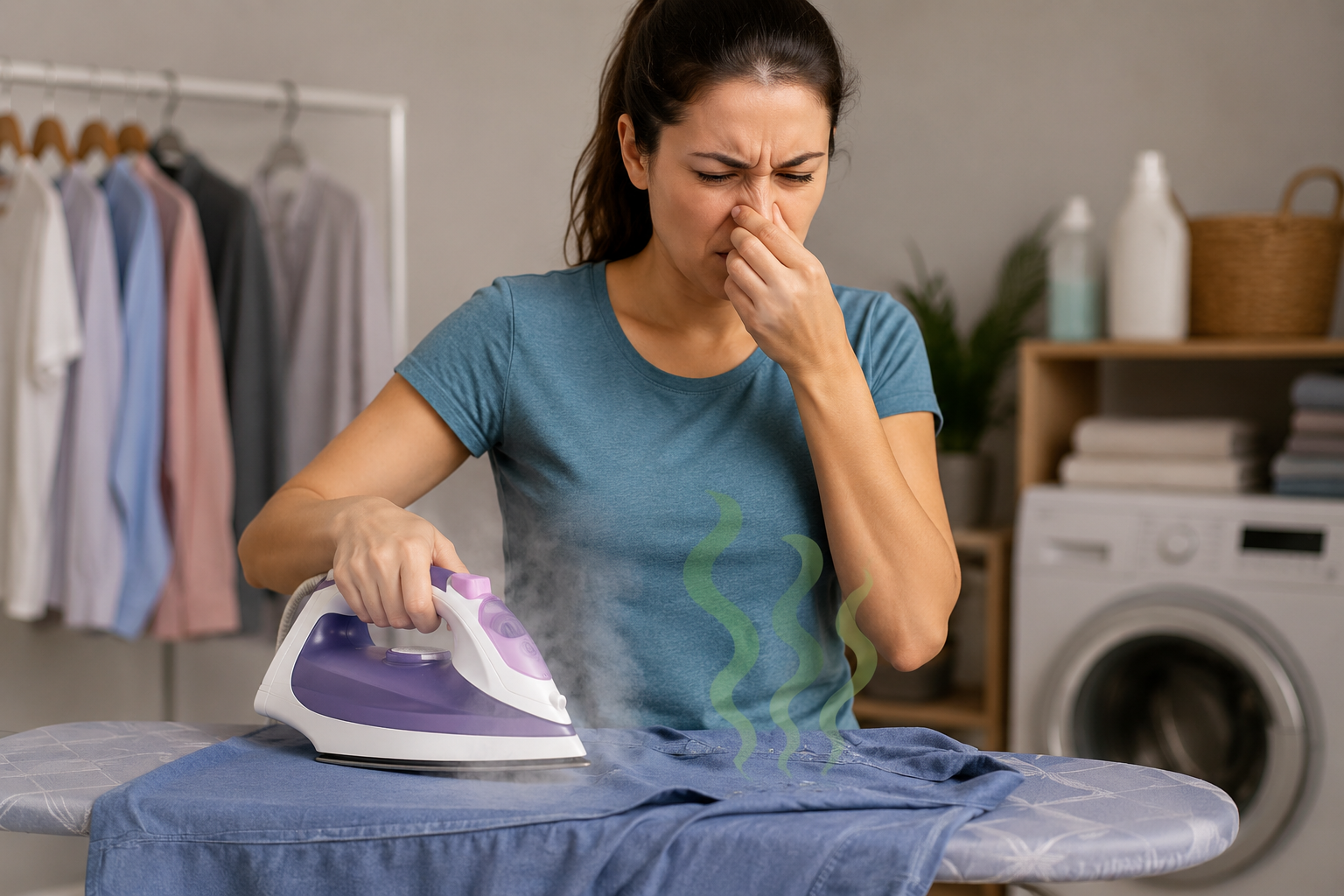

Few things are more frustrating than ironing clean clothes, only to notice a strong sweat-like smell as soon as heat touches the fabric.
At first, it can feel confusing. The clothes were just washed — so why do they suddenly smell bad again?
This is a very common problem, especially with synthetic fabrics, gym clothes, and items that already had light odor buildup before washing.
The truth is simple: heat from ironing can reactivate hidden odor-causing bacteria trapped inside fabric fibers.
The good news is that once you understand why this happens, it becomes much easier to fix — and prevent.
What You’ll Learn in This Guide
- Why clothes smell like sweat after ironing
- What causes hidden odor buildup in fabrics
- Why washing sometimes doesn’t remove smells completely
- How heat reactivates odors
- Step-by-step methods to remove the smell permanently
- How to prevent it from happening again
By the end, you’ll know exactly how to go from “clean but smelly” clothes to truly fresh, odor-free results.
Why Clothes Smell After Ironing

If your clothes smell like sweat during ironing, it usually comes down to residual bacteria and body oils that weren’t fully removed during washing.
When heat is applied:
- Bacteria become active again
- Trapped oils release odor
- Fabric pores open up
- Moisture residue evaporates, carrying smell with it
This creates that sudden “sweaty” or “musty” smell — even if the clothes seemed fine before.
The 5 Most Common Causes

1. Residual Sweat and Body Oils
Even after washing, small amounts of sweat and oils can remain in fabric fibers.
This is especially true for:
- Armpit areas
- Collars
- Back of shirts
- Tight-fitting clothing
When iron heat hits these areas, the odor becomes noticeable again.
2. Synthetic Fabrics Trap Odor
Materials like:
- Polyester
- Nylon
- Spandex
are designed to trap moisture and heat — which unfortunately also traps bacteria.
That’s why workout clothes and activewear are the biggest offenders.
3. Washing in Cold Water Only
Cold water is great for preserving fabric, but it doesn’t always remove:
- oils
- bacteria
- odor-causing residue
Without occasional deeper cleaning, buildup remains inside fibers.
4. Too Much Detergent
Excess detergent creates a coating on fabrics.
This layer traps:
- sweat
- bacteria
- dirt
Over time, this makes odors worse — not better.
5. Ironing Slightly Damp Clothes
If clothes still contain moisture:
- bacteria survive
- heat intensifies smell
- odor spreads more easily
Always ensure clothes are fully dry before ironing.
How to Remove Sweat Smell From Clothes Permanently
Now let’s fix the problem properly.
Step 1: Rewash With Vinegar

White vinegar helps break down odor-causing residue.
How to do it:
- Add 1 cup of white vinegar to the rinse cycle
- Use regular detergent in the wash cycle
- Avoid mixing vinegar with bleach
This helps remove trapped smells without damaging most fabrics.
Step 2: Use Baking Soda for Deep Odor Neutralization
Baking soda is excellent for neutralizing strong smells.
Instructions:
- Add ½ cup of baking soda directly into the drum
- Wash as usual
This works especially well for sweat-heavy clothes.
Step 3: Target Problem Areas

Focus on areas like:
- armpits
- collars
- inner seams
You can:
- apply a small amount of detergent directly
- gently scrub before washing
This removes buildup where odor is strongest.
Step 4: Wash With Warm or Hot Water (When Safe)
Heat helps break down oils and bacteria.
Always check clothing labels, but when possible:
- use warm water for everyday clothes
- use hot water for towels and durable fabrics
Step 5: Dry Clothes Completely Before Ironing

Never iron damp clothes.
Make sure:
- fabrics are fully dry
- there is no trapped moisture
- clothes are aired out if needed
This alone prevents many odor issues.
Step 6: Clean Your Iron (Often Overlooked)
Yes — your iron can also cause smells.
Residue buildup inside the iron can transfer odors to clothes.
What to do:
- Empty water tank regularly
- Use distilled water when possible
- Clean steam vents periodically
How to Prevent Clothes From Smelling After Ironing

Prevention is easier than fixing the problem repeatedly.
Build a Better Laundry Routine
- Wash sweaty clothes quickly
- Don’t leave clothes sitting damp
- Avoid overloading the washer
- Use the correct detergent amount
Avoid Fabric Softener for Problem Clothes
Fabric softener can trap odor inside fibers.
Instead, use:
- vinegar occasionally
- proper detergents
- odor-targeting products
Improve Drying Conditions
Make sure clothes dry in:
- ventilated spaces
- low-humidity environments
- areas with airflow
Poor drying leads to hidden moisture and odor buildup.
Rotate High-Odor Clothing
If certain clothes always smell:
- wash them separately
- treat them more deeply
- avoid mixing with lightly worn clothes
Common Mistakes to Avoid
- Using more detergent than needed
- Ignoring mild odors (they get worse over time)
- Ironing clothes before they are fully dry
- Washing everything only in cold water
- Skipping deep cleaning cycles
Frequently Asked Questions
Why do my clothes smell fine until I iron them?
Because heat activates hidden bacteria and releases trapped odor.
Does ironing kill bacteria?
Not completely. It may reduce some bacteria, but it doesn’t remove odor-causing residue.
Can I spray perfume to fix the smell?
This only masks the odor temporarily — it doesn’t solve the problem.
Is vinegar safe for clothes?
Yes, in moderate amounts and occasional use.
Final Thoughts
If your clothes smell like sweat after ironing, the issue is not the iron — it’s residual buildup inside the fabric.
Heat simply reveals what was already there.
The key is:
- removing odor at the source
- washing properly
- avoiding detergent buildup
- ensuring complete drying
With the right routine, your clothes will stay fresh before, during, and after ironing.
Quick Summary
- Heat reactivates hidden odor in fabrics
- Synthetic materials trap bacteria easily
- Use vinegar or baking soda to remove buildup
- Wash with proper temperature when possible
- Avoid excess detergent and fabric softener
- Always dry clothes completely before ironing
Follow these steps consistently, and you’ll eliminate that frustrating post-ironing smell for good.