
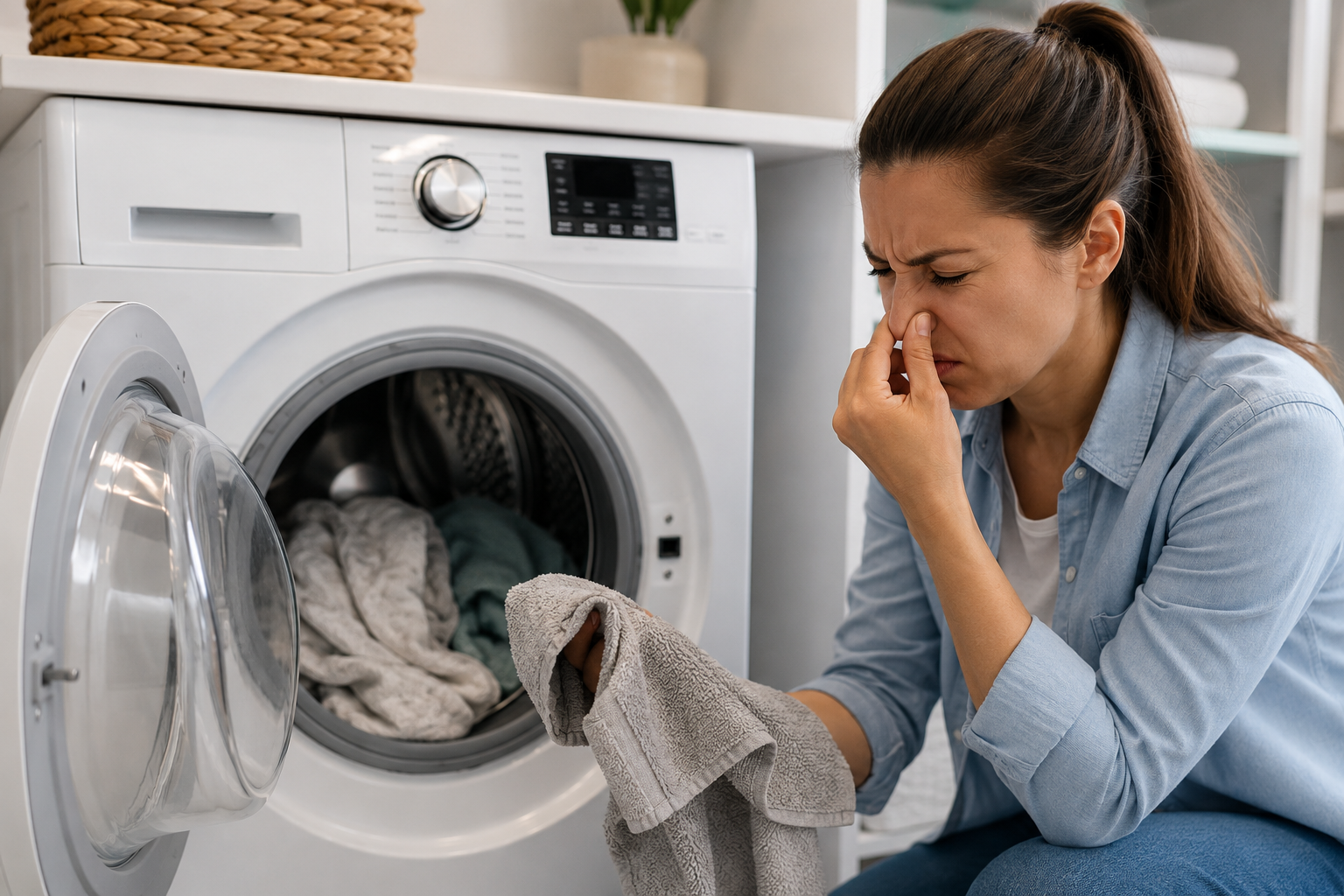

Laundry Smells: Why Your Clothes and Washing Machine Still Smell Bad
Few household problems are more frustrating than opening your washing machine and noticing a musty odor — or worse, pulling out freshly washed clothes that still smell bad.
Laundry odors are one of the most common problems in modern homes, especially with front-load washing machines, high-humidity laundry rooms, and synthetic fabrics that trap bacteria and moisture.
The good news is that most laundry smell problems can be fixed without replacing your washer or using harsh chemicals.
In this guide, you’ll learn:
- Why laundry smells bad even after washing
- The most common causes of washing machine odors
- How to remove bad smells from clothes and towels
- Which cleaning methods actually work
- How to prevent laundry odors from coming back
- Recommended products and tools that help keep laundry fresh
By the end of this article, you’ll know exactly how to identify the cause of laundry odors and fix the problem permanently.
Why Does Laundry Smell Bad After Washing?
If clothes smell bad after washing, the issue is usually caused by one or more of these problems:
1. Mold and Mildew Inside the Washing Machine

Front-load washing machines are especially prone to mold growth because moisture gets trapped inside the rubber door seal and detergent drawer.
Over time, bacteria and mildew create a sour or musty smell that transfers to clothes.
Common signs include:
- A damp or earthy smell
- Black spots around the rubber seal
- Water trapped in the detergent compartment
- Odor that gets worse when the washer door stays closed
2. Too Much Detergent

Using extra detergent does not make clothes cleaner.
In fact, excess detergent can build up inside the drum and hoses, trapping dirt, body oils, and bacteria.
High-efficiency (HE) washers are especially sensitive to detergent buildup.
Signs of detergent buildup:
- Slimy washer drum
- Clothes feeling stiff
- Strong perfume smell mixed with mustiness
- Soap residue on dark clothes
3. Wet Clothes Sitting Too Long
Leaving clothes inside the washer for hours creates the perfect environment for bacteria and mildew.
Even one forgotten load can create odors that stick to towels, gym clothes, and synthetic fabrics.
4. Dirty Washer Filters and Drains
Many people never clean the washer filter.
Lint, hair, soap residue, and trapped moisture can create strong smells over time.
Some washing machines also develop clogged drain hoses that trap dirty water.
5. Hard Water Mineral Buildup
Hard water minerals can combine with detergent residue and create odors inside the machine.
This is especially common in areas with high mineral content in tap water.
How to Remove Bad Smells From a Washing Machine

Step 1: Clean the Rubber Door Seal
The rubber gasket around front-load washers traps moisture and debris.
What to do:
- Pull back the rubber seal carefully
- Wipe away moisture and dirt
- Use a cloth with white vinegar or a mold remover
- Dry the area completely
Tip: A soft cleaning brush helps remove hidden buildup.
Step 2: Run a Hot Cleaning Cycle
Run an empty hot-water cycle using one of these options:
- Washing machine cleaner tablets
- White vinegar
- Baking soda
- Oxygen bleach
Hot water helps break down detergent residue and kill odor-causing bacteria.
Important: Never mix bleach and vinegar.
Step 3: Clean the Detergent Drawer
Remove the detergent tray if possible.
Soak it in warm water and scrub away residue using an old toothbrush or cleaning brush.
This area often contains hidden mold.
Step 4: Clean the Washer Filter

Check your washer manual to locate the drain filter.
Remove trapped lint, hair, coins, and debris.
Cleaning the filter regularly improves both odor and washing performance.
Step 5: Leave the Washer Door Open
One of the simplest ways to prevent odors is allowing the machine to dry completely after each cycle.
Keeping the door slightly open reduces trapped humidity and mold growth.
How to Remove Musty Smells From Clothes and Towels
Sometimes the washer smells fine, but clothes still hold odors.
This is especially common with:
- Towels
- Gym clothes
- Polyester fabrics
- Pet blankets
- Bedding
Vinegar Laundry Method
Add one cup of white vinegar during the rinse cycle.
Vinegar helps dissolve odor-causing residue without damaging most fabrics.
Baking Soda Method
Add half a cup of baking soda directly into the drum.
Baking soda helps neutralize odors and soften fabrics naturally.
Wash With Hot Water When Safe
Cold water saves energy, but some odors require higher temperatures.
Always check clothing labels before using hot water.
Dry Clothes Immediately
Leaving damp laundry in baskets or inside the washer allows bacteria to multiply quickly.
Dry clothes completely before storing them.
Does Vinegar Damage Washing Machines?
This is one of the most searched laundry questions online.
In small amounts, white vinegar is generally considered safe for occasional cleaning.
However, using large amounts too often may slowly wear down rubber components over time.
Best practice:
- Use vinegar occasionally, not daily
- Avoid combining vinegar with bleach
- Use products specifically designed for washing machine cleaning when possible
Best Products for Laundry Odor Problems

The right tools can make laundry maintenance much easier.
Washing Machine Cleaner Tablets
These help dissolve:
- detergent residue
- bacteria
- hidden buildup
- mold-causing moisture
Useful for monthly maintenance.
Moisture Absorbers
Laundry rooms with poor ventilation often develop humidity problems.
Moisture absorbers help reduce:
- mildew smell
- excess humidity
- mold growth
Soft Cleaning Brushes
Small cleaning brushes help clean:
- rubber seals
- detergent drawers
- washer corners
- drain filters
Dehumidifiers
If your laundry room stays damp year-round, a small dehumidifier can significantly reduce moisture problems.
This is especially useful in apartments, basements, and humid climates.
Common Laundry Smell Mistakes
Avoid these common mistakes:
Using Too Much Detergent
More soap often creates more buildup.
Closing the Washer Door Immediately
Trapped moisture leads to mold growth.
Ignoring Small Odors
A mild smell today can become major mold buildup later.
Washing Everything in Cold Water
Some loads benefit from occasional hot cycles.
Never Cleaning the Washer
Modern washing machines require regular maintenance.
How Often Should You Clean a Washing Machine?
For most households:
- Light use: once per month
- Heavy use: every 2 weeks
- Homes with pets or kids: more frequent cleaning may help
Regular maintenance prevents expensive repairs and helps clothes smell fresher.

Final Thoughts
Laundry smells are usually caused by trapped moisture, detergent buildup, mold, or poor airflow.
Fortunately, most odor problems can be solved with simple maintenance habits and a few practical cleaning steps.
The key is identifying the real cause instead of masking odors with stronger detergent or fabric softener.
A clean washing machine not only improves how clothes smell, but also helps the appliance last longer and work more efficiently.
If you maintain your washer regularly, dry clothes promptly, and reduce excess moisture, you can prevent most laundry odor problems before they start.
Quick Summary
- Clean the washer seal and detergent drawer regularly
- Avoid using too much detergent
- Leave the washer door open after cycles
- Use hot cleaning cycles occasionally
- Dry laundry quickly after washing
- Reduce moisture in the laundry room
- Clean washer filters monthly
With the right habits, your laundry can stay fresh, clean, and odor-free year-round.