
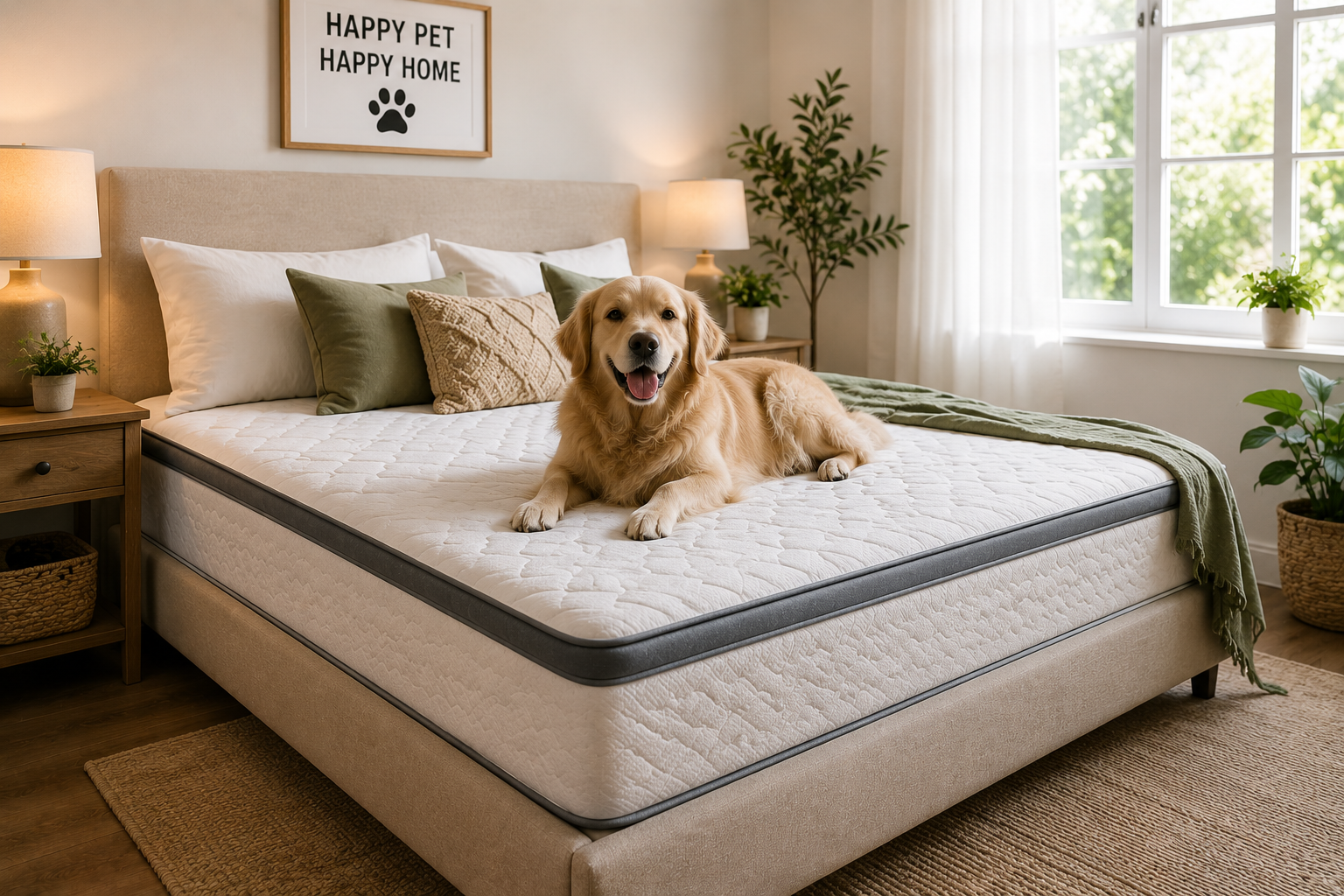
Pet odors trapped inside a mattress can become one of the hardest household smells to remove.
Unlike floors or washable fabrics, mattresses absorb:
- moisture,
- pet oils,
- urine,
- saliva,
- dander,
- and bacteria
deep into the internal layers where regular cleaning cannot easily reach.
Even after surface cleaning, many homeowners still notice:
- lingering smells,
- musty odors,
- or recurring pet scent buildup.
This problem becomes even worse when:
- pets sleep on the bed regularly,
- accidents go unnoticed,
- or moisture remains trapped inside the mattress.
The good news is that deep pet odors can often be reduced or removed safely with the right cleaning methods.
In this guide, you’ll learn:
- Why mattresses trap pet odor so easily
- The most common causes of deep mattress smells
- How to remove pet odor safely without damaging the mattress
- What cleaning products work best
- Mistakes that make odors worse
- How to dry mattresses properly
- How to prevent odors from returning
- And when professional cleaning may be necessary
By the end of this article, you’ll know exactly how to clean and deodorize a mattress safely while protecting its comfort and lifespan.

Why Mattresses Hold Pet Odors So Easily
Mattresses act like large absorbent sponges.

They trap:
- moisture,
- body oils,
- sweat,
- pet fur,
- and odor particles
inside foam and fabric layers.
Pet odors become especially difficult to remove because smells often penetrate below the surface.
Memory foam mattresses can absorb odors even more deeply due to their dense internal structure.
Without proper drying and cleaning, bacteria and odor particles continue building up over time.
The Most Common Sources of Pet Odor in Mattresses
Understanding the source of the smell helps determine the best cleaning method.
Pet Urine Accidents
Urine is one of the strongest mattress odor sources.
If not treated quickly, urine can seep:
- through fabric,
- into foam,
- and deep into mattress layers.
This often creates:
- ammonia smells,
- bacteria buildup,
- and long-term odor problems.
Wet Fur and Pet Oils
Pets naturally transfer:
- skin oils,
- saliva,
- dirt,
- and moisture
onto bedding and mattresses.
Over time, this creates a noticeable odor buildup.
Pet Dander
Dander particles settle into mattress fabric and contribute to:
- musty smells,
- allergies,
- and stale air.
Moisture and Humidity
Humidity allows:
- bacteria,
- mildew,
- and odor particles
to spread more easily inside mattresses.
Old Stains That Were Never Fully Cleaned
Some odors return because old stains remain hidden underneath the surface.
How to Remove Pet Odor From a Mattress Safely
1. Vacuum the Mattress Thoroughly
Start by removing:
- pet hair,
- dust,
- dander,
- and loose debris.

Use upholstery attachments whenever possible.
Pay close attention to:
- seams,
- corners,
- and fabric folds.
2. Use Baking Soda to Absorb Odors
Baking soda helps absorb:
- moisture,
- mild odors,
- and oils naturally.

How to use it:
- sprinkle generously across the mattress,
- allow it to sit for several hours,
- then vacuum thoroughly.
For stronger odors, leaving it overnight often works better.
3. Spot Clean Carefully
For localized odor areas:
- lightly dampen the area,
- avoid soaking the mattress,
- and use pet-safe cleaners.
Avoid excessive water because trapped moisture may worsen odors later.
4. Use Enzyme Cleaners for Pet Urine
Enzyme-based cleaners help break down:
- urine proteins,
- bacteria,
- and odor-causing organic material.

These products work much better than standard household sprays for deep pet odors.
Always follow product instructions carefully.
5. Dry the Mattress Completely
Drying is one of the most important steps.

Moisture trapped inside mattresses can cause:
- mildew,
- bacteria growth,
- and stronger odors later.
Helpful drying methods include:
- fans,
- open windows,
- dehumidifiers,
- and sunlight when possible.
How Long Does Mattress Odor Removal Take?
Light odors may improve within:
- several hours,
- or one day.
Deep odors often require:
- multiple cleaning sessions,
- repeated drying,
- and ongoing ventilation.
Older stains may take significantly longer.
Cleaning Products That Work Best
Some products are safer and more effective for mattresses than others.
Baking Soda
Good for:
- mild odors,
- moisture absorption,
- and general freshness.
Enzyme Cleaners
Best for:
- urine,
- organic odors,
- and bacteria breakdown.
Upholstery Cleaners
Useful for:
- fabric surfaces,
- spot cleaning,
- and deeper extraction.
Pet-Safe Disinfectants
Can help reduce:
- bacteria,
- odor particles,
- and surface contamination.
What NOT to Use on Mattresses
Some cleaning methods may damage the mattress or worsen odors.
Avoid:
- soaking the mattress,
- bleach,
- harsh chemicals,
- steam saturation,
- and strong artificial fragrances.
Heavy moisture often causes deeper internal odor problems later.
Common Mistakes That Make Mattress Odors Worse
Using Too Much Water
Oversaturation traps moisture inside foam layers.
Covering Odors Instead of Removing Them
Air fresheners may temporarily mask smells but rarely solve the problem.
Not Drying the Mattress Properly
Incomplete drying encourages:
- mildew,
- mold,
- and bacteria growth.
Ignoring Bedding and Pillows
Odors often spread into:
- sheets,
- blankets,
- mattress protectors,
- and pillows.
Waiting Too Long to Clean Accidents
Fresh stains are much easier to remove than old stains.
How to Prevent Pet Odors From Returning
Prevention is easier than deep odor removal later.
Helpful habits include:
- using waterproof mattress protectors,
- washing bedding frequently,
- vacuuming regularly,
- grooming pets often,
- and cleaning accidents immediately.
These habits dramatically reduce long-term odor buildup.
Should You Use a Mattress Protector?
For pet owners, mattress protectors are extremely helpful.

Waterproof protectors help prevent:
- urine penetration,
- moisture buildup,
- and deep odor absorption.
They also make future cleaning much easier.
When Professional Cleaning May Be Necessary
Professional mattress cleaning may help if:
- odors remain after multiple cleanings,
- stains are extensive,
- or moisture reached deep internal layers.
Severe contamination sometimes requires professional extraction equipment.
Final Thoughts
Mattresses trap pet odors deeply because foam and fabric layers absorb:
- moisture,
- oils,
- bacteria,
- dander,
- and organic residue.
The best long-term solution combines:
- odor absorption,
- careful spot cleaning,
- enzyme treatment,
- proper drying,
- and preventative protection.

Instead of masking smells temporarily, focus on removing odor particles from deep inside the mattress safely.
With proper cleaning habits and fast accident response, pet owners can keep mattresses fresh, clean, and comfortable for years.
Quick Summary
- Vacuum mattresses regularly
- Use baking soda for odor absorption
- Use enzyme cleaners for urine odors
- Avoid oversaturating the mattress
- Dry mattresses completely
- Wash bedding frequently
- Use waterproof mattress protectors
- Groom pets regularly
- Clean accidents immediately
- Improve room airflow and ventilation
Safe cleaning and moisture control are the keys to preventing deep mattress odors long term.