
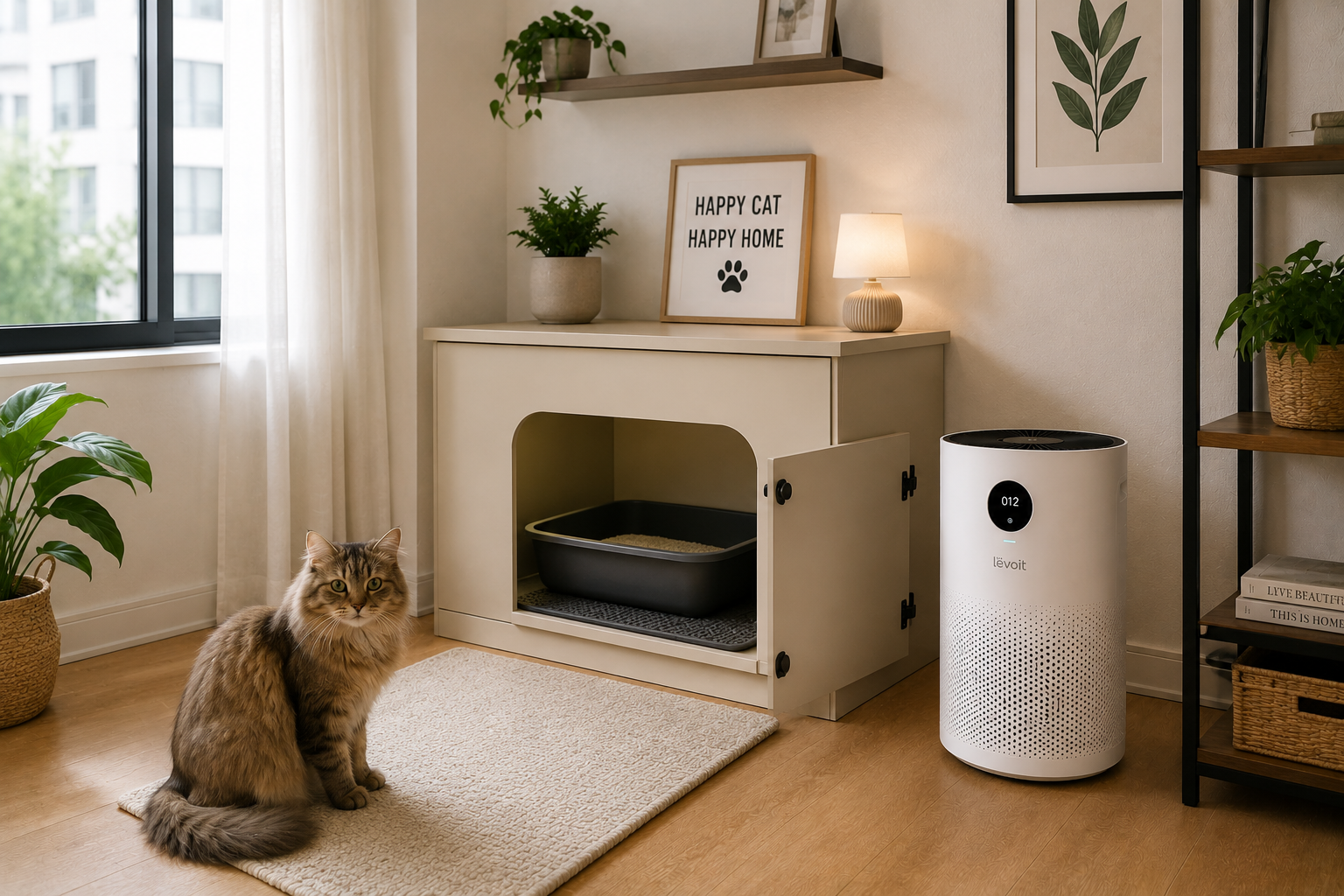
One of the biggest challenges for cat owners living in apartments or small homes is controlling litter box odor.
In small rooms, smells build up much faster because there is:
- limited airflow,
- less ventilation,
- and a smaller amount of circulating air.
Even well-trained cats and regularly cleaned litter boxes can still produce odors that spread throughout:
- bedrooms,
- bathrooms,
- laundry rooms,
- studio apartments,
- and small living spaces.
The good news is that strong litter box smell is usually manageable when you address:
- the source of the odor,
- airflow problems,
- cleaning habits,
- and litter box placement.
In this guide, you’ll learn:
- Why litter box smells become stronger in small rooms
- The most common odor causes
- How to reduce odors quickly
- The best litter types for odor control
- How airflow affects litter smell
- Common mistakes cat owners make
- The best cleaning routines
- And long-term odor prevention strategies
By the end of this article, you’ll know exactly how to keep a small room smelling fresh while still maintaining a comfortable environment for your cat.

Why Litter Box Smell Gets Worse in Small Rooms
Small rooms trap odors much more easily than larger spaces.
This happens because:
- air circulation is limited,
- odors remain concentrated,
- and moisture builds up faster.
Cat litter odor usually comes from:
- urine,
- feces,
- ammonia,
- moisture,
- and bacteria buildup.

Without proper ventilation, these particles stay suspended in the room longer.
Warm temperatures and humidity can also intensify litter box odors significantly.
The Most Common Causes of Strong Litter Box Odor
Understanding the source of the smell helps solve the problem more effectively.
Dirty Litter Boxes
The most common cause is infrequent cleaning.
Even high-quality litter cannot control odors if waste sits too long.
Poor Ventilation
Rooms with:
- closed windows,
- weak airflow,
- or trapped humidity
often develop stronger litter smells.
Low-Quality Cat Litter
Some litters absorb odors much better than others.
Cheap litter may:
- hold moisture,
- break apart quickly,
- and release stronger smells.
Small or Overcrowded Litter Boxes
Boxes that are too small may:
- retain waste,
- reduce airflow,
- and increase odor concentration.
Dirty Surrounding Areas
Odor particles often spread around:
- floors,
- litter mats,
- nearby walls,
- and hidden corners.
Old Litter Box Materials
Plastic litter boxes absorb odors over time.
Older boxes may continue smelling even after cleaning.
How to Reduce Litter Box Smell Quickly
If the odor is already strong, these steps can help improve the room fast.
1. Scoop the Box More Frequently
Daily scooping is essential.

In small rooms, many cat owners benefit from:
- scooping twice daily,
- especially in warm climates.
Removing waste quickly reduces ammonia buildup.
2. Replace Litter Regularly
Even clean-looking litter eventually absorbs odors deeply.
Complete litter replacement should happen regularly depending on:
- the number of cats,
- litter type,
- and room size.
3. Clean the Entire Box Weekly
Wash the litter box using:
- mild soap,
- warm water,
- and pet-safe cleaning products.

Avoid harsh chemicals with strong fragrances.
Cats can become sensitive to overpowering smells.
4. Improve Airflow Immediately
Fresh air dramatically helps reduce odor buildup.
Helpful strategies include:
- opening windows,
- using fans,
- running air purifiers,
- or improving HVAC circulation.
5. Use Baking Soda Carefully
Some cat-safe baking soda products can help absorb odor.
However, avoid excessive amounts that may irritate sensitive cats.
Best Types of Cat Litter for Odor Control
Not all litter performs equally well in small spaces.

Clumping Clay Litter
Helps trap:
- urine,
- moisture,
- and odor particles.
Popular for strong odor control.
Activated Carbon Litter
Carbon helps absorb:
- ammonia,
- moisture,
- and airborne odor particles.
Very useful in apartments.
Silica Crystal Litter
Helps absorb moisture efficiently.
Often produces less odor in humid environments.
Natural Plant-Based Litters
Some plant-based litters help reduce:
- dust,
- chemicals,
- and artificial fragrances.
However, odor performance varies between brands.
Best Litter Box Placement for Small Rooms
Placement matters more than many cat owners realize.

Avoid Tight Corners
Trapped airflow can intensify odor buildup.
Keep the Box Away From Heat Sources
Heat increases:
- moisture,
- bacteria activity,
- and ammonia smell.
Avoid placing litter boxes near:
- heaters,
- dryers,
- or direct sunlight.
Use Areas With Better Ventilation
Rooms with:
- windows,
- air circulation,
- or nearby ventilation
usually stay fresher.
Avoid Placing the Box Near Beds or Sofas
Soft fabrics absorb odors easily.
How Air Purifiers Help With Litter Box Smell
Air purifiers can significantly improve small-room air quality.

Especially models with:
- HEPA filters,
- activated carbon filters,
- and odor-focused filtration.
Purifiers help reduce:
- airborne dust,
- dander,
- and odor particles.
For best results:
- place the purifier near the litter area,
- but not directly beside the cat box.
Common Mistakes That Make Litter Box Smell Worse
Avoid these common odor-control mistakes.
Using Too Little Litter
Shallow litter layers absorb odors less effectively.
Waiting Too Long to Scoop
Ammonia smell intensifies rapidly in small rooms.
Using Strong Artificial Fragrances
Heavy fragrances often:
- mask odors temporarily,
- irritate cats,
- and create mixed unpleasant smells.
Ignoring Humidity
Humidity dramatically increases odor strength.
Not Replacing Old Litter Boxes
Plastic eventually absorbs odor permanently.
How to Keep Small Rooms Smelling Fresh Long Term
Long-term freshness comes from consistency.

Helpful habits include:
- daily scooping,
- regular deep cleaning,
- improving airflow,
- using quality litter,
- and replacing old litter boxes when necessary.
Small changes can dramatically improve odor control over time.
Additional Odor Control Tips
Extra strategies that help include:
- using litter mats,
- vacuuming nearby floors,
- washing litter area rugs,
- brushing cats regularly,
- and controlling room humidity.
Cleaner environments reduce airborne odor particles significantly.
Final Thoughts
Litter box odor becomes much stronger in small rooms because smells remain trapped in concentrated spaces with limited airflow.
The best long-term solution combines:
- proper litter maintenance,
- frequent scooping,
- better ventilation,
- quality litter,
- air purification,
- and consistent cleaning habits.
Instead of masking smells temporarily, focus on removing the odor source directly.
With the right setup and maintenance routine, even small apartments and compact rooms can stay fresh, clean, and comfortable for both cats and owners.
Quick Summary
- Scoop litter boxes daily
- Replace litter regularly
- Wash litter boxes weekly
- Improve room airflow
- Use quality odor-control litter
- Avoid heavy fragrances
- Replace old litter boxes
- Use air purifiers with carbon filters
- Keep litter boxes away from heat
- Control room humidity
A clean litter setup combined with proper ventilation can dramatically reduce odor buildup in small spaces.