
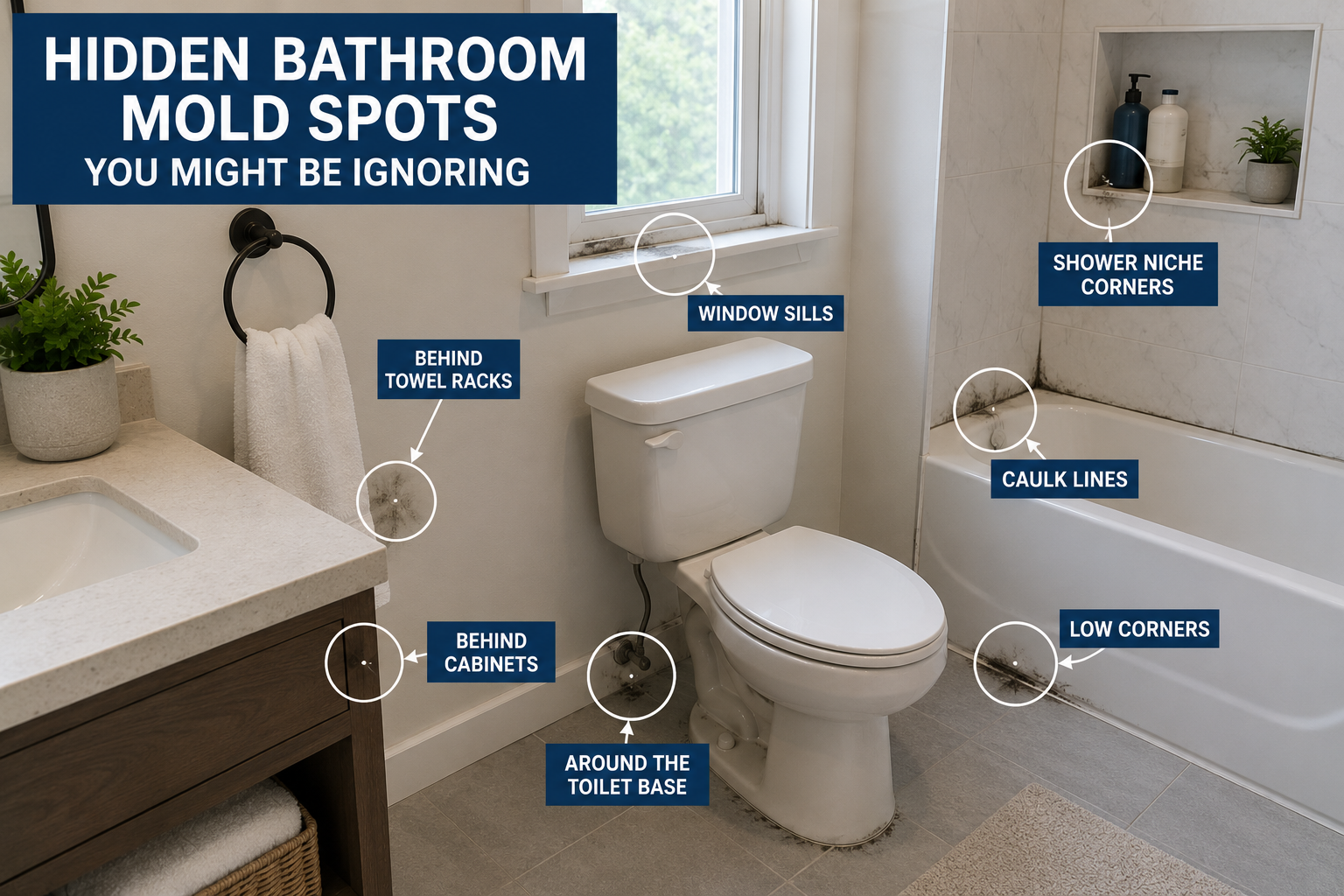
Bathroom mold is not always easy to see.
Many homeowners focus only on visible mold around showers or ceilings, while hidden moisture problems continue spreading behind cabinets, under sinks, around vents, and inside overlooked bathroom corners.
Because bathrooms naturally trap humidity, steam, and condensation, hidden mold can develop slowly for weeks or even months before becoming noticeable.
Many people only discover the problem after noticing:
- musty smells,
- peeling paint,
- recurring mildew,
- water stains,
- warped cabinets,
- or worsening humidity problems.
The good news is that most hidden bathroom mold problems can be prevented early with better ventilation, regular inspections, and simple moisture-control habits.
In this guide, you’ll learn:
- The most common hidden bathroom mold locations
- Why mold develops in overlooked areas
- Warning signs of hidden moisture problems
- How to inspect bathrooms properly
- Which bathroom materials trap moisture the most
- The best ways to prevent hidden mold naturally
- Long-term mold prevention strategies that actually work
By the end of this article, you’ll know exactly where hidden bathroom mold develops and how to stop moisture problems before they spread.
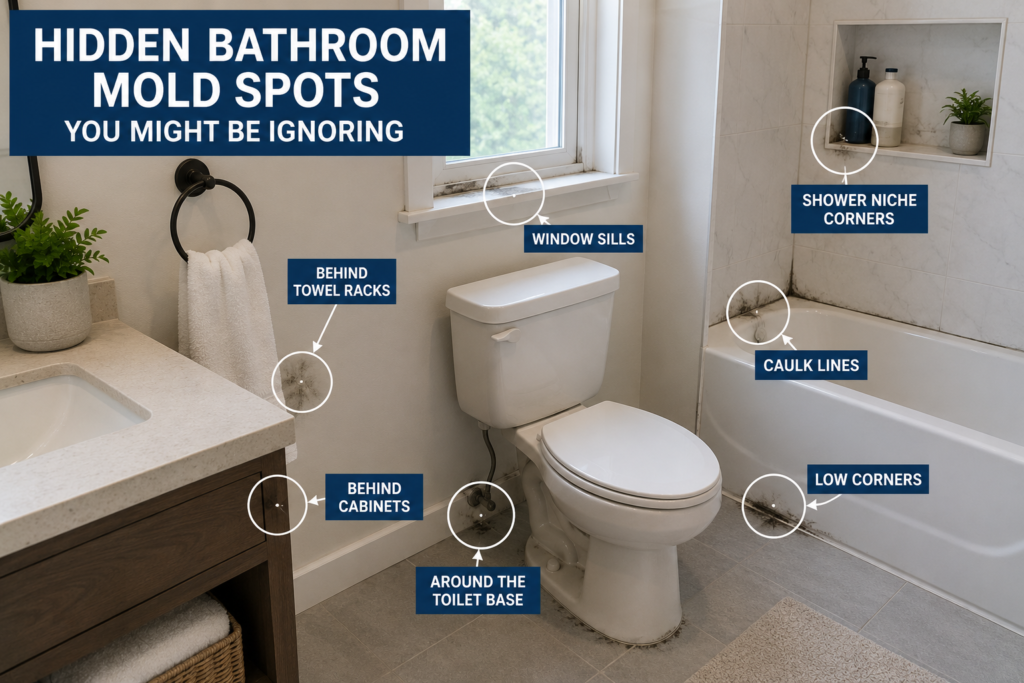
Why Hidden Bathroom Mold Is So Common
Bathrooms create ideal conditions for mold growth because they constantly produce:
- steam,
- condensation,
- humidity,
- moisture buildup,
- damp surfaces.
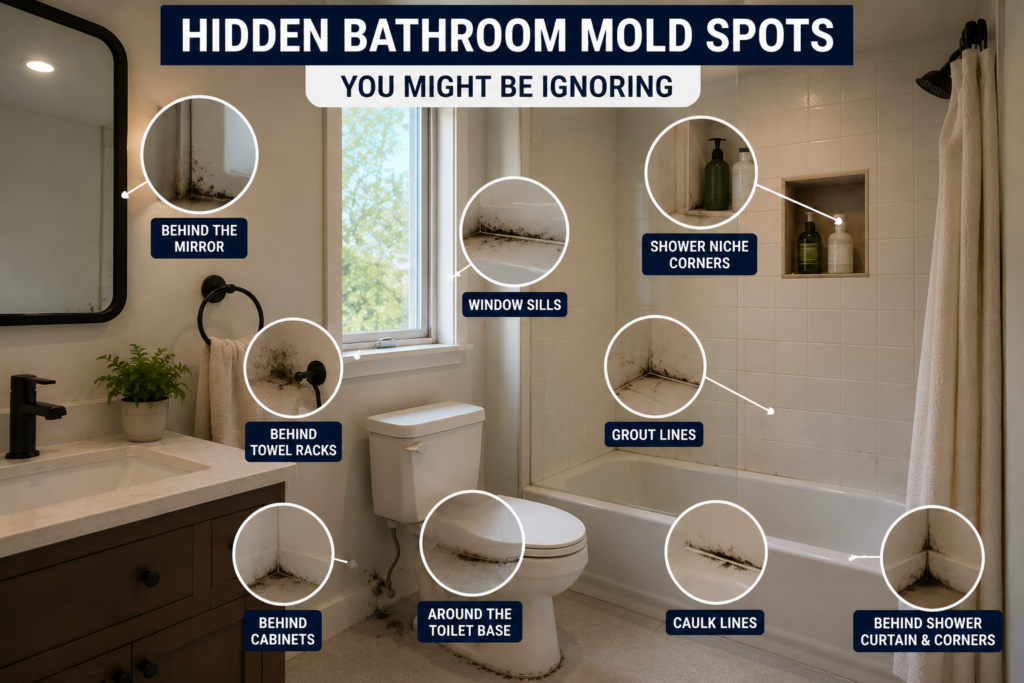
Even when bathrooms appear clean on the surface, moisture may still remain trapped in hidden areas.
Mold spores grow especially well in:
- dark spaces,
- humid corners,
- poorly ventilated areas,
- damp materials.
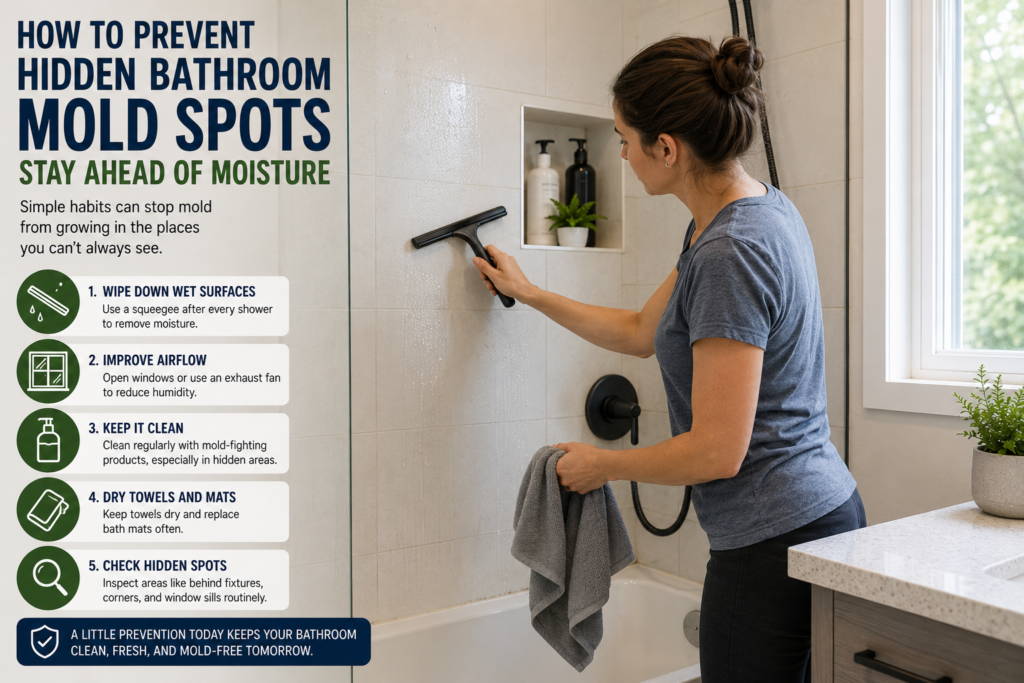
This is why hidden mold often develops long before homeowners notice visible damage.
Common Signs of Hidden Bathroom Mold
Hidden mold problems often begin gradually.
Common warning signs include:
- musty odors,
- recurring mildew smells,
- peeling paint,
- bubbling walls,
- damp cabinets,
- warped wood,
- soft drywall,
- dark stains near corners,
- recurring humidity.
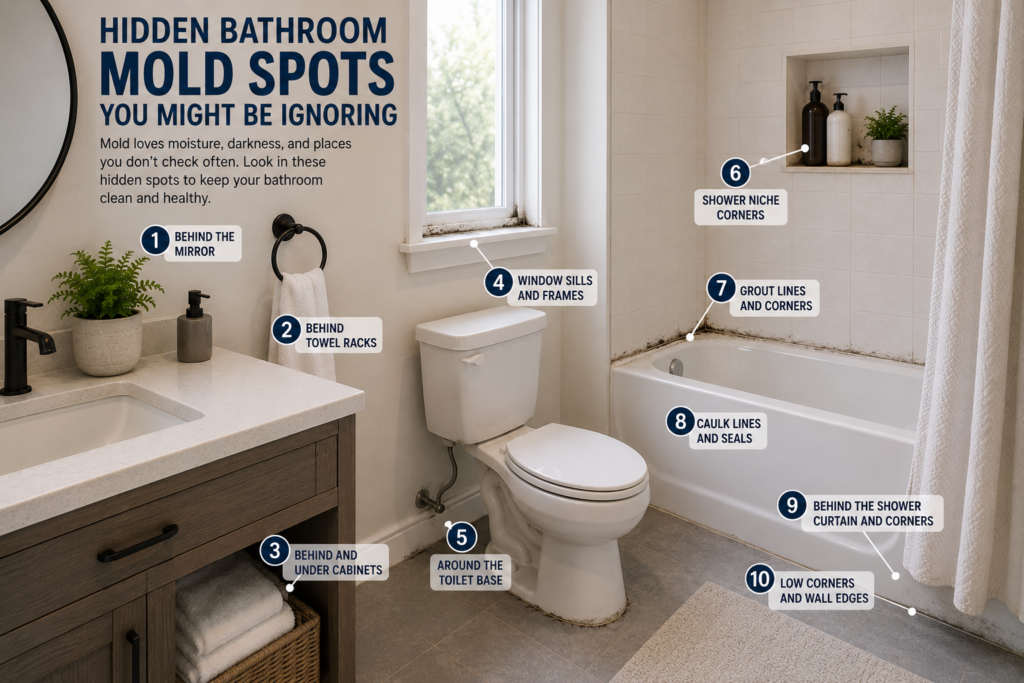
If mold keeps returning quickly after cleaning, hidden moisture may still be present somewhere nearby.
1. Under Bathroom Sinks
The area beneath bathroom sinks is one of the most common hidden mold locations.
Leaks, condensation, and poor airflow create ideal conditions for moisture buildup.
Mold often develops:
- behind stored products,
- around plumbing,
- beneath cleaning supplies,
- under sink cabinets.
Many homeowners rarely inspect these areas closely.
How to Prevent Mold Under Sinks
Helpful habits include:
- checking pipes regularly,
- cleaning moisture quickly,
- avoiding overcrowded storage,
- improving airflow,
- inspecting cabinets monthly.
Small leaks can cause major mold problems over time.
2. Behind Bathroom Cabinets and Storage Units
Bathroom storage areas often trap humidity.
Moisture becomes trapped behind:
- cabinets,
- shelves,
- storage bins,
- organizers,
- laundry baskets.
When airflow is blocked, surfaces stay damp much longer.
This creates ideal conditions for hidden mildew and mold growth.
3. Around Bathroom Exhaust Fans
Bathroom fans help remove humidity, but they may also collect:
- dust,
- moisture,
- condensation,
- mildew buildup.
Dirty exhaust fans become less effective over time.
Reduced airflow allows humidity to remain trapped inside the bathroom.
Signs Your Exhaust Fan Needs Cleaning
- Dust buildup
- Weak airflow
- Lingering humidity
- Condensation after showers
- Musty smells near vents
Regular maintenance improves ventilation significantly.
4. Around Windows and Window Frames
Bathroom windows frequently collect condensation.
Water droplets often build up around:
- window corners,
- frames,
- seals,
- blinds,
- curtains.
Without regular drying, mold may begin growing in hidden corners.
Bathrooms with poor ventilation usually experience the worst condensation problems.
5. Behind Toilets
Many people rarely inspect behind the toilet.
However, this area may collect:
- condensation,
- dust,
- moisture,
- small plumbing leaks.
Poor airflow behind toilets allows dampness to remain trapped.
Over time, mold may spread quietly behind the fixture.
6. Around Shower Caulk and Grout
Caulk and grout absorb moisture constantly.
Mold often develops:
- inside grout lines,
- beneath caulk edges,
- in shower corners,
- around bathtubs.
Even if surfaces appear clean initially, hidden moisture may remain underneath.
Regular inspection is extremely important.
7. Ceiling Corners and Upper Walls
Warm steam naturally rises after showers.
Because of this, ceiling corners often trap moisture longer than lower surfaces.
Mold commonly develops:
- near ceiling edges,
- around light fixtures,
- near exhaust fans,
- in poorly ventilated corners.
Small black spots often appear first.
Why Small Bathrooms Have More Hidden Mold Problems
Small bathrooms trap humidity much more easily.
Limited airflow means moisture dries more slowly.
This increases the risk of hidden mold developing behind:
- cabinets,
- towels,
- storage containers,
- bath mats,
- wall corners.
Windowless bathrooms are especially vulnerable.
How to Prevent Hidden Bathroom Mold Naturally
Preventing hidden mold mainly involves reducing moisture consistently.
Improve Bathroom Ventilation
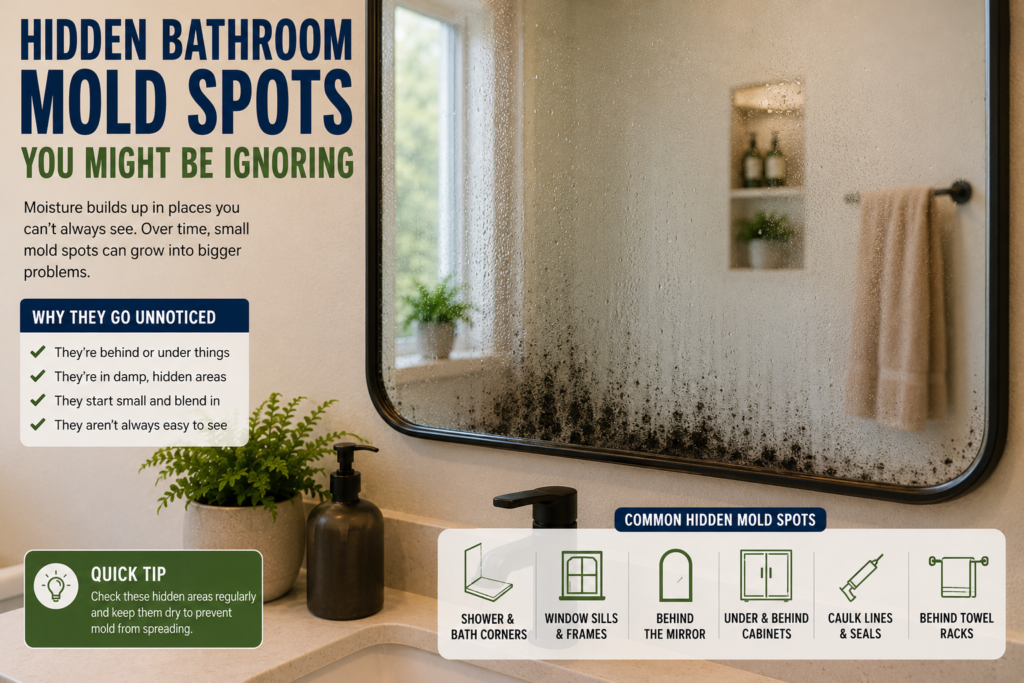
Good airflow is one of the best mold prevention strategies.
Helpful habits include:
- running the exhaust fan,
- opening windows,
- leaving the bathroom door partially open,
- using portable fans.
Better airflow helps moisture dry faster.
Dry Damp Surfaces Quickly
Removing moisture quickly helps stop mold before it spreads.
Focus on drying:
- counters,
- mirrors,
- shower walls,
- windows,
- bathroom corners.
Even small amounts of trapped moisture matter over time.
Reduce Bathroom Clutter
Overcrowded bathrooms reduce airflow.
Keeping storage organized helps:
- improve circulation,
- reduce trapped humidity,
- make inspections easier.
Minimal clutter helps hidden areas dry faster.

Inspect Hidden Areas Regularly
Monthly inspections help catch moisture problems early.
Check areas such as:
- under sinks,
- behind toilets,
- around vents,
- inside cabinets,
- around windows,
- ceiling corners.

Early detection prevents larger mold infestations.
Should You Use a Dehumidifier?
In many homes, yes.
Compact dehumidifiers may help:
- reduce humidity,
- improve air quality,
- lower condensation,
- slow mold growth.
They are especially useful in:
- apartments,
- humid climates,
- windowless bathrooms,
- poorly ventilated spaces.
Best Products for Preventing Hidden Bathroom Mold
Many homeowners use:
- moisture absorbers,
- compact dehumidifiers,
- exhaust fans,
- humidity monitors,
- microfiber cloths,
- mold-resistant caulk,
- shower squeegees.
Simple products can help reduce long-term moisture problems significantly.
Common Hidden Mold Mistakes
Avoid these common problems:
Ignoring Musty Smells
Hidden moisture often causes odors before visible mold appears.
Never Checking Behind Furniture or Cabinets
Moisture may remain trapped for long periods.
Leaving Damp Towels Piled Together
Wet fabrics increase humidity quickly.
Never Cleaning Exhaust Fans
Poor ventilation allows humidity to build up.
Ignoring Small Water Leaks
Tiny leaks may eventually cause major mold growth.
Frequently Asked Questions
Where does hidden bathroom mold usually grow?
Common areas include under sinks, behind toilets, around windows, inside cabinets, and near ceiling corners.
Can mold grow without visible water leaks?
Yes. Steam, condensation, and humidity alone may create enough moisture for mold growth.
Why does my bathroom smell musty even after cleaning?
Hidden moisture or mold may still be trapped in poorly ventilated areas.
Are small bathrooms more vulnerable to hidden mold?
Yes. Tight spaces trap humidity much more easily.
How often should I inspect for hidden mold?
Monthly inspections help catch problems before they become severe.
Final Thoughts
Hidden bathroom mold problems are extremely common because moisture often becomes trapped in areas homeowners rarely inspect.
Fortunately, most hidden mold issues can be prevented early by:
- improving ventilation,
- reducing humidity,
- drying surfaces consistently,
- checking hidden areas regularly,
- and fixing moisture problems quickly.
Small prevention habits make a major difference over time.
By controlling bathroom humidity properly and inspecting vulnerable areas regularly, you can keep your bathroom cleaner, fresher, and far less vulnerable to hidden mold growth.